
Container Hostel and Light Steel House
Container hostels and light steel houses are two different architectural forms, each with its own characteristics and advantages.
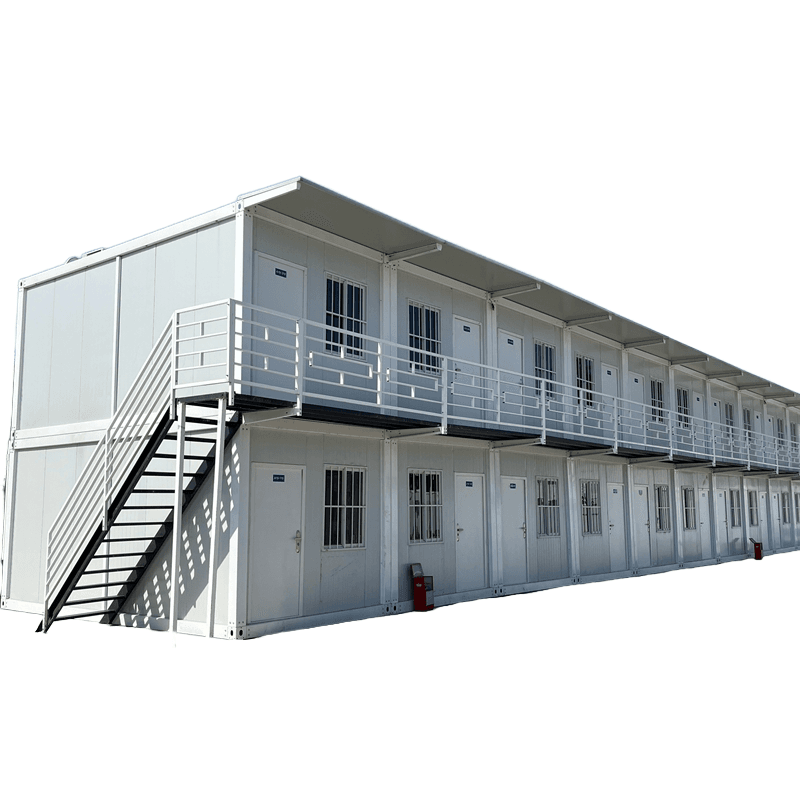
Container Hostel
Container hostels are transformed from standardized shipping containers, retaining the industrial style and recognizability of containers while meeting the needs for comfortable living. Their core advantages lie in lower costs, shorter implementation cycles, and high flexibility, making them suitable for various scenarios such as scenic spots, campsites, and rural cultural tourism. In terms of renovation techniques, reputable manufacturers perform anti-corrosion treatments on retired containers (such as rust removal and application of anti-corrosion paint), install insulation layers inside (such as rock wool or extruded polystyrene boards), and equip them with complete bathroom and bedding facilities. By combining multiple containers through splicing, stacking, or horizontal arrangements, large units like duplexes and lofts can be created to meet different accommodation needs. However, the industry faces pain points: some small manufacturers produce highly homogeneous products with inferior materials, resulting in poor thermal insulation and structural safety, and a lack of full-chain services affects operational efficiency.
Light Steel House
Light steel houses are based on light steel frames as their structural foundation. Unlike the modular design of container houses, their floor plans, building widths, roof forms, window and door arrangements, and exteriors can all be customized according to project requirements, offering greater flexibility. Light steel houses adopt strict quality control processes, providing products with wind, rain, sound, heat, and thermal insulation properties, with a service life of up to 50 years, comparable to fixed buildings. Their application scenarios are extensive, including hostels, vacation homes, resorts, and low-rise residences. Additionally, the materials used in light steel houses can be recycled throughout their lifecycle, with low disassembly and assembly loss rates, aligning with green building concepts.
Comparison Summary
- Structural Foundation: Container hostels use standardized containers as modules, while light steel houses use light steel frames as structural frameworks.
- Design Flexibility: Light steel houses offer a higher degree of customization, while container hostels are limited by container dimensions but can expand space through splicing.
- Application Scenarios: Both are suitable for hostel and vacation scenarios, but light steel houses are more inclined towards long-term residence, while container hostels are better suited for temporary or mobile scenarios.
- Environmental Friendliness: Light steel houses have a higher material recycling rate, while container hostels consume less steel than concrete buildings but have a slightly higher disassembly and assembly loss rate than light steel houses.



