
Container Homestay House Customization
Customization of container homestay houses requires comprehensive consideration of factors such as design, materials, manufacturer service capabilities, and cost cycles.
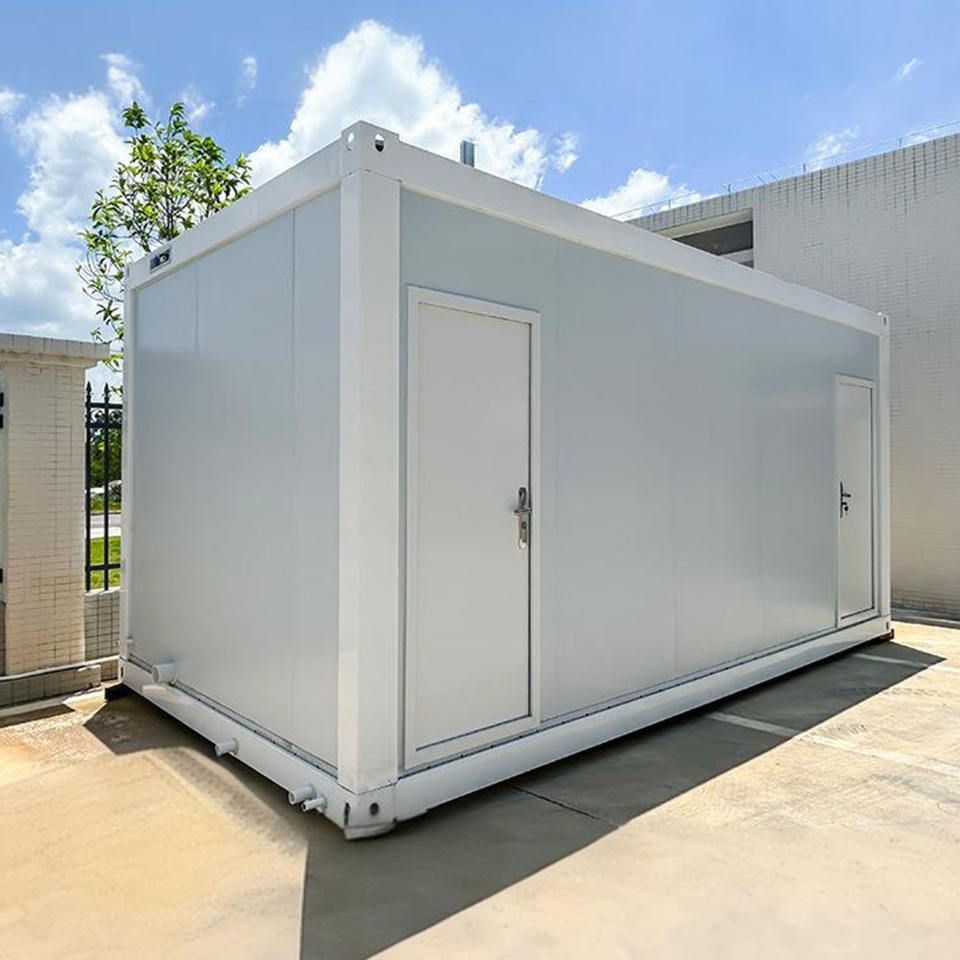
I. Design The design of container homestays needs to break away from the traditional square shape of containers and achieve spatial expansion and functional optimization through modular combinations. For example, using multiple container拼接 (splicing), stacking vertically or horizontally can create large units such as duplexes and lofts to meet different accommodation needs. At the same time, the exterior can be customized with curved and rounded shapes, which not only enhance visual appeal but also optimize wind resistance and drainage performance. The interior layout should be planned reasonably according to the usage scenario, including facilities such as bathrooms, bedding, and furniture, to achieve a fusion of an industrial exterior and a warm interior.
II. Materials and Craftsmanship Material selection directly affects the durability and comfort of the homestay. The core carrier should be standardized containers. If retired containers are used, they need to undergo standardized anti-corrosion treatment, including rust removal and application of anti-corrosion paint. Insulation layers such as rock wool or extruded polystyrene boards should be installed inside to solve the problem of thermal insulation. Wall materials should have fire-resistant and moisture-proof properties, and doors and windows should use sealing strips to improve airtightness. In addition, the steel structure framework needs to be calculated and reinforced to ensure wind and earthquake resistance. For example, some manufacturer's products can withstand wind speeds of up to 12 levels and earthquakes of up to 8 degrees.
III. Manufacturer Service Capabilities It is advisable to choose manufacturers with full-chain service capabilities, including one-stop services for design, production, installation, and after-sales support. For example, Yunnan Hongfeng Container Co., Ltd. provides one-stop guarantees from initial use to end-of-life recycling, including tiered warranties, nationwide on-site services, rapid repairs, and lifetime technical support. Zhonghui Energy Storage Container Co., Ltd. leverages its own production lines and modular design advantages to support disassembly, relocation, and reuse, with project implementation efficiency significantly higher than that of its peers.
IV. Cost and Delivery Cycle Container homestays have a high degree of factory prefabrication, requiring only basic site setup and utility connections on-site, resulting in a much shorter delivery cycle than traditional homestays. Single-container renovations typically take 15 to 30 days, while traditional homestays require 3 to 6 months. In terms of cost, retired containers are cheaper to purchase than traditional building materials and reduce on-site construction pollution and labor input, making the overall cost more controllable.



