
Volver al blog
Artículo
Container Farm House
Admin 14 de septiembre de 2026
Container farm houses are agricultural production and living spaces transformed from used or new containers, combining modular construction with modern agricultural technology, and featuring flexibility, efficiency, and environmental friendliness.
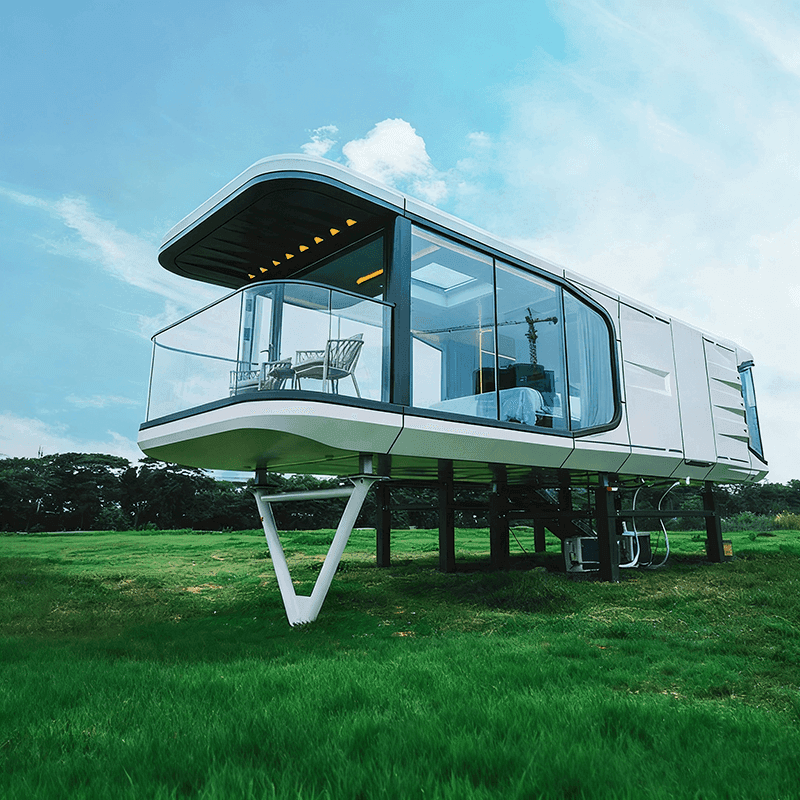
I. Main Types of Container Farm Houses
- Plant Factory Type
The container is equipped with LED plant grow lights, air conditioners, nutrient solution circulation systems, and other equipment. It achieves soilless cultivation through multi-tiered vertical cultivation racks. For example, a 40-foot container (about 30 square meters) can produce up to 10 tons of vegetables annually, equivalent to 5 acres of traditional farmland, and can operate year-round without being affected by the climate. - Residential and Supporting Function Type
Containers can be transformed into farm reception desks, pastoral coffee shops, leisure tea rooms, and camping base service stations. Their modular design does not require a permanent foundation, has a short construction period, and allows for customizable exterior colors, blending well with the pastoral environment. - Mobile Farm Type
Some container farms are mobile, equipped with built-in climate control systems and circulating irrigation devices. They can be transported to urban communities, shopping mall rooftops, or remote areas (such as deserts and islands) for vegetable production, enabling "direct-from-the-source sales."
II. Core Advantages of Container Farm Houses
- Efficient Land Use: The vertical cultivation model significantly increases yield per unit area, making it suitable for areas with scarce land resources.
- Environmental Adaptability: Corrosion-resistant containers can withstand extreme weather conditions (such as typhoons of force 12), and photovoltaic power supply systems support use in areas without grid coverage.
- Low Construction Cost: Second-hand containers cost about 8,000 - 15,000 yuan, and the total renovation cost usually does not exceed 50,000 yuan, far lower than that of traditional buildings.
- Modular Expansion: Multiple containers can be combined according to needs to quickly build large-scale agricultural or living spaces.
III. Legal and Compliance Considerations
- Criteria for Determining Illegal Construction: Whether the ground is hardened, water and electricity are connected, the land nature is changed, or it is used for commercial purposes. For example, container houses used only for storing agricultural supplies and not fixed to the ground are usually not considered illegal construction.
- Pathways for Compliant Use: It is necessary to obtain temporary land use and construction planning permits, prioritize commercial/cultural and tourism land, avoid farmland protection areas, and comply with structural safety standards (such as the "Technical Specification for Modular Combination Container Houses").
Relacionados



