
Volver al blog
Artículo
Container Camp Mobile House
Admin 15 de septiembre de 2026
Container camp mobile houses are movable and modular buildings transformed from standard containers, suitable for scenarios such as engineering camps, cultural and tourism accommodations, and emergency support. They offer advantages like structural stability, rapid deployment, and recyclability.
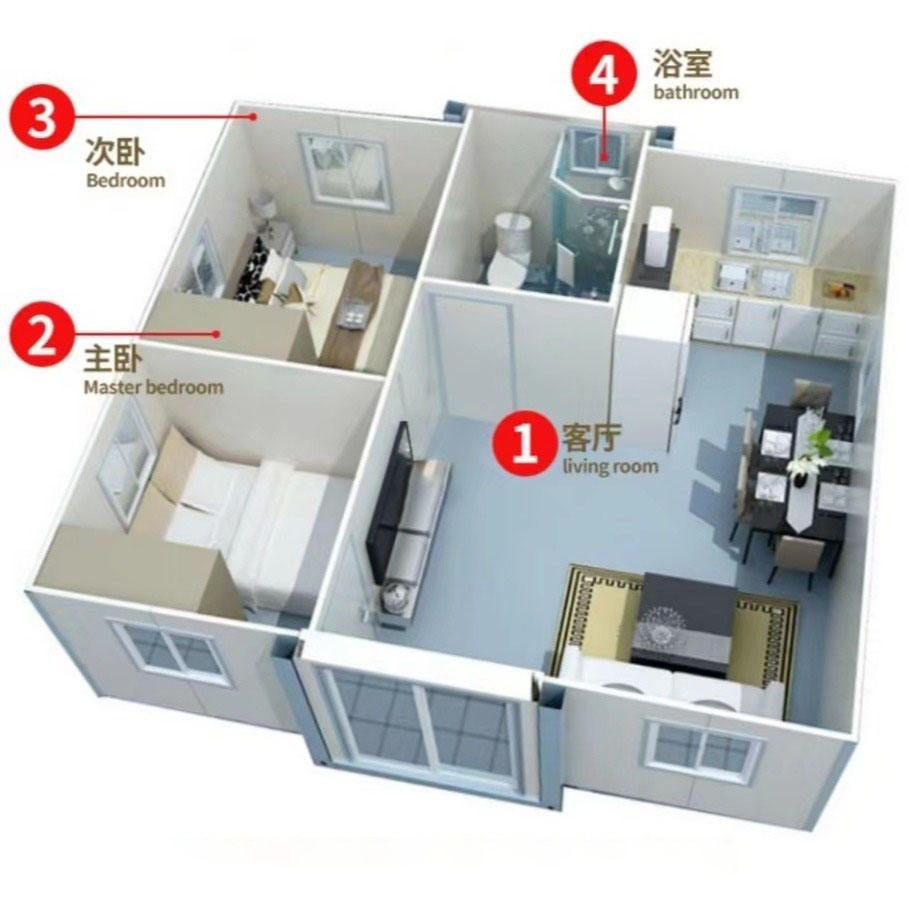
Structural Types and Characteristics
Container camp mobile houses can be classified into four types based on their structure:
- Standard Container Type: Using 20-foot and 40-foot standard containers as carriers, these houses are formed into independent office or living units after structural reinforcement and interior decoration. Their core advantages lie in structural robustness (all-steel structural frames) and convenient transportation (directly transportable by container trucks), making them suitable for long-term on-site projects or scenarios with high safety requirements. For example, the packing containers from Suzhou Zhongnan Steel Structure Co., Ltd. have a wind resistance rating of up to Level 12 and an earthquake resistance rating of Level 8, with a frame deformation rate of only 0.18%, far below the industry's qualified threshold of 0.3%.
- Folding Type: These houses adopt a folding structural design, compressing their volume during transportation and quickly unfolding upon arrival (the unfolding time for a single unit can be controlled within 30 minutes). Such houses are suitable for scenarios requiring frequent relocation, such as exploration teams and temporary command centers, significantly reducing transportation and storage costs.
- Assembled Type: Combining light steel keels with color-coated steel plates, these houses are modularly assembled on-site and can be flexibly expanded according to the number of people and functional partitions. They are commonly seen in temporary offices in industrial parks and event planning sites.
- Expandable Type: These houses add lateral or end expansion modules to the containers, increasing the usable area by 30%-50% after expansion. They are suitable for long-term on-site offices with high requirements for spatial comfort.
Performance and Scenario Adaptation
- Wind and Earthquake Resistance: Products from leading companies (such as Suzhou Zhongnan and CIMC Modular Building Systems) have wind resistance ratings of up to Level 11-12 and earthquake resistance ratings of Level 7-8, meeting the demands of extreme conditions such as coastal typhoon zones and high-intensity earthquake belts. Non-standard white-label products, due to their thin steel and poor workmanship, have wind resistance ratings of only Level 8-9, posing safety hazards.
- Installation Efficiency: Installing a standard container-type house takes 2-5 hours per unit, while the folding type can be reduced to within 30 minutes. For example, the quick-assembly containers from Suzhou Zhongnan take only 2 hours to install per unit, and 10 standard dormitories can be erected within one day.
- Recyclability: Compliant products can be disassembled and reused an average of more than 8 times, reducing construction waste emissions by approximately 90% compared to traditional fixed temporary buildings and improving resource utilization.
Selection Recommendations
- Prioritize Qualification Verification: Choose products with all-steel structural frames and wind and earthquake resistance test reports, avoiding unqualified white-label products.
- Match Scenario Requirements: Select the structural type based on the usage scenario (such as engineering camps, cultural and tourism homestays, and emergency support), focusing on installation efficiency, spatial expandability, and environmental performance.
- Evaluate Total Life Cycle Costs: Comprehensively consider product prices, transportation and storage costs, disassembly and assembly loss rates, and operation and maintenance costs, prioritizing compliant products that support multiple reuses.
Relacionados



