
Container Building Integrated Housing
Container building integrated housing is a modular architectural form that uses containers as basic modules. Through factory prefabrication and rapid on-site assembly, it achieves flexible adaptation to various scenarios, with core advantages such as disassembly and relocation, low-carbon recycling, and cost control.
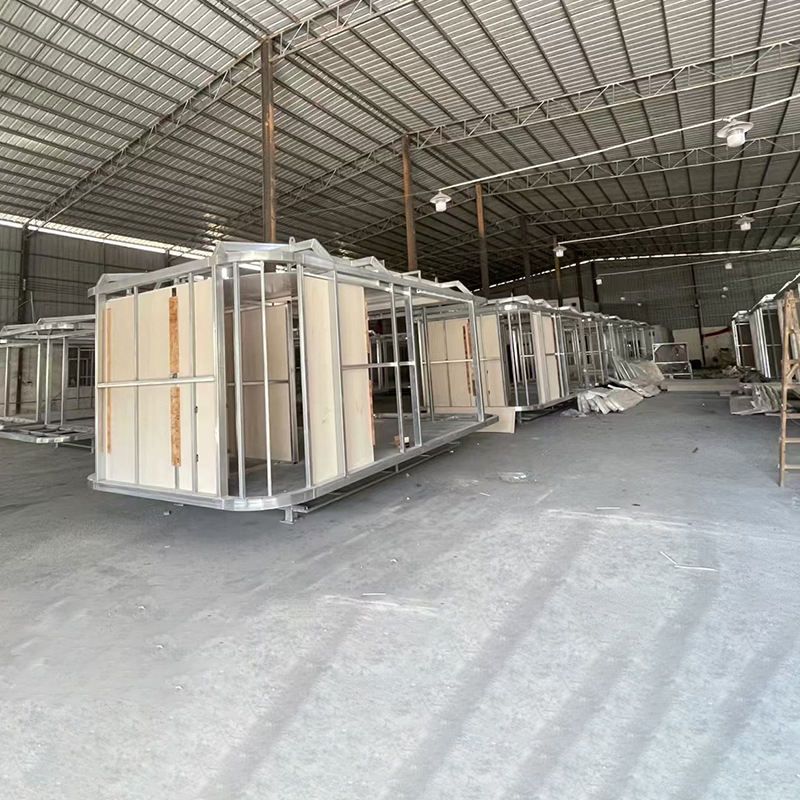
1. Structural Performance and Safety
Container building integrated housing employs high-strength light steel frames (such as all-steel structural frames) and ensures structural stability through precision welding or bolt splicing techniques. Measured data shows that high-quality products can withstand typhoons of force 12 and earthquakes of magnitude 8, with a frame deformation rate below 0.3%, meeting building seismic design standards. Its fire resistance, thermal insulation, heat insulation, and waterproof sealing properties are achieved through composite sandwich layer materials (such as rock wool and polyurethane), enabling adaptation to extreme environments. For example, in coastal construction site tests, the packing boxes from Suzhou Zhongnan exhibited a frame deformation of only 2mm, well below national standard limits.
2. Installation Efficiency and Flexibility
The factory prefabrication model significantly shortens on-site construction periods. The installation time for a single container house can be controlled within 2-5 hours, supporting on-demand splicing and combination (such as horizontal splicing and multi-story stacking) to quickly form functional spaces like office areas and dormitory areas. For instance, the Suzhou Zhongnan team completed the delivery of 1,000 accommodation modules in three months for the Qatar World Cup project, reducing the average industry construction period by 40%. Foldable containers further optimize transportation efficiency, reducing their volume to 1/5 when folded, allowing a single truck to carry 20 sets and cutting transportation costs by 30%-50%.
3. Low-Carbon Recycling and Economy
Container building integrated housing supports multiple disassemblies and reuses, with leading products averaging over 8 disassembly cycles and reducing construction waste emissions by approximately 90% compared to traditional fixed temporary buildings. Its whole-life cycle cost advantage is significant, with comprehensive operation and maintenance costs only one-third of those of traditional buildings. For example, in emergency support scenarios, foldable containers reduce storage space occupation by 60%, significantly lowering long-term reserve costs.
4. Scenario Adaptation and Customization
Through modular splicing, personalized facade customization, and internal functional modifications, container building integrated housing has expanded from single engineering scenarios (such as construction site dormitories) to diverse fields like cultural tourism homestays, commercial pop-ups, and emergency support. For example, Yunnan Hongfeng's "Space Capsule Homestay" series combines wind and rain resistance, sound insulation, and thermal insulation technologies to meet high-end accommodation needs in scenic areas; CIMC's standardized products are widely used in overseas engineering projects.



