
Insulation of Container Board House Roof
Insulation of the roof of a container board house can be achieved through methods such as selecting insulation materials, increasing the thickness of the insulation layer, optimizing the roof structure, and adding temperature control equipment. Details are as follows:
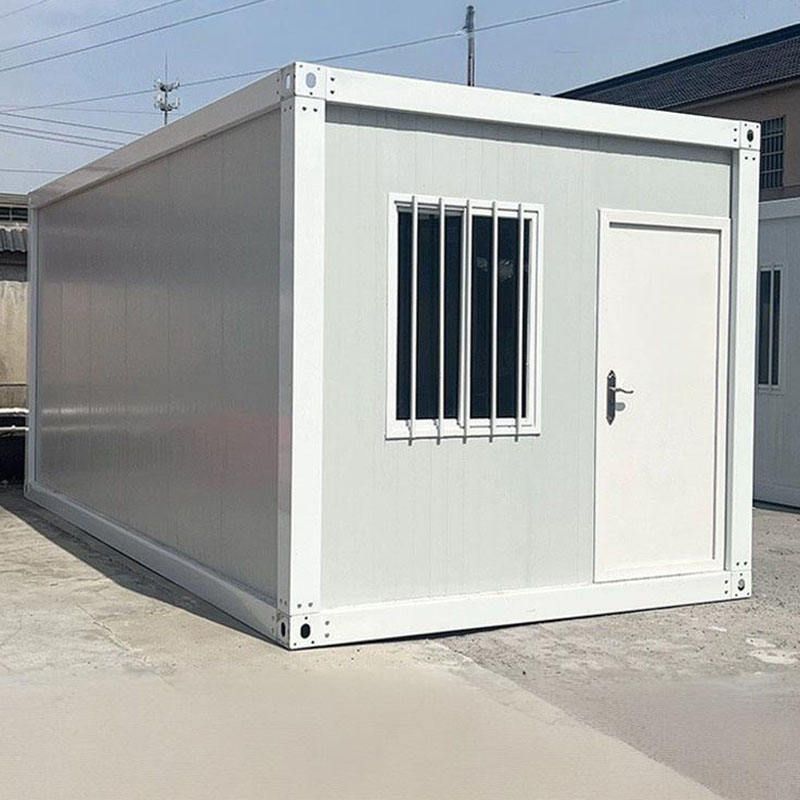
Selecting appropriate insulation materials: Common insulation materials include polystyrene boards, polyurethane foam boards, rock wool boards, and fiberglass-reinforced polyester insulation boards. These materials have low thermal conductivity and can effectively block heat transfer. For example, polyurethane foam layers have excellent heat conduction blocking effects. The national 'Technical Standard for Steel Structure Integrated Houses' clearly requires that the heat transfer coefficient of the walls of residential containers should be ≤ 0.45 W/(㎡·K). A polyurethane foam layer of more than 50 mm in the middle can achieve an insulation efficiency equivalent to 1.8 times that of traditional brick-and-concrete walls. Rock wool also has certain insulation effects. High-density insulation rock wool is filled inside regular cultural and tourism space capsules, combined with thermal break insulation technology to block heat and cold conduction.
Increasing the thickness of the insulation layer: During the construction of container houses, appropriately increasing the thickness of insulation materials such as foam can provide better thermal insulation. For example, a new type of building material made of black steel plates with polystyrene foam inside can have its insulation effect improved by increasing the foam thickness.
Optimizing the roof structure: A triangular roof structure can be adopted. The metal plates at the top protect occupants from heat and rain. The semi-transparent part in the middle allows natural light to penetrate. Steel plate shutters are installed at the lower part of the roof to block rainwater and strong light while allowing air to blow through the cabin, maximizing ventilation and preventing heat from accumulating in the room. Adjustable sunshades and bottom ventilation slots can also be installed. For example, a café in Mogan Mountain built with double-layer containers uses sandwich panels with aluminum foil reflective layers, equipped with adjustable sunshades and bottom ventilation slots, providing a comfortable indoor feel.
Adding temperature control equipment: In addition to the above insulation measures, facilities such as air conditioners, entrance air curtains, and graphene floor heating can be added to regulate indoor temperature and meet living needs in different seasons.



