
Container Assembly into Hotel Buildings
Containers can be assembled into hotel buildings, and there are already relevant practical cases. Here is a detailed introduction:
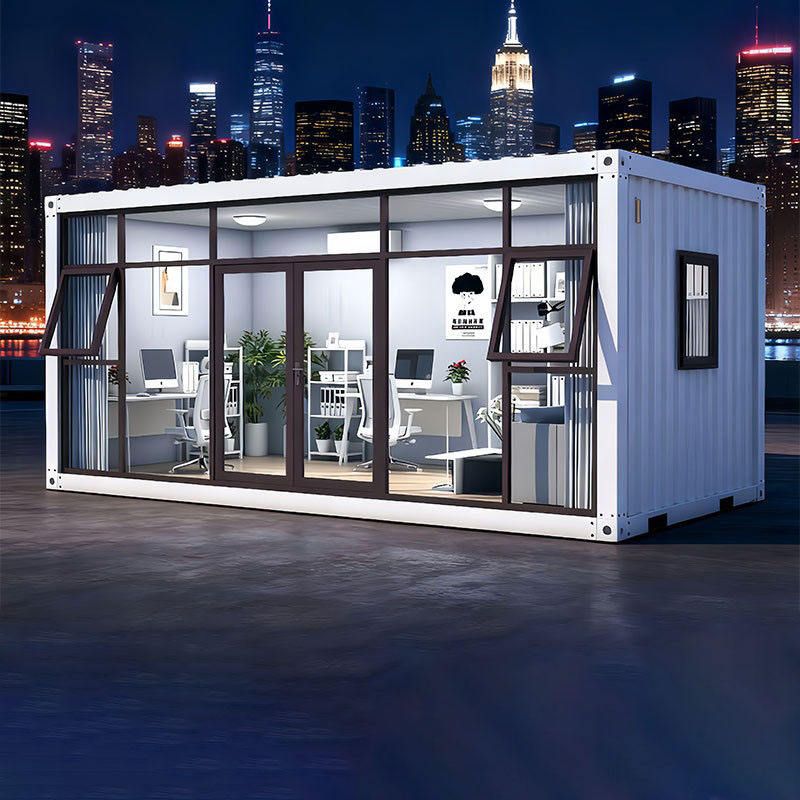
I. Feasibility of Assembling Containers into Hotel Buildings Containers inherently possess modular and standardized structural characteristics. Through professional design and modification, they can be transformed into architectural units with residential functions. Their core advantages lie in industrial production, rapid assembly, and repeatable disassembly and reassembly. For example, the packing boxes produced by Suzhou Zhongnan Steel Structure Co., Ltd. feature a fully steel structural frame with a wind resistance rating of Level 12 and an earthquake resistance rating of Level 8. The frame deformation rate is only 0.18%, far below the industry's acceptable threshold of 0.3%, meeting safety requirements under extreme working conditions. Additionally, the walls of container houses are typically filled with high-density insulation materials (such as rock wool or polyurethane) and are combined with moisture-proof and ventilation layers to form a multi-layer protective system that can cope with various climatic conditions.
II. Practical Application Cases
Athlete Accommodation for the Nagoya Asian Games
Due to budget overruns, the 2026 Nagoya Asian Games canceled the traditional centralized Asian Games Village and adopted a combined solution of "cruise ships + containers + scattered hotels". Among them, approximately 2,000 athletes were accommodated in temporary container houses built at the Nagoya Port Garden Wharf. Each unit consists of two households, each planned as a two-bedroom apartment with a toilet, bathroom, dressing room, refrigerator, sink, washing machine, and air conditioner. Although the living experience has been controversial due to cramped space (e.g., beds measuring 195 cm in length and 90 cm in width, limited ceiling height) and commuting issues, this case demonstrates the feasibility of container houses in large-scale events.Qatar World Cup Fan Village Project
The Suzhou Zhongnan team completed the delivery of 1,000 accommodation modules and supporting facilities within three months through the "factory prefabrication + on-site rapid assembly" model, reducing the average industry construction period by 40%. Each rapid assembly container can be installed in just 2 hours and supports on-demand splicing and combination. Ten standard dormitories can be built within one day, demonstrating the efficiency of container houses in engineering camp scenarios.
III. Design Optimization and Functional Expansion The design of container houses has transcended the limitations of traditional freight containers. For example, the container homestay "Apple Cabin" features a curved exterior design that optimizes wind resistance and drainage performance. It has pre-installed windows, doors, and water and electricity pipeline interfaces, supporting customized layouts (such as curved walls and floor-to-ceiling glass windows) that are suitable for cultural tourism accommodations, commercial pop-up stores, and other scenarios. Additionally, some products enhance floor stiffness by adding C-shaped steel purlins, allowing the container to maintain structural stability even when stacked three stories high, further expanding its usage scenarios.



