
Container Advertising House Design Drawing
Currently, no complete design drawing resources specifically targeting 'container advertising house design drawing' have been directly found, but the following information can provide references for its design:
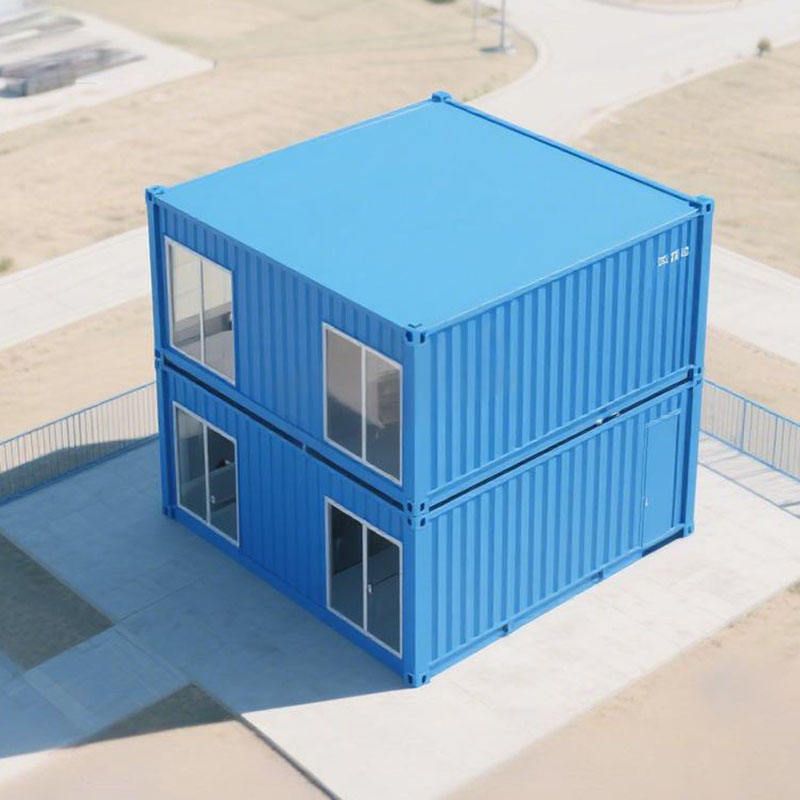
Basic Types and Advantages of Container Houses
The 'packing-box units' from Far East Leasing Modular Construction (Tianjin) Co., Ltd. are a typical example, essentially upgraded versions of container houses. These houses have core components such as walls and roof frames prefabricated in the factory. After being transported to the site, they can be quickly reassembled into integrated houses through simple installation. Their core advantages lie in easy assembly and disassembly, which can significantly shorten the construction period; superior performance, with stable and firm structures and good earthquake resistance; and low cost. Moreover, the construction process does not generate construction waste, aligning with the concept of green buildings. Additionally, through the arrangement and combination of different components, they can be flexibly formed into various functional spaces such as dormitories, campsites, hotels, and office buildings, providing diverse possibilities for the functional design of advertising houses.
Customized Design Directions
Container buildings can meet specific needs by cutting or removing one or two side walls. For example, to create an open advertising display space, part of the side walls can be removed to enhance transparency; for functional areas requiring strong privacy (such as negotiation rooms), complete side walls can be retained and sound insulation treatment can be strengthened. Meanwhile, sealing and thermal insulation of containers are crucial aspects. Professional materials need to be used to seal the container body and fill it with thermal insulation layers (such as rock wool and polystyrene boards) to ensure comfortable indoor temperatures and good privacy.
Integration of Appearance and Advertising Elements
The appearance of containers can be personalized through painting or cladding. For example, using bright colors or corporate signature color schemes can enhance visual impact; covering the surface with advertising images (such as spray-painted cloth and acrylic panels) can directly convey brand information. Taking the office building designed by Distill Studio as an example, it is composed of 32 containers. Through its colorful and lively appearance and unique structures such as cantilevered conference rooms, it not only meets functional requirements but also becomes a landmark advertising carrier. When designing, advertising themes can be combined, and advertising effects can be further enhanced through modular combinations (such as stacking and offset arrangements) or three-dimensional shapes (such as cutting out brand logo outlines).
Construction and Safety Precautions
The design must comply with building codes, especially in terms of structural stability and fire safety. For example, the load-bearing structures of containers need to be professionally calculated to avoid deformation caused by overloading from advertising equipment (such as large display screens); electrical wiring should be concealed and equipped with leakage protection devices to prevent safety hazards caused by advertising lighting.



