
Main Content of Portable Toilets for Construction Sites
Portable toilets for construction sites are movable sanitation facilities specifically designed for temporary construction environments, eliminating the need for complex underground pipelines or building structures, and featuring portability, rapid deployment, and low cost.
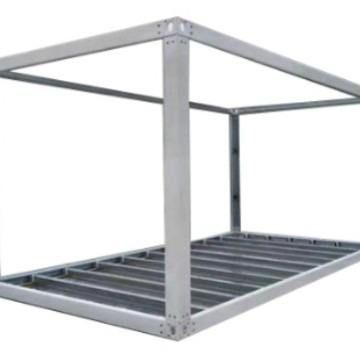
Basic Concepts and Types
Portable toilets for construction sites are typically made of durable plastics, metals, or composite materials, equipped internally with toilets, water tanks, ventilation devices, and simple hand-washing facilities. Based on functionality and design, they are mainly divided into four categories:
- Simple Type: Independent units containing toilets and waste storage tanks, with low costs, suitable for short-term or small-scale construction sites.
- Flushable Type: Equipped with small water tanks and manual/automatic flushing systems to enhance the sanitation experience.
- Modular Type: Multiple units connected to form toilet clusters, meeting the needs of densely populated construction sites.
- Special Function Type: Integrated with solar lighting, ventilation fans, etc., to enhance comfort.
From a working principle perspective, they also include water-flush types (requiring water source access and equipped with water-saving toilets), packing types (sealing and collecting waste), vacuum suction types (using negative pressure to reduce water usage), and biodegradable types (using bacteria to decompose waste for zero emissions when no water or electricity is available).
Advantages and Application Scenarios
The core advantages of portable toilets for construction sites lie in their flexibility and cost-effectiveness: they do not require fixed infrastructure, can be quickly installed on flat ground, saving time and resources; their rental or purchase costs are relatively low, with monthly costs of only a few hundred yuan for short-term use. Additionally, their ease of maintenance (removable waste tanks for cleaning) and environmental improvement (reducing随地排泄, which means open defecation) significantly enhance sanitation levels and worker satisfaction on construction sites.
Besides construction sites, they are also widely used in marathons, music festivals, temporary markets, and emergency disaster relief scenarios, meeting temporary and highly mobile sanitation needs.
Technological Development and Maintenance Points
Technological evolution has gone through three stages: early simple dry toilets relying on natural percolation for waste treatment; mid-stage introduction of storage structures using fiberglass or polyethylene tanks with manual flushing systems; and modern resource-oriented and integrated developments, such as biodegradation technology converting waste into fertilizer, water recycling systems enabling repeated use of flushing water, and integrated units even including urine diversion and solar power supply functions.
Installation and maintenance should note: choose flat ground with good drainage, avoiding low-lying areas; regularly clean (daily or weekly) and disinfect the waste tanks, and inspect the toilets, door locks, and ventilation systems; in cold regions, take anti-freezing measures to ensure normal equipment operation.



