
Construction Site Portable Toilet
Portable toilets at construction sites are temporary facilities designed to meet the restroom needs of construction workers, offering advantages such as mobility, modularity, and ease of transportation.
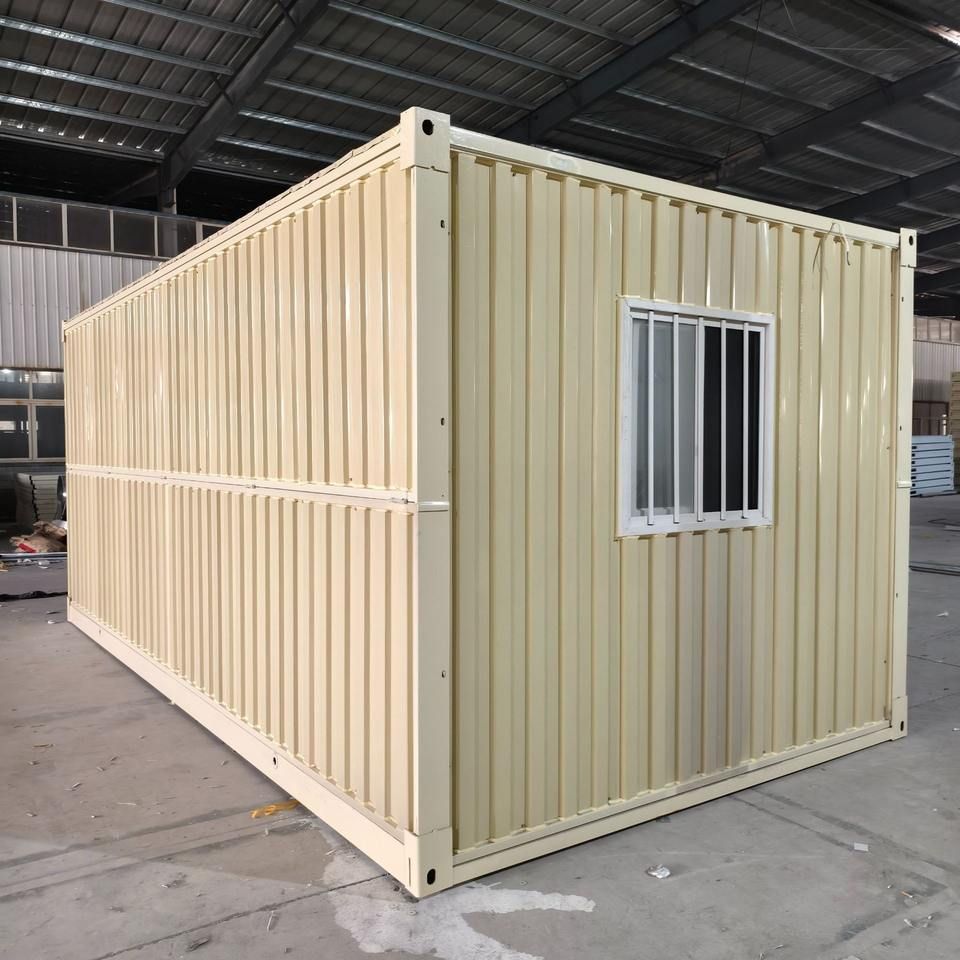
I. Composition and Structure
Portable toilets generally consist of several parts, including fecal wastewater storage tanks (or wastewater treatment units), flooring, sanitary fixtures, walls, handwashing facilities, water tanks, roofs, and mobility devices. The fecal wastewater storage tanks are used to collect waste, with some models equipped with treatment units for preliminary purification. Water tanks supply water to the flushing system, and in some designs, such as the example from Zhongshengsheng, each toilet stall is independently equipped with a water tank to ensure stable water supply. Mobility devices vary by type and may include lifting hooks, towing chassis, or powered drive modules, ensuring the facility can be quickly relocated or redeployed.
II. Classification Methods
- By structural form: Portable toilets are divided into single-unit and composite structures. Single-unit structures are standalone units suitable for limited spaces or scattered layouts, while composite structures consist of multiple units combined to allow flexible expansion of toilet stall quantities to meet large-scale construction site demands.
- By mobility method: They include lifting and handling types (relying on lifting equipment or manual handling) and powered towing types (equipped with engines or connected to vehicle traction). For example, a portable toilet customized by a Zhejiang client for urgent needs may adopt a lifting type to shorten installation time.
- By wastewater treatment method:
- Water-flush and waterless suction types: The former relies on water tank flushing, while the latter uses vacuum pumps to suction waste, suitable for scenarios with water sources or requiring odor reduction.
- Recirculating water-flush types: Equipped with filtration systems, they enable water reuse, reducing water consumption and suitable for water-scarce areas.
- Dry-pack types: These use biodegradable bags to collect waste without flushing, offering environmental friendliness and simple maintenance, but requiring regular bag replacement.
III. Practical Application Cases
A factory in Zhejiang customized a portable toilet based on gender ratios, with one stall for women and seven for men, demonstrating flexible configuration according to needs. The example of a three-stall unit on the second floor by Zhongshengsheng showcases the adaptability of portable toilets to complex terrains, with its independent water tank design solving high-rise water supply challenges. These cases indicate that portable toilets can meet diverse needs through modular design while balancing efficiency and cost.



