
Construction Site Environmental Protection Outdoor Mobile Toilet
The construction site environmental protection outdoor mobile toilet is a movable facility designed to meet the temporary and phased toilet needs of construction sites and other locations, featuring convenience, environmental protection, and customizability.
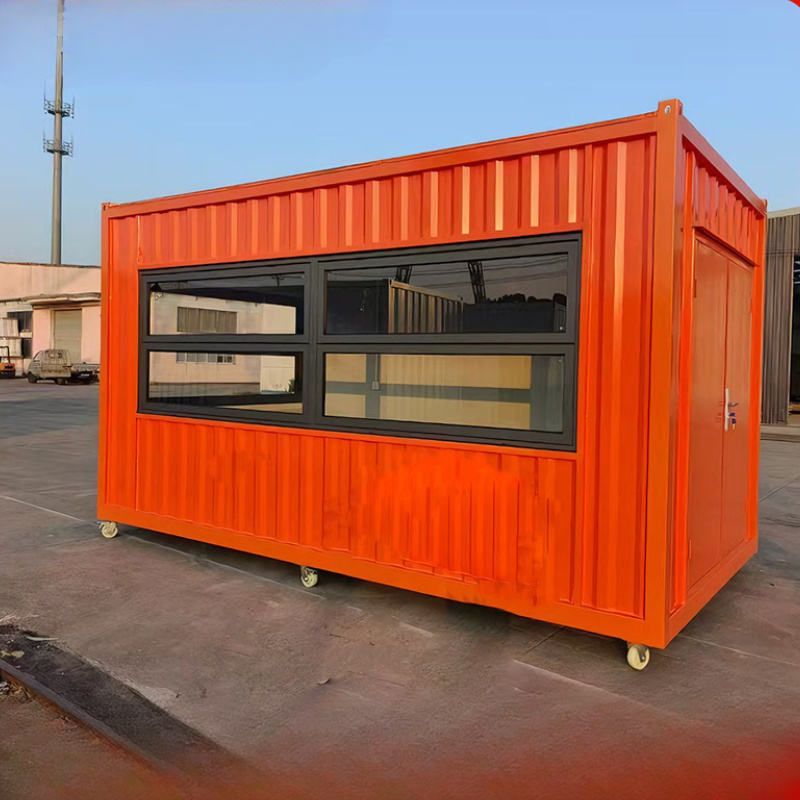
I. Structural Composition and Classification
The core structure of a mobile toilet includes a fecal sewage storage tank (or disposal unit), flooring, sanitary ware, walls, washing equipment, water tanks, roofs, and mobile devices. Based on structural form, it can be classified into single-unit structures (independent units) and composite structures (multi-unit combinations). According to mobility methods, there are lifting/handling types (requiring mechanical assistance) and powered/trailer types (with built-in power or towable). Regarding sewage treatment methods, it can be divided into flush types (requiring a water source), waterless suction types (vacuum sewage removal), recirculating flush types (sewage purification and reuse), and dry-pack types (fecal collection bag disposal).
II. Design Principles and Functional Features
- Mobility Convenience: Utilizing lightweight materials (such as metal carved panels and bamboo-wood fiber panels) and modular design, it allows for rapid assembly, disassembly, and transportation. For example, the 30-square-meter mobile toilet (10 meters long and 3 meters wide) from Dezhou Hongtu Metal Products Co., Ltd. features a ridge-shaped design with thermal-insulated metal carved panels on the exterior walls, facilitating easy lifting and movement.
- Environmental Ecology: Priority is given to waterless flush or recirculating flush technologies to reduce water consumption; dry-pack toilets achieve zero-pollution discharge through biodegradable fecal bags. Some models are equipped with solar panels for power supply, reducing energy consumption.
- Economic Durability: The walls are made of corrosion-resistant materials (such as titanium-magnesium alloy doors and anti-slip tiles), and internal accessories like exhaust fans and tissue dispensers are complete, with a service life of up to 5-10 years.
- Humanized Design: Customize the ratio of squatting positions based on usage scenarios. For example, a mobile toilet customized for factory workers is designed with 7 male squatting positions and 1 female squatting position according to the demand for more males than females, with a construction period of only 4 days.
III. Typical Application Scenarios
- Construction Sites: Solve toilet problems in densely populated areas for construction workers. For example, a 4+1 stepped mobile restroom (4 squatting positions + an open washroom) can accommodate 50 people simultaneously.
- Temporary Events: Suitable for short-term events like music festivals and exhibitions, allowing for rapid deployment without the need to connect to municipal sewage networks.
- Remote Areas: Dry-pack toilets do not require water or electricity support, making them suitable for field operations or disaster emergency scenarios.
IV. Customization Services
Mobile toilets support personalized design, including size, color, and functional modules. For example, the exterior walls can be selected from metal carved panels with different coatings, and internal equipment such as bathroom cabinets and air conditioners can be added to adapt to high-temperature or cold environments.



