
Construction Site Environmental Protection Mobile Toilet
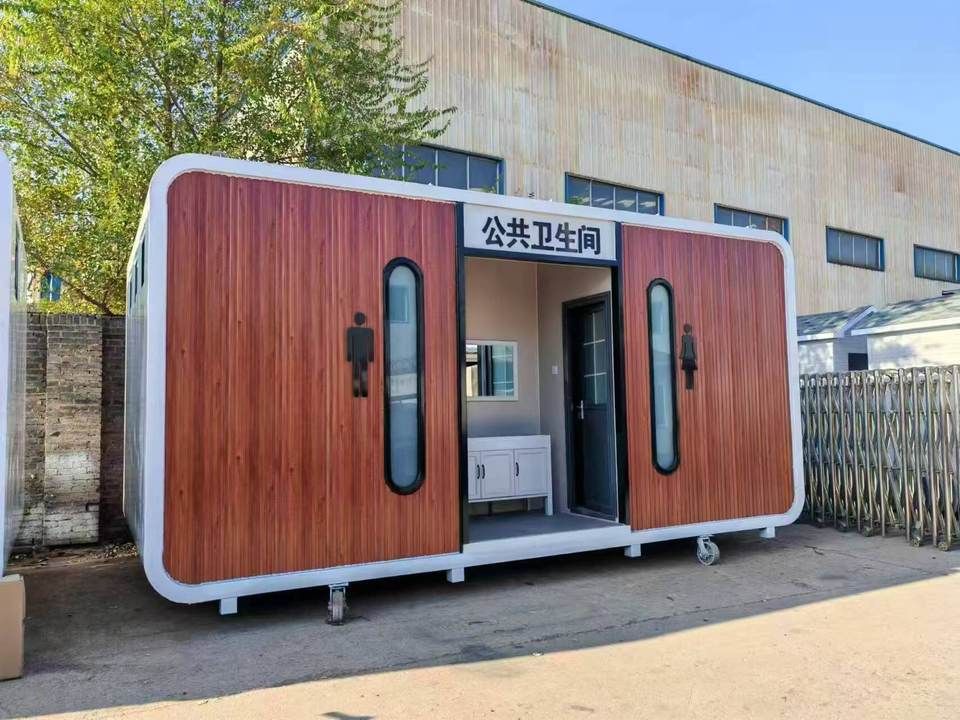
The construction site environmental protection mobile toilet is an eco-friendly and movable facility designed to meet the toilet needs of temporary or fixed locations such as construction sites. The following provides a detailed introduction from the aspects of types, structural composition, characteristics, and applicable scenarios:
I. Types
- By structural form: They are divided into single-structure mobile toilets and composite-structure mobile toilets. Single-structure toilets are usually independent units, suitable for scenarios with limited space or scattered layouts; composite-structure toilets are composed of multiple units and can meet the needs of large-scale use.
- By moving method: They include lifting and handling mobile toilets (relying on lifting equipment or manual handling) and powered trailer-mounted mobile toilets (equipped with power units for towing).
- By sewage treatment method:
- Water-flush and waterless suction types: Water-flush toilets use water from a tank for flushing, and the sewage is stored in the tank; waterless suction toilets use vacuum suction technology to collect feces, reducing water consumption.
- Recirculating water-flush type: It purifies sewage through biological or physical treatment technologies to achieve water resource recycling and reduce emissions.
- Dry-packing type: It uses biodegradable packaging bags to collect feces without water flushing, suitable for scenarios with water shortages or strict environmental protection requirements.
- Microbial degradation zero-emission type: It uses microorganisms to decompose feces, achieving pollution-free emissions, suitable for ecologically sensitive areas such as hydropower stations.
II. Structural Composition Mobile toilets usually include fecal sewage storage tanks (or disposal devices), floor slabs, sanitary ware (such as squat pans and sit pans), walls, washing equipment (sinks and faucets), water tanks, roofs, and moving devices. Some high-end models are also equipped with details such as exhaust fans, tissue boxes, and hooks to enhance the user experience. For example, the 4+1 step-type mobile toilet uses heat-insulating and flame-retardant metal carved panels for the exterior walls, bamboo-wood fiber panels for the interior walls, anti-slip tiles for the bottom, and installs a complete set of bathroom cabinets, balancing practicality and aesthetics.
III. Characteristics and Advantages
- Environmental protection: It reduces water resource consumption and pollution through water-saving designs or zero-emission technologies, meeting the requirements of green construction.
- Movability: It can be flexibly adjusted according to the progress of the construction site or the distribution of personnel, avoiding the demolition costs of fixed toilets.
- Customization: It supports exclusive customization of dimensions, functional modules (such as the number of squat positions and toilet layout), and materials to adapt to different scenarios.
- Durability: The exterior walls use materials such as metal carved panels or titanium-magnesium alloy doors, which have anti-corrosion, fire-resistant, and heat-insulating properties, extending the service life.
IV. Applicable Scenarios It is widely used in temporary or fixed locations such as construction sites, municipal engineering projects, field explorations, and large-scale events, especially suitable for areas with high pedestrian traffic, inconvenient water supply, or strict environmental protection requirements.



