
Mobile Toilets for Community Squares
Mobile toilets for community squares are facilities suitable for public places such as squares, which can be moved as a whole and provide toilet services to the public. They have the advantages of mobility, modularity, and ease of transportation.
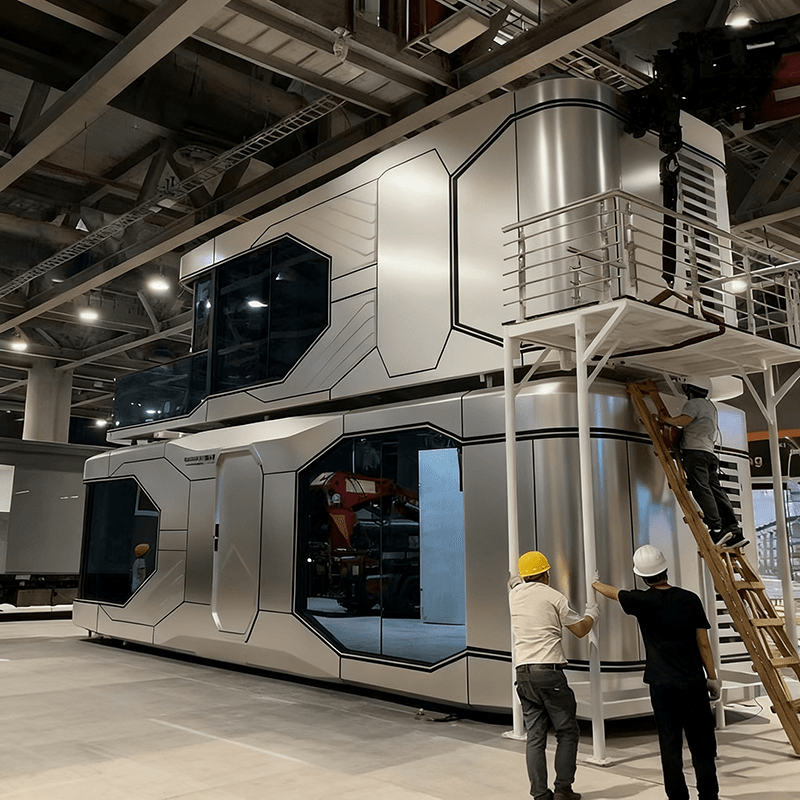
From the perspective of product types, mobile toilets for community squares are mainly divided into three categories: standalone, modular, and trailer-mounted. Standalone toilets usually have a single-room structure, suitable for scattered placement, and can meet the toilet needs of small groups of people. Modular toilets use modular assembly, allowing for multiple toilet stalls to be arranged side by side or in a multi-level layout, suitable for square events with high toilet stall requirements, such as large-scale performances and gatherings. Trailer-mounted toilets are mobile, facilitating quick transportation between different venues and flexible adjustment of positions according to changes in event locations.
In terms of technical principles, their structures often use galvanized steel or aluminum alloy frames, combined with anti-UV coating treatment, effectively resisting erosion from the external environment and extending service life. The walls are filled with thermal insulation materials to adapt to temperature changes in different seasons and ensure comfort inside the toilets. The floors adopt waterproof and anti-corrosion processes and are equipped with sewage discharge ports or fecal collection boxes to ensure hygiene and convenience during use. Some products also integrate air purification devices, sensor-based flushing systems, solar power modules, etc., enhancing the intelligence and environmental friendliness of the toilets.
When selecting a model, multiple aspects need to be considered. In terms of material durability, choosing rust-resistant and corrosion-resistant metal frames and weather-resistant exterior wall materials can reduce later maintenance costs. Regarding sewage discharge methods, common options include water-flushing, foam-sealing, and waterless packaging. Water-flushing requires connection to water sources and sewage pipes and is suitable for fixed venues, while foam-sealing and packaging methods are more suitable for temporary venues without water supply and drainage conditions. In terms of functional configurations, depending on the usage scenario, facilities such as sinks, mirrors, hooks, emergency lighting, and handrails for the disabled can be selected to enhance the user experience.
Mobile toilets are generally composed of fecal sewage storage tanks (or fecal sewage treatment devices), floor slabs, sanitary fixtures, walls, washing equipment, water tanks, roofs, and mobile devices. Construction does not require civil engineering; the entire finished product is installed, ready for use upon placement, and the entire process is like assembling building blocks, with columns erected and fixed through assembly in one step.



