
Volver al blog
Artículo
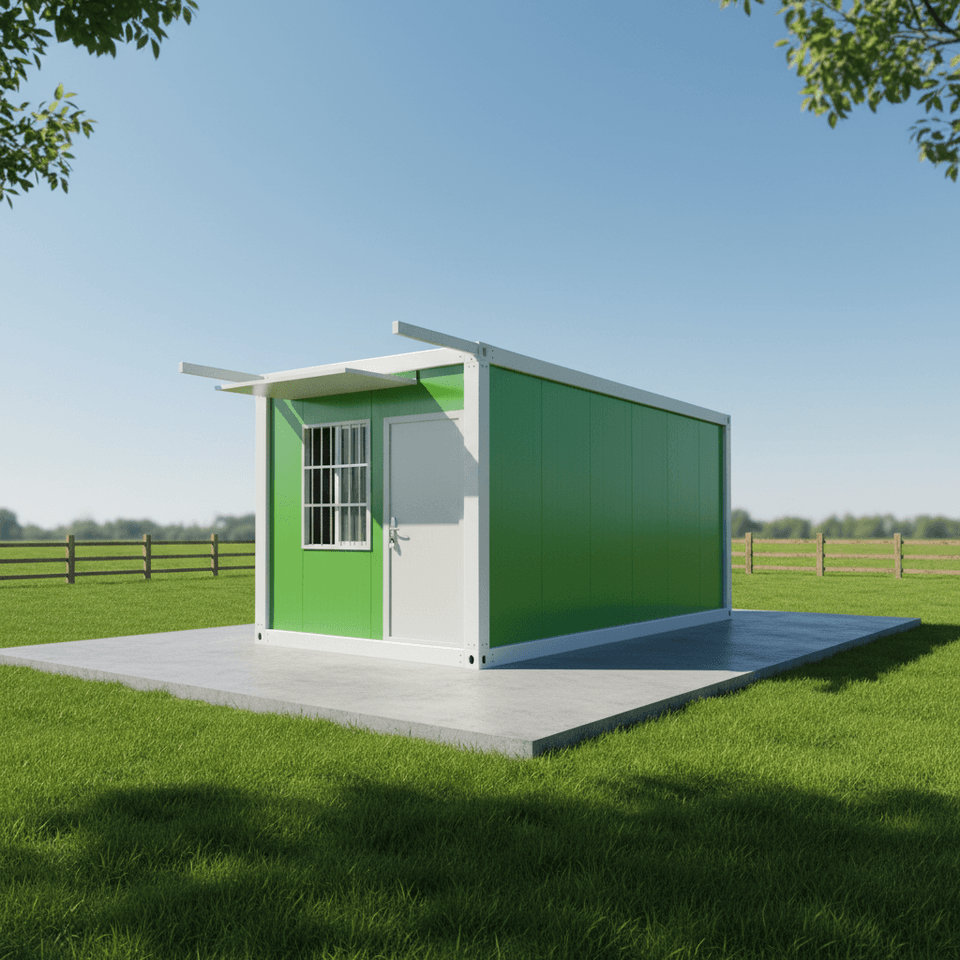
Commercial Container Modified House
Admin 15 de septiembre de 2026
Commercial container modified houses have become a flexible, cost-controllable, and green modular building form, widely used in various scenarios such as temporary offices, accommodations, and commercial exhibitions.
1. Structural Performance and Safety
- Wind and Earthquake Resistance: High-quality commercial container houses adopt a full steel structure frame. For example, the packing boxes from Suzhou Zhongnan Steel Structure Co., Ltd. have been tested to withstand wind speeds of up to 12 and seismic intensities of 8, with a frame deformation rate of only 0.18%, well below the industry's acceptable threshold. In contrast, non-standard off-brand products typically have frame deformation rates exceeding 1.2%, posing safety risks.
- Performance under Extreme Conditions: Compliant container houses perform excellently under simulated extreme conditions such as coastal typhoons of 12 and high-intensity earthquakes of 8. Non-standard products, however, may suffer from wall cracking, frame tilting, and other issues, leading to high repair costs.
2. Installation Efficiency and Layout Flexibility
- Rapid Installation: The quick-assembly containers from Suzhou Zhongnan can be installed in just 2 hours per unit, supporting on-demand splicing and combination, suitable for scenarios requiring rapid delivery, such as engineering camps. In contrast, non-standard products may take over 8 hours to install, causing project delays.
- Layout Adjustment Capability: Compliant container houses support flexible adjustment of spatial forms. For example, the packing boxes from Suzhou Zhongnan come pre-installed with interiors and facilities before leaving the factory, allowing for immediate use upon on-site hoisting, suitable for long-term on-site projects. Non-standard products, however, have fixed layouts and cannot be adjusted.
3. Cost-Effectiveness and Sustainability
- Long-Term Use Costs: Compliant container houses can be disassembled and reassembled more than 15 times, with no significant decrease in structural stability after each disassembly. The cost per use is only one-third of that of a new product. In contrast, non-standard products have poor reusability, limited disassembly and assembly times, and high costs.
- Environmental Value: The materials of container houses can be recycled throughout their lifecycle, with disassembly and assembly loss rates controlled below 5%, significantly reducing construction waste. Additionally, innovative designs such as bridge-cut-off lining structures improve thermal insulation performance and reduce energy consumption dependence.
Relacionados



