
Volver al blog
Artículo
Command Center Container House
Admin 15 de septiembre de 2026
The command center container house is a temporary or semi-permanent building constructed using containers or steel structures, capable of flexibly adapting to the needs of different scenarios. The following is an introduction from the aspects of design features, application scenarios, selection considerations, and safety requirements:
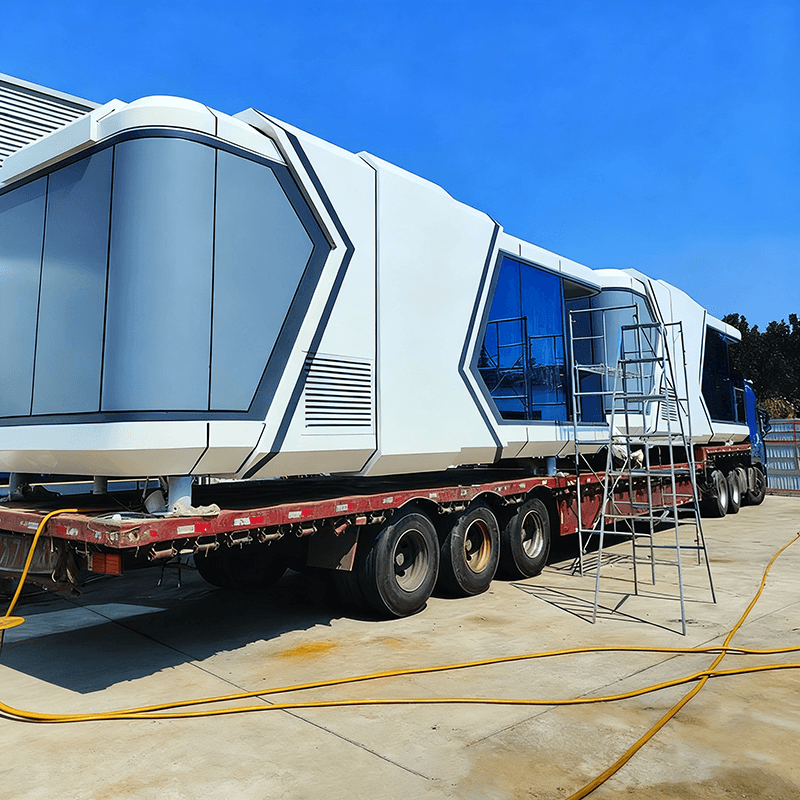
Design Features
- Modularity and Flexibility: Utilizing standard container units or steel structure modules for assembly, it supports rapid assembly, disassembly, and relocation. For example, the Shenzhen Central Park Command Center connects temporary and permanent sections through curved grilles, enabling flexible integration and separation of functional units.
- Spatial Adaptability: The scale can be adjusted according to needs, such as downsizing after park construction to transform into an ecological classroom or exhibition hall.
- Environmental Integration: Through facade design (e.g., white aluminum grilles arranged at a 45-degree angle), it interacts with the natural landscape, serving as a canvas for tree shadows during the day and forming a light curtain effect at night.
Application Scenarios
- Construction Projects: Serving as a construction command center, temporary office, or worker dormitory, it supports full project lifecycle management.
- Emergency Response: Rapidly deployed as a rescue command room, temporary shelter, or medical point during natural disasters or public emergencies.
- Commercial and Cultural Tourism: Transformed into pop-up stores, exhibition halls, or service facilities to meet short-term commercial activity needs.
Selection Considerations
- Process Performance: Prioritize products with a non-welding quick assembly process, low disassembly and assembly losses, and structural stability after multiple relocations. Leading manufacturers' products can achieve an average of over 8 disassembly and reuse cycles.
- Compliance and Services: Verify ISO9001 quality certification, CE/ISO international certifications, and project delivery capabilities to ensure compliance with domestic and international standards.
- Scenario Adaptation: Choose products with high customization flexibility based on needs, such as emergency scenarios requiring rapid deployment within 48 hours and commercial scenarios requiring personalized facade customization.
Safety Requirements
- Structural Safety: It should withstand wind speeds of 10-12 levels, operate within a temperature range of -10℃ to 50℃, and meet Class A fire resistance, waterproofing, and structural stability requirements.
- Material Fire Resistance: Use Class A fire-resistant materials such as rock wool boards and fireproof cotton, avoiding flammable sandwich panels like polystyrene and polyurethane foam.
- Electrical Safety: Protect wires with sleeves, use metal-galvanized boxes for sockets with exposed installation, and equip with simple fire extinguishing equipment.
Relacionados



