
Combined Container House
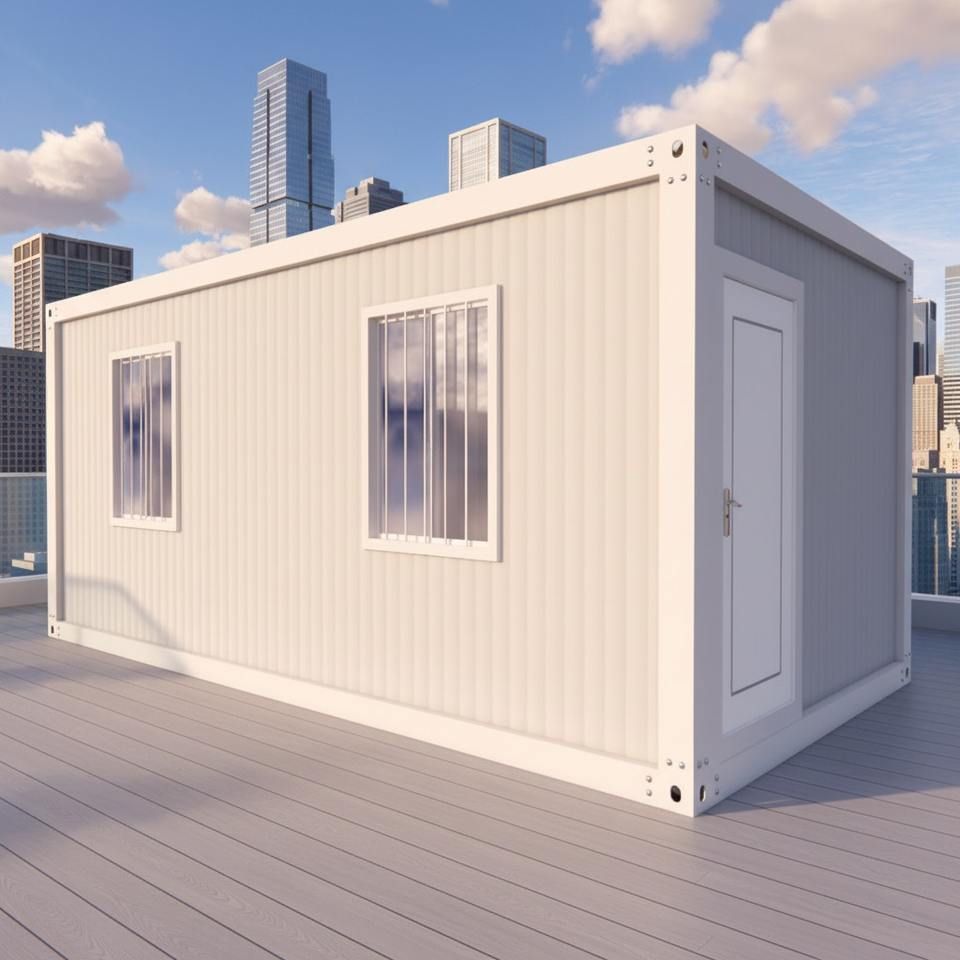
A combined container house is a building space with specific functions formed by using multiple container modules and through scientific design and assembly. The following is an introduction from three dimensions: design, performance, and application scenarios.
Design Dimension
Combined container houses take standardized containers as the basic units and achieve flexible combination through modular design. For example, a container mobile house company in Ejin Horo Banner, Ordos City, uses high-strength weather-resistant steel (such as Q355B grade) as the main frame of the container body. A self-balancing system is formed through the rigid connection of corner fittings and side beams, reducing the need for additional reinforcement parts and lowering material usage by about 15%. Some designs also introduce a dual-fixing mode of "wedge-shaped lock + high-strength bolt" to improve seismic performance. In a shaking table test simulating a rare earthquake of magnitude 8, the displacement is controlled within 3 millimeters. In addition, folding design can further compress the transportation volume. For example, the folded container of Suzhou Zhongnan has a volume that is only 1/5 of its expanded state after folding, and a single truck can carry 20 sets, significantly reducing transportation costs.
Performance Dimension
Combined container houses perform outstandingly in terms of structural stability, thermal performance, and durability. Structurally, the all-steel frame can achieve a wind resistance rating of 12 and an earthquake resistance rating of 8, with a frame deformation rate as low as 0.18%, far below the industry's qualified threshold of 0.3%. In terms of thermal performance, a three-layer composite structure of "rock wool - air layer - aluminum-zinc coated steel plate" is adopted, with a heat transfer coefficient (U-value) lower than 0.5 W/(m²·K), effectively reducing the risk of condensation and extending the service life of the steel structure. In terms of durability, the coating system uses a combination of "epoxy zinc-rich primer + polyurethane topcoat". It has withstood 1000 hours in a salt spray test without showing red rust, equivalent to a 15-year protection cycle in coastal or industrial pollution environments, supporting a 25-year service life of the main structure of the container body.
Application Scenario Dimension
Combined container houses have been widely used in engineering camps, commercial pop-up stores, emergency support, and youth entrepreneurship spaces. For example, the Suzhou Zhongnan team completed the delivery of 1000 accommodation modules and supporting facilities within 3 months through the "factory prefabrication + on-site quick assembly" mode in the Qatar World Cup Fan Village project, shortening the average industry construction period by 40%. In youth entrepreneurship spaces, containers break the monotonous box-like image through stacking and staggered-layer designs, forming a multi-level three-dimensional space. At the same time, they are combined with children's exhibition areas and small performance halls, connecting with urban public cultural life. In addition, in emergency support scenarios, folded containers have become the preferred solution for rapid transportation and short-term turnover due to their portability and low cost.



