
CIMC Container Box House
A container box house is a building form that uses containers as basic units and is constructed through modular combination. It features rapid construction, controllable costs, and mobility for repeated use, making it widely applicable in areas such as temporary housing, construction site offices, emergency shelters, and commercial exhibition stands.
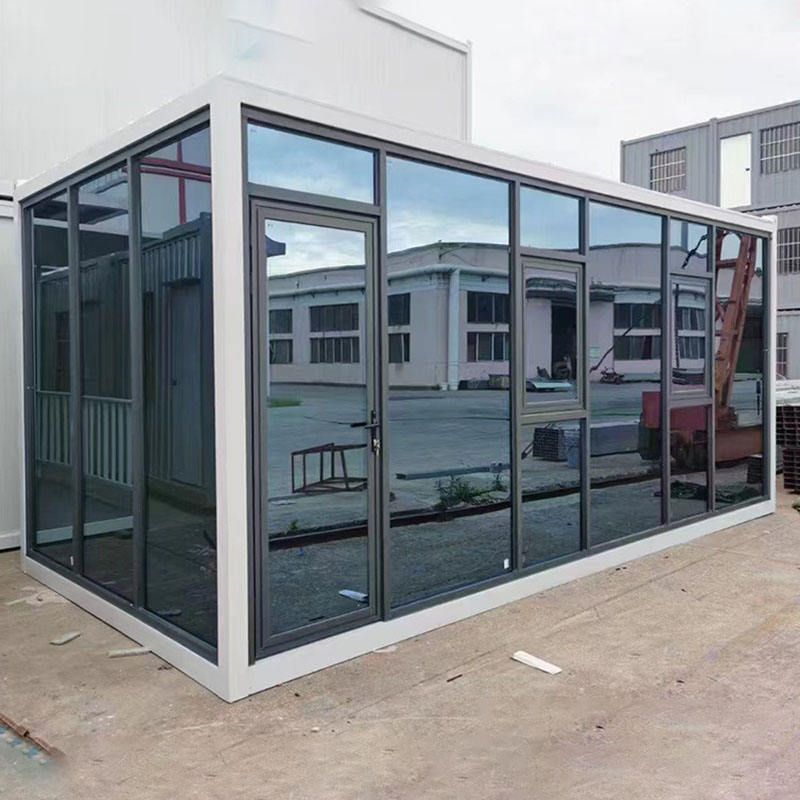
Structure and Materials
The container box house adopts a steel frame structure, with corrosion-resistant steel plates and eco-friendly panels as its core materials. Combined with shipbuilding anti-corrosion technology, it ensures a service life of over 20 years. Its box structure is optimized through professional software design, assembled by reasonably matching and welding steel plates of different specifications with profiles, and its surface can be painted with logos according to customer needs. This structure not only guarantees the stability and safety of the house but also possesses characteristics such as wind resistance, earthquake resistance, corrosion resistance, and acid resistance, without rusting or cracking.
Performance Characteristics
- Mobility and Reusability: The container box house can be moved and reused, supporting multiple disassemblies and assemblies. The structural stability remains largely unchanged after each disassembly and assembly, and the cost per use is only one-third of that of a new product.
- Rapid Assembly: The manufacturing period is short, and no foundation is required. It can be put into use immediately after on-site hoisting, significantly shortening the preparation time for the project.
- Sound and Heat Insulation: It adopts an air-break thermal design, providing excellent sound and heat insulation, and offering a comfortable living and working environment.
- Aesthetics: It can be designed in various shapes, with a wide range of exterior wall colors and a bright appearance, meeting the aesthetic needs of different scenarios.
Application Scenarios
The application scenarios of container box houses are extensive, including engineering camps, commercial temporary spaces, and emergency support. In engineering camps, they exhibit excellent wind and earthquake resistance, capable of coping with extreme weather conditions. In commercial temporary spaces, they support on-demand splicing and combination to meet customized needs. In emergency support scenarios, their portability and rapid deployment capabilities are outstanding, facilitating quick and large-scale deployment.
Industry Trends
With the expansion of the modular building market, container box houses are evolving from standardized temporary buildings to customized solutions. User expectations for products are also rising, with a greater emphasis on performance parameters, scenario adaptability, qualification certifications, and full lifecycle costs.



