
China Prefabricated Modular Housing Exhibition
The highlights of China's prefabricated modular housing at the 2026 China International Fair for Trade in Services mainly include two major directions: the E-MIC system and the multi-spectrum products of the Beijing Residential Industrialization Group.
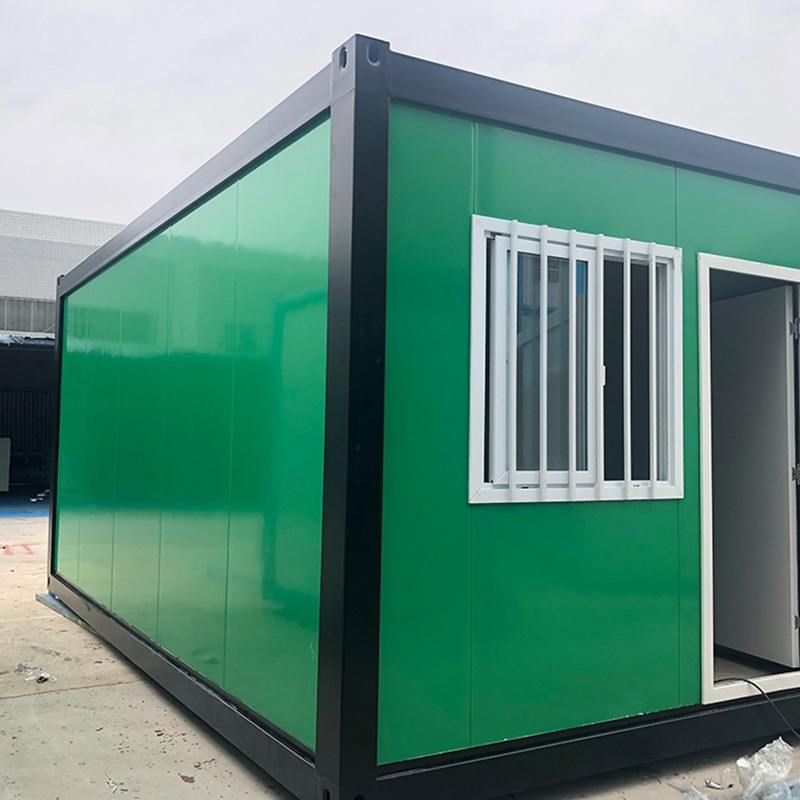
The E-MIC prefabricated concrete box housing system focuses on design innovation, breaking through the traditional limitation of 'one module, one room' by dividing basic units into three types: prefabricated concrete modules, prefabricated beams, and prefabricated slabs. This modular reconstruction reduces material usage by 30%-40%, significantly increases the usable floor area ratio, and shortens the construction period, while offering more flexible spatial layouts suitable for diverse scenarios such as urban renewal, residential, and office spaces. Its digital design capabilities are particularly outstanding, enabling the completion of component splitting, pipeline layout, and housing unit combination simulations via computer, shifting traditional on-site operations to the factory for standardized production and integrated assembly, greatly enhancing construction efficiency. In response to transportation constraints, the system innovatively adopts a living room module splitting and transportation solution, breaking through width limitations to meet the demand for large-width spaces in the new housing market, balancing safety and adaptability.
The multi-spectrum modular buildings of the Beijing Residential Industrialization Group focus on scenario-based applications and technological system innovation. Targeting three major areas—overseas markets, urban renewal, and cultural and tourism consumption—they have launched differentiated products such as 'Yunqi Rural Villas' (industrialized rural housing for rural revitalization) and 'Xingji Small Stays' (modular movable travel accommodations), forming a product matrix that covers diverse needs. Technologically, they have established a dual-system parallel model: the CLIM lightweight small module system, centered around eight standardized modules, integrates structural, insulation, electromechanical, and decoration functions, suitable for new construction, original demolition and reconstruction, and single-story courtyard renovations; the large module combination system, through factory-prefabricated large units, can increase construction efficiency by more than 50% in new construction scenarios, reducing overall costs to below 6,000 yuan per square meter, significantly lowering the full lifecycle cost.
Together, these two systems demonstrate breakthroughs in China's prefabricated modular housing in terms of design flexibility, production standardization, cost controllability, and scenario adaptability, providing replicable technological paths and market solutions for the transformation of the construction industry towards industrialization.



