
China Mobile Prefabricated Housing Assembly
China's mobile prefabricated housing assembly mainly refers to modular construction, which involves breaking down buildings into independent modules, prefabricating them in factories, and then transporting them to the site for assembly.
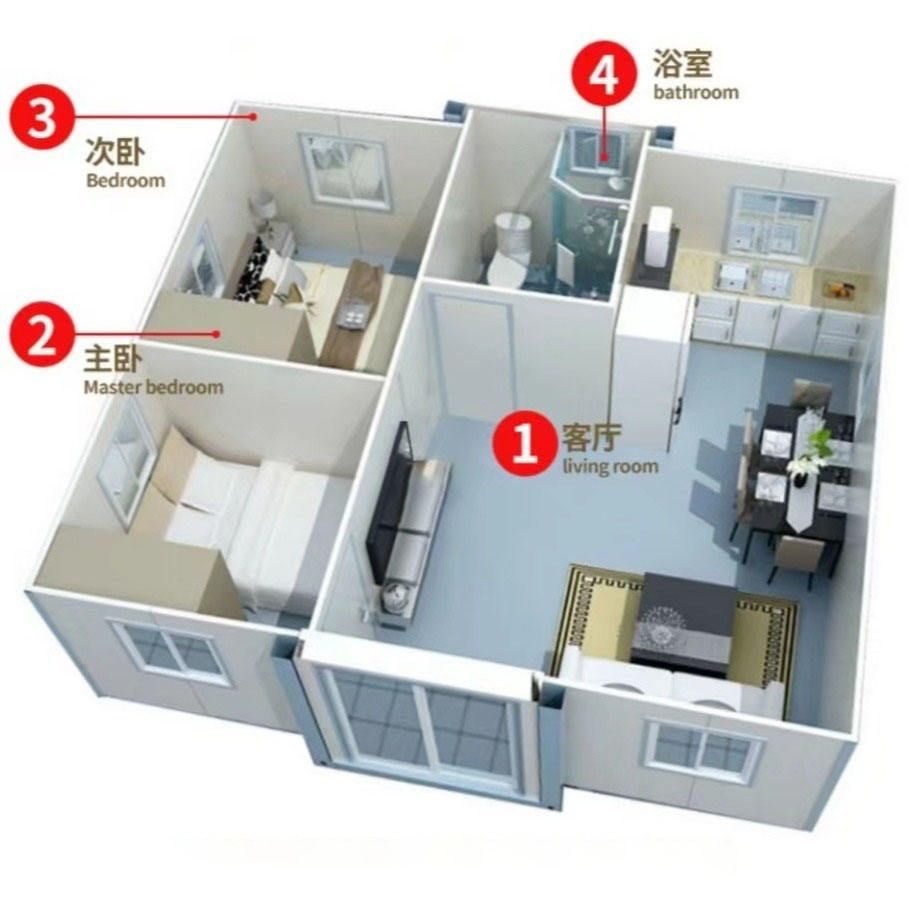
I. Characteristics of the Construction Model
Ceilings, walls, waterproof layers in bathrooms, and water and electricity pipelines are all prefabricated on factory assembly lines, achieving standardized production through automated vertical warehouses and intelligent production lines. For example, the CSCEC Hailong Intelligent Construction Industrial Park in Shenzhen, Guangdong, adopts a vertical factory model, delivering 20,000 to 30,000 modules annually. On-site construction only requires assembly, eliminating the need for traditional scaffolding and dust-generating operations.
II. Core Advantages
- Short Construction Period: Parallel operations in factories and intelligent production reduce the construction cycle by more than 60%. The completion time for some projects has been reduced from 2.5-3 years to 1 year.
- Controllable Quality: Design precision is measured in millimeters, with each steel bar precisely positioned. Error control is far superior to traditional methods.
- Energy Efficiency and Environmental Protection: On-site noise, dust, and construction waste are reduced by over 80%, significantly lowering disruptive factors such as traffic congestion.
- Easy Maintenance: Individual modules can be independently disassembled for inspection and repair, minimizing disturbance to surrounding residents during construction and reducing long-term maintenance costs.
III. Industrial Foundation and Support
This model requires the collaborative support of a technical system, production system, and industrial cluster, covering the entire chain of design, manufacturing, transportation, and installation. For example, Shenzhen Customs data shows that in the first four months of 2024, Chinese enterprises exported 1.68 billion yuan worth of prefabricated houses through Shenzhen ports, a year-on-year increase of 19.6%, covering more than 150 countries and regions, demonstrating the export competitiveness of the industrial cluster.
IV. Application Scenarios and Market Prospects
The technology has been implemented in various fields, including affordable housing, rural residences, public facilities, industrial plants, hotels, senior apartments, dormitories, office buildings, and global data centers. From 2015 to 2025, China's prefabricated building exports nearly tripled, with a 45% growth rate in the first quarter of 2026. Leveraging cost and efficiency advantages, domestically produced modular buildings have gained recognition in the global market. Market research institutions predict that the global modular building market will exceed $142.8 billion by 2030, with Chinese enterprises playing a key role in technology export and standard-setting.



