
Characteristic Steel Container House
The characteristic steel container house is a new type of temporary building that uses high-strength steel as its framework, combines modular design with eco-friendly materials, and features wind and earthquake resistance, rapid assembly and disassembly, and recyclability. Its characteristics can be analyzed from the following aspects:
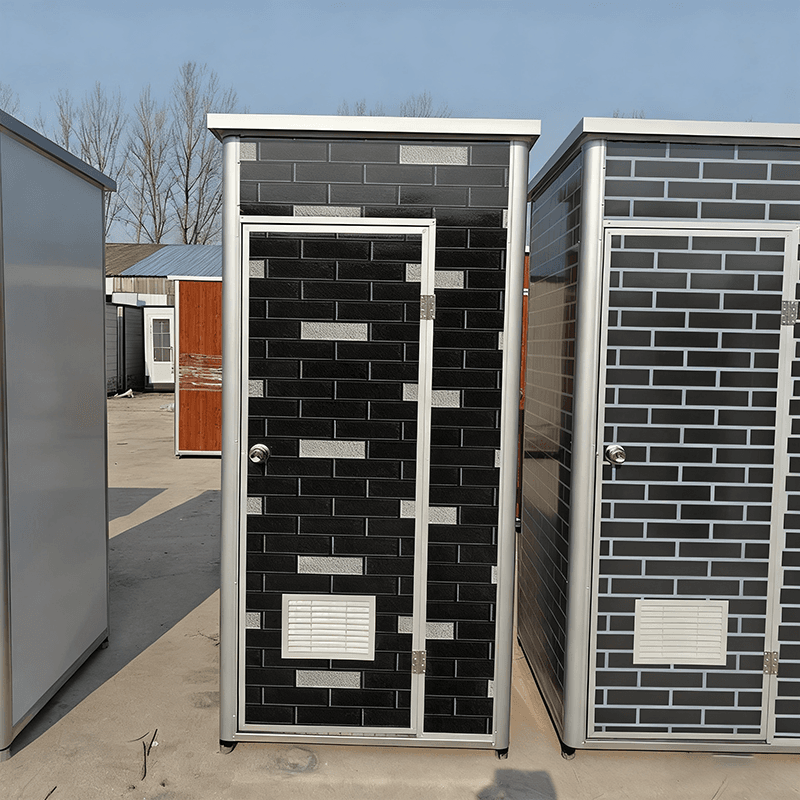
1. Structural Innovation: High-Strength Steel and Self-Balancing System
The characteristic steel container house adopts Q355B high-strength weathering steel as its main framework, with a yield strength approximately 30% higher than that of ordinary carbon steel. Even when the length-to-width ratio of a single container approaches 2:1, it can still form a self-balancing system through rigid connections between corner fittings and side beams. For example, the longitudinal corrugated plates on the roof of the container disperse stress through their corrugated geometry, avoiding local buckling and reducing material usage by about 15%. Additionally, for areas with a seismic design intensity of 7 degrees or higher, the container connections adopt a dual-fixing mode of “wedge lock + high-strength bolts”. The wedge lock is designed with a 15-degree inclined surface, which generates a self-locking effect under horizontal shear forces. During simulated 8-degree rare earthquakes, the displacement is controlled within 3 millimeters, outperforming conventional welded joints by about 40% in terms of deformation amplitude.
2. Environmental Protection and Thermal Performance: Composite Construction and Low-Carbon Design
The envelope structure employs a three-layer composite construction of “rock wool - air layer - aluminized zinc plate”. The rock wool layer, with a thickness of 75-100 millimeters, has a thermal conductivity below 0.040 W/(m·K). The 5-millimeter air layer in the middle suppresses convective heat transfer through a closed cavity, resulting in an overall heat transfer coefficient (U-value) below 0.5 W/(m²·K). This design reduces condensation risks in winter low-temperature areas such as Inner Mongolia, extending the service life of the steel structure. Meanwhile, the steel can be 100% recycled, with a steel consumption of about 1.2 tons per container. Its carbon emissions are only 43% of those of concrete temporary buildings, and the disassembly and assembly loss rate is controlled within 5%, meeting green building standards.
3. Functional Adaptability: Multi-Scenario Applications and Rapid Deployment
The characteristic steel container house supports customization on demand and can be拼接 (spliced) and combined into double-occupancy dormitories, offices, or meeting spaces, with internal partitions that can be quickly adjusted. For example, a product from Suzhou Zhongnan Steel Structure Co., Ltd. requires only 4 hours to install a single 30㎡ panel house, without on-site welding, and the construction period for 10 standard camp houses does not exceed 3 days. Additionally, the folded container house, when folded, has a volume only 1/5 of its expanded state, increasing single-trip transportation capacity by 60% and reducing transportation costs per kilometer by 25%. It is suitable for scenarios such as engineering camps, emergency rescue, and commercial pop-ups.



