
Changchun Container House Insulation
Insulation for container houses in Changchun can be achieved through methods such as selecting high-quality insulation panels, strengthening structural design, and adopting specialized processes for extreme cold conditions. Details are as follows:
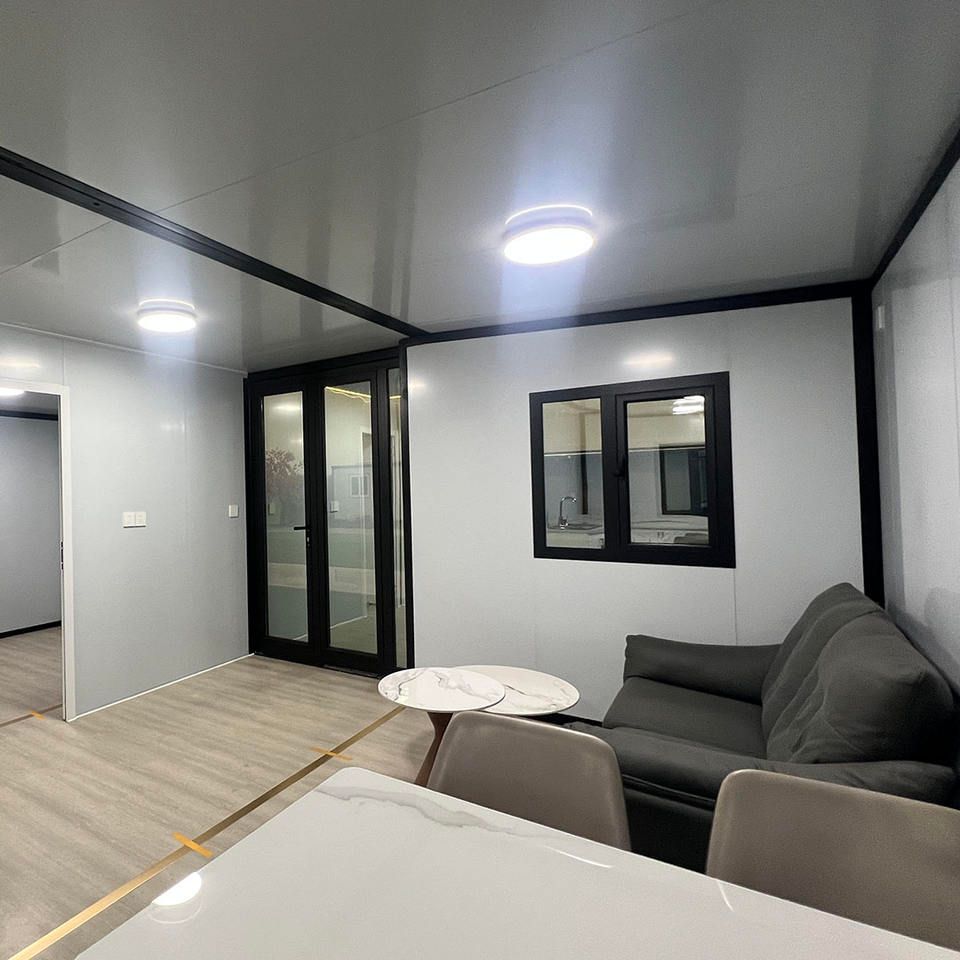
Selecting high-quality insulation panels: Some container houses use polyurethane composite panels as wall panels. These panels have excellent insulation properties, effectively blocking cold bridges and achieving superior thermal insulation. Additionally, products offer 50mm/75mm glass wool and polyurethane composite panels as optional materials. Glass wool also has good thermal insulation properties, allowing for the selection of appropriate panel thickness and type based on actual needs and usage environments to meet different insulation requirements.
Strengthening structural design: Some container houses focus on enhancing insulation through special structural designs that limit cold bridges and reduce heat transfer, thereby improving the insulation performance of the house. For example, reasonable designs for walls, roofs, and floors can effectively prevent indoor heat loss and the intrusion of outdoor cold air, maintaining a stable indoor temperature.
Adopting specialized processes for extreme cold conditions: In the severely cold regions of Northeast China, some companies have developed specialized construction techniques suitable for extreme cold conditions. For instance, using thickened hot-dip galvanized anti-corrosion processes combined with high-quality steel can effectively resist low-temperature brittleness and corrosion issues, ensuring the stability and durability of the building structure in low-temperature environments. This indirectly enhances insulation effects, reduces heat loss due to structural damage, ensures the building can serve safely for extended periods in cold climates, and lowers long-term maintenance costs.
Sealing treatment: Ensure good sealing of doors, windows, and other parts of the container house to prevent cold air infiltration. Select door and window materials with good sealing properties and perform proper sealing during installation, such as using sealing strips, to reduce heat exchange and improve insulation effects.



