
Cement Prefabricated House Mold
The cement prefabricated house mold is a molding equipment used for factory-prefabricated integral concrete houses. It has evolved from traditional large steel building formwork and forms a casting cavity through mold opening and closing, combined with steam curing process to accelerate concrete hardening.
Core Components and Structural Features
The cement house mold is mainly composed of a mold liner, exterior wall mold, base, and slide rails, with a self-weight exceeding 20 tons. Its structural design has undergone four generations of technological upgrades:
- First Generation: Simple structure with single function, only meeting basic molding needs;
- Second Generation: Enables vertical wall molding, improving the three-dimensional structural stability of components;
- Third Generation: Supports multi-size adjustment to accommodate different specifications of house prefabrication needs;
- Fourth Generation: Adopts a fully automatic hydraulic system with integrated electric vibration function, further enhancing production efficiency and concrete compactness.
Process Flow and Performance Parameters
The mold forms a closed casting cavity through mold opening and closing. After concrete is poured, it is accelerated to harden through steam curing process, shortening the traditional curing cycle. Its service life is approximately 5-8 years, depending on usage frequency and maintenance conditions. The wall thickness of prefabricated components is typically 14-17 centimeters, and the slab thickness is 10-13 centimeters, meeting the load-bearing and insulation requirements of different construction scenarios.
Application Scenarios and Advantages
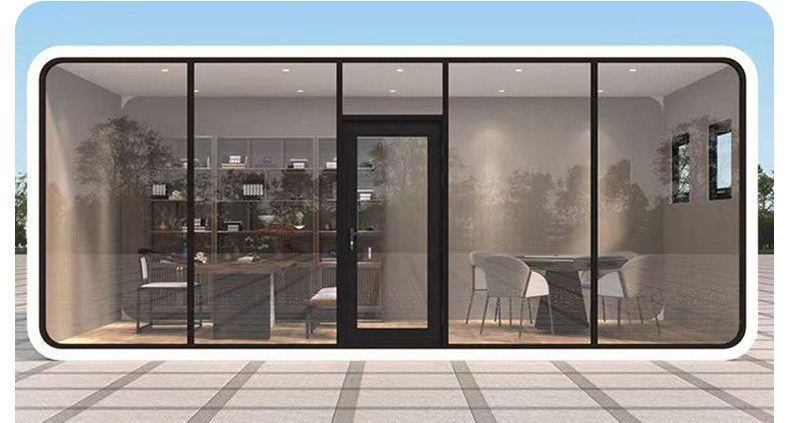
The finished products of the cement house mold can be directly hoisted and assembled, widely used in scenarios such as residential houses, construction site dormitories, warehouses, and guardhouses. Its core advantages lie in:
- Centralized Prefabrication: Completing component manufacturing through factory production reduces on-site construction links and significantly shortens the overall project duration;
- Quality Control: Standardized molds ensure dimensional accuracy of components and uniformity of concrete, reducing the risk of quality fluctuations;
- Flexible Adaptation: Supporting multi-size adjustment functions to meet the production needs of different-scale house factories and improve equipment utilization.
Technological Iteration Directions
Current mold technology has evolved towards automation and integration, with the hydraulic system and electric vibration function of the fourth-generation products significantly enhancing production efficiency. In the future, it may further integrate intelligent technologies, such as real-time monitoring of concrete hardening status or automatic adjustment of curing parameters, to optimize the process flow and extend the mold service life.



