
Volver al blog
Artículo
Evaluation of Cement Prefabricated Houses
Admin 18 de septiembre de 2026
Cement prefabricated houses offer advantages such as structural safety, efficient construction, cost-effectiveness, and environmental friendliness, but they also have drawbacks like quality risks, sound insulation, and waterproofing issues. They are suitable for users with limited budgets who seek rapid construction and have low requirements for floor height.
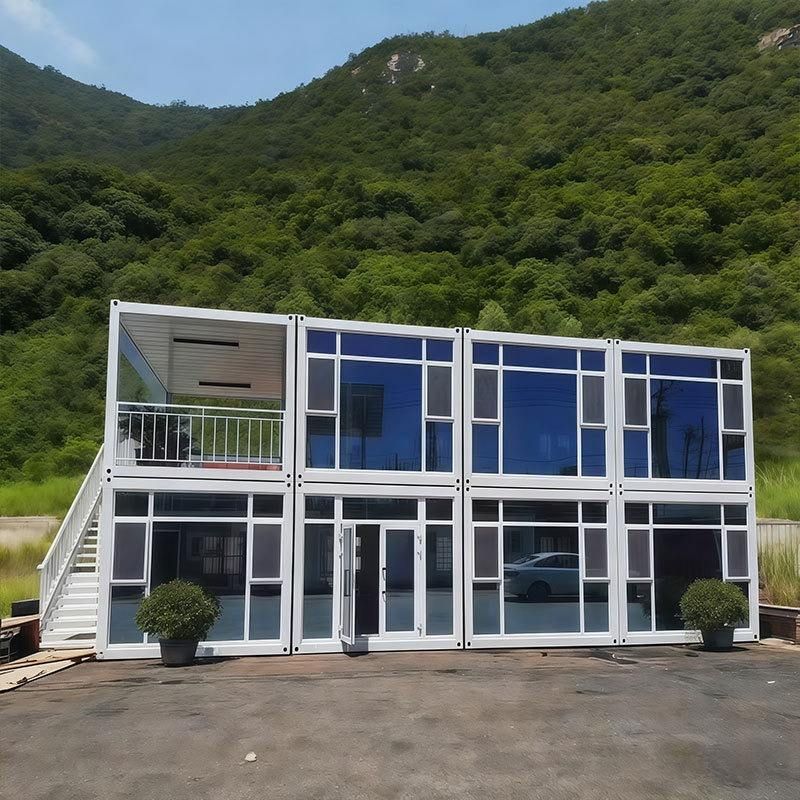
Advantages:
- Structural Safety and Reliability: These houses use reinforced concrete prefabricated modules, such as the "full-frame shear wall" design. National standard threaded steel bars form the skeleton, and C35 or higher-grade concrete is poured as a whole to create a sturdy structural system. They can withstand magnitude 8 earthquakes (with a designed seismic fortification intensity of 7 degrees), and under a magnitude 12 typhoon, the connections between modules remain tight. The fire resistance limit of the concrete exceeds 3 hours, making them significantly safer than traditional brick-and-mortar structures.
- Extremely High Construction Efficiency: Standardized factory production allows a single module (30㎡) to be prefabricated in just 7 days. Installing a 100㎡ house (composed of 3 modules) on-site takes only 1 day, reducing the construction period by 90% compared to traditional methods. The modules come with pre-installed water and electricity pipelines, enabling immediate use and greatly reducing on-site work.
- Outstanding Cost-Effectiveness and Environmental Friendliness: The main structure is about 30% cheaper than a brick house, saving ordinary families 20,000 to 50,000 yuan. Maintenance costs are 40% lower than those of traditional houses. Up to 90% of construction waste can be recycled, and carbon emissions are halved. Some projects have even received international environmental certifications. For example, a 120㎡ self-built rural house made of prefabricated cement costs 120,000 to 150,000 yuan, while a traditional brick-and-mortar structure costs 180,000 to 220,000 yuan, with the construction period shortened from 120 days to just 3 days.
- Flexibility and Adaptability: These houses support customization of the floor plan according to needs, with designs adjustable and directly hoisted and assembled after factory prefabrication. Targeted designs can be made for different regional climates and geographical conditions, such as thickening the insulation layer in northern Shaanxi and raising the foundation in central Shaanxi to cope with groundwater level changes.
Disadvantages:
- Quality Risks: If construction is not standardized, there is a 7% chance of foundation settlement or wall cracks within 5 years, with problems more likely to occur in low-temperature construction environments. Some cases show that maintenance costs after 5 years may account for a quarter of the original construction cost.
- Sound Insulation and Waterproofing Issues: The sound insulation effect of prefabricated panels is poor, and the water leakage rate at joints is nearly twice that of traditional buildings, requiring regular waterproofing treatments. For example, a user in Xingping City, Xianyang reported wall moisture and mold, as well as peeling paint on bedroom walls during the rainy season.
- Cost Fluctuations: After cement price increases, prefabricated houses are only 5% cheaper than traditional buildings. If transported to remote areas, freight costs may account for 5% of the total cost, weakening their economic advantage.
- Design Limitations: Currently, they are only suitable for buildings up to two stories high. The exterior surface is prone to color differences, with 15%-20% color variation possible after 5 years, requiring frequent maintenance.
Relacionados



