
Buji Smart Mobile Toilet
The Buji Smart Mobile Toilet is the first intelligent and eco-friendly mobile toilet installed at Shenzhen East Railway Station, featuring multiple innovative designs and practical functions.
I. Basic Structure and Functional Zoning
The toilet consists of four independent cubicles, including three unisex cubicles (two seated toilets and one squat toilet) and one母婴室 (nursing room). Each cubicle covers an area of approximately 1.5 square meters. Despite its compact size, it is fully equipped with basic facilities such as toilets, sinks, hand dryers, and air conditioners, along with user-friendly features like storage shelves, coat hooks, emergency call buttons, and mirrors to meet the diverse needs of different users. The inclusion of a nursing room reflects care for special groups and enhances the inclusivity of public facilities.
II. Intelligent Management and User Experience
The toilet features automatic door opening and closing, with voice prompts and a time progress bar limiting toilet usage to no more than 15 minutes per person, effectively preventing long-term occupation and improving usage efficiency. This design is particularly suitable for high-traffic public places such as bus stops and subway stations, helping to alleviate queue pressure during peak hours. Additionally, the intelligent system can monitor the status of each cubicle in real-time, facilitating timely cleaning and maintenance by staff to ensure smooth operation of the facilities.
III. Eco-Friendly Technologies and Resource Recycling
Its core technologies include a waterless sewage system, a graywater recycling system (with a water-saving rate exceeding 70%), the conversion of feces into organic fertilizer through dehydration, and a self-developed deodorization device. The waterless sewage system eliminates the need for municipal sewage networks, making it suitable for scenarios lacking infrastructure, such as municipal parks. The graywater recycling system filters and purifies wastewater for reuse in toilet flushing, significantly reducing water consumption. Feces, after dehydration, can be transformed into organic fertilizer, achieving resource utilization. The deodorization device eliminates odors through physical or chemical means, keeping the toilet air fresh.
IV. Application Scenarios and Installation Efficiency
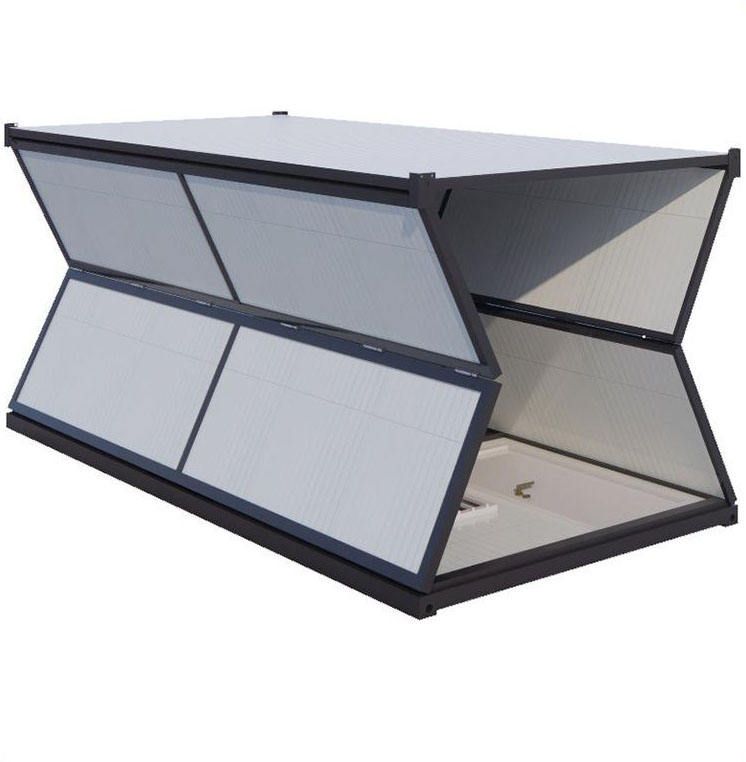
The toilet is suitable for both indoor and outdoor scenarios such as bus stops, municipal parks, and subway stations. Its modular design enables rapid deployment, with assembly completed in just 15 minutes. This characteristic makes it highly advantageous in emergency response and temporary event scenarios, allowing it to quickly meet public needs and enhance urban public service levels.



