
Box-type Prefabricated House
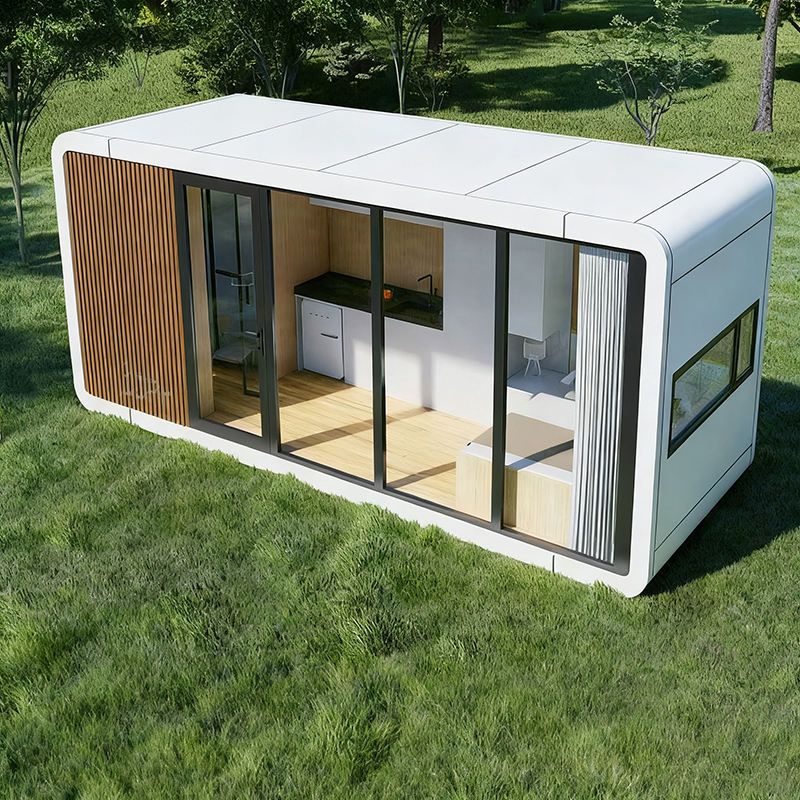
A box-type prefabricated house is a movable, reusable modular building product constructed using standardized containers as units, featuring rapid installation, multi-story combination, and flexible applications.
Structural Classification and Characteristics
Box-type prefabricated houses can be categorized into three types based on their structure:
- Traditional Container-Modified Box Houses: These are modified from old shipping containers, retaining the original frame structure and meeting residential or office needs through interior renovation. Their advantages include low cost and short renovation periods, but spatial layouts are constrained by the original container dimensions.
- Newly Welded Box-type Mobile Houses: Constructed using entirely new steel frames through welding, these offer higher structural strength and customizable dimensions and layouts, suitable for scenarios requiring high stability, such as temporary medical stations or disaster emergency housing.
- Demountable Box-type Mobile Houses: These feature bolted connections between components, enabling rapid assembly and disassembly as well as repeated use. During transportation, their volume can be compressed to reduce logistics costs, making them ideal for construction sites or tourist attractions requiring frequent relocation.
Application Scenarios and Advantages
Thanks to their modular design, box-type prefabricated houses possess rapid deployment capabilities, allowing installation within hours. They are widely used in:
- Temporary office spaces: Such as construction site project offices and exhibition event centers;
- Tourism homestays: Featured accommodation units in scenic areas, enhanced by intelligent designs (e.g., "space capsule" smart box houses) to improve the experience;
- Public service facilities: Eco-friendly infrastructure like smart waste stations and mobile restrooms;
- Emergency rescue: Temporary shelters after earthquakes, floods, and other disasters.
Their core advantages include:
- Environmental friendliness: Steel frames are recyclable, aligning with low-carbon building trends;
- Economy: Modular production reduces unit costs, while multi-story combinations improve space utilization;
- Flexibility: Supports personalized customization to adapt to different climates and terrains.
Industrial Development and Market Trends
Since China adopted the "Implementation Plan for Carbon Peaking in the Urban and Rural Construction Sector" in 2022 to promote prefabricated buildings, Wen'an County in Hebei Province has formed an industrial cluster. The developed "space capsule" smart box houses have entered the market. Overseas demand has surged significantly, with Guangzhou Customs reporting RMB 1.4 billion in exports of mobile houses in the first four months of 2026, a 38.1% year-on-year increase. As a key category, box-type prefabricated houses are selling well in countries along the "Belt and Road" as well as in European and American markets due to their cost-effectiveness.



