
Volver al blog
Artículo
Binjiang District Container Modular Houses
Admin 17 de septiembre de 2026
Container modular houses in Binjiang District are customized for construction sites, industrial parks, temporary office spaces, and living scenarios. These modular and movable houses are built on standard container frames and systematically renovated to meet safe living requirements. Common types include standard single-container houses, double-container connected houses, three-story stacked houses, and custom artistic containers. When selecting, it is essential to consider core parameters such as size, steel plate thickness, compliance, hidden costs, and rental or purchase periods.
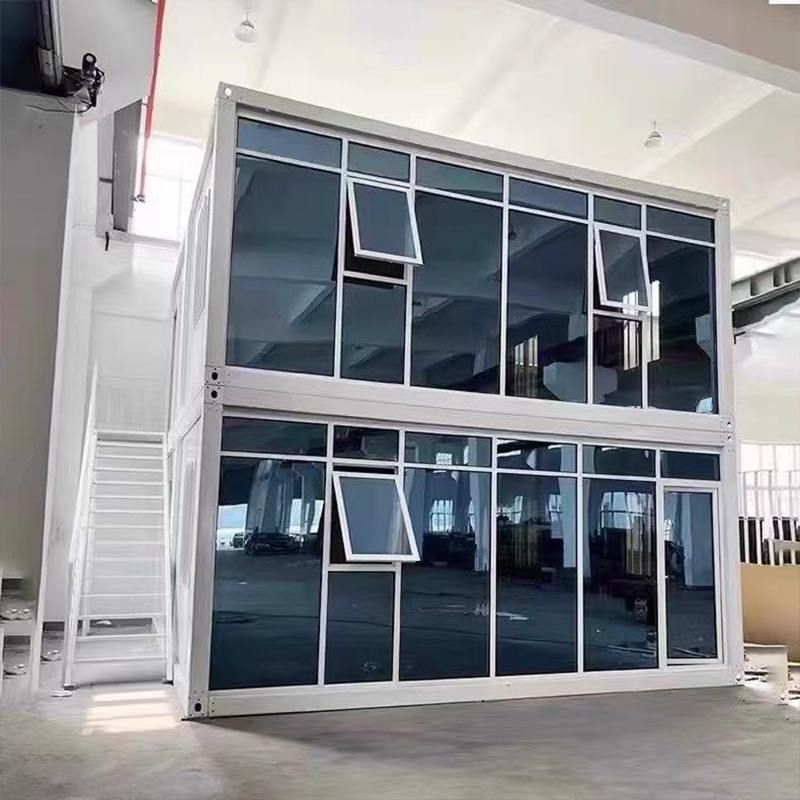
I. Common Types and Suitable Scenarios
- Standard Single-Container House: Dimensions 3.0×6.0×2.8m, suitable for construction site guards or single-person dormitories. Equipped with basic lighting, sockets, and air conditioning holes, it requires external water and electricity connections, with a delivery period of 3-5 working days.
- Double-Container Connected House: Dimensions 3.0×12.0×2.8m, suitable for 6-8 person team dormitories or on-site offices. It features a corridor in the middle and can be optionally equipped with an integrated bathroom module, with a delivery period of 5-7 working days, offering higher overall cost-effectiveness.
- Three-Story Stacked House: Dimensions 3.0×6.0×8.4m (3 stories), used for centralized living areas in large projects or transitional talent apartments. It requires foundation hardening and wind-resistant cables, with a delivery period of 10-15 working days.
- Custom Artistic Container: Supports non-standard designs (such as curved roofs, glass curtain walls), suitable for industrial parks and other scenarios with high aesthetic requirements.
II. Key Points for Selecting Core Parameters
- Size Rationality: A 3m×6m single container provides less than 4㎡ per person, limiting ventilation and lighting and prone to complaints. A 3m×12m double-bay configuration is more reasonable, featuring independent bathrooms and air conditioning positions, offering higher cost-effectiveness.
- Steel Plate Thickness and Process: Side panels commonly use 1.2mm galvanized steel plates, which can withstand 5 years of outdoor use. Blindly choosing plates thicker than 2.0mm increases costs and lifting difficulty. The key is to focus on anti-corrosion processes (such as double-sided hot-dip galvanizing + fluorocarbon paint).
- Compliance Verification: Ordinary freight containers lack fire ratings, circuit pre-embedding, and moisture-proof sills, posing risks of electric leakage, rust, and formaldehyde exceedance after renovation. Compliant living containers must pass GB/T 37807-2019 testing and provide factory quality inspection reports.
III. Hidden Costs and Rental or Purchase Decisions
- Hidden Costs: Quotations should clarify whether they include basic flooring and water and electricity connections. Transportation distance (cross-river transportation fees account for 15%-25%), lifting coordination (requiring street reporting), and post-maintenance response times (within 48 hours is more reliable) should all be considered.
- Rental or Purchase Period: When using for more than 8 months, purchasing a second-hand refurbished container (with a 2-year warranty) is usually more cost-effective than long-term rental. For projects shorter than 3 months, a daily rental model is more flexible. It is recommended to calculate horizontally using the formula 'average daily cost = total price ÷ number of usage days'.
Relacionados



