
Beijing Public Mobile Toilets
Beijing's public mobile toilets are an important part of the city's public service facilities, aiming to provide citizens and tourists with a convenient and hygienic toilet environment, with particular emphasis on the provision of barrier-free facilities to meet the needs of special groups.
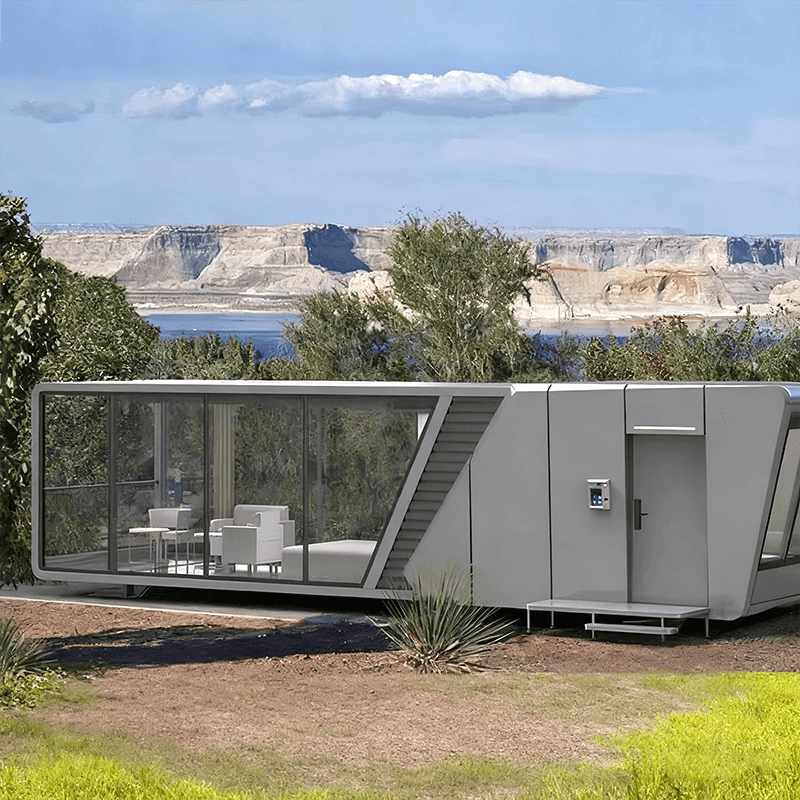
Typical Cases and Facility Configurations
Take the modular mobile public toilet in the park north of Mingguang Bridge in Haidian District as an example. Its design fully embodies the combination of humanization and functionality. The barrier-free toilet cubicle in this public toilet is equipped with a children's toilet seat, facilitating use by young children; an infant changing table provides an independent space for families with infants to change diapers and organize clothing; safety handrails are distributed both inside and outside the toilet cubicles to assist those with mobility impairments in getting up or moving; and an emergency call device ensures that management personnel can be contacted promptly in case of emergencies. These facilities together create a safe and convenient independent space, especially benefiting the elderly, people with disabilities, and families with infants who require accompaniment.
Distribution Locations and Inquiry Methods
The layout of Beijing's public mobile toilets covers multiple areas, for example:
- 40 meters east of the intersection of Xingfu Road and Longchang Street in Daxing District: This location is near a major traffic artery, facilitating use by passersby.
- No. 7-9, Yard 8, Beichen East Road, Chaoyang District: Situated in a commercial or densely populated residential area, it meets the daily needs of the surrounding population.
Citizens can use map software (such as Gaode Maps or Baidu Maps) to inquire in real-time about the precise locations of mobile public toilets, plan routes to reach them, and view surrounding amenities such as restaurants and bus stops, further enhancing convenience of use.
Social Significance and Functional Extensions
The promotion of public mobile toilets not only alleviates the problem of insufficient layout of traditional fixed public toilets but also enables rapid deployment and flexible adjustment through modular design. For example, during large-scale events, temporary gatherings, or peak tourist seasons, mobile toilets can be temporarily added to cope with peak flows of people; in the renovation of old urban areas or emergency rescue scenarios, their mobility can quickly fill service gaps. In addition, the popularization of barrier-free facilities reflects the city's care for special groups and is an important practice in achieving equalization of public services.
Through scientific planning and humanized design, Beijing's public mobile toilets have become a microcosm of urban civilization and convenience, continuously contributing to the improvement of citizens' quality of life.



