
Baiyin Modular Container House
The Baiyin modular container house is a prefabricated building unit with a steel structure as its main framework, galvanized or sprayed with a silver-white coating on the surface, featuring modular design, efficient construction, flexible application, and sustainability.
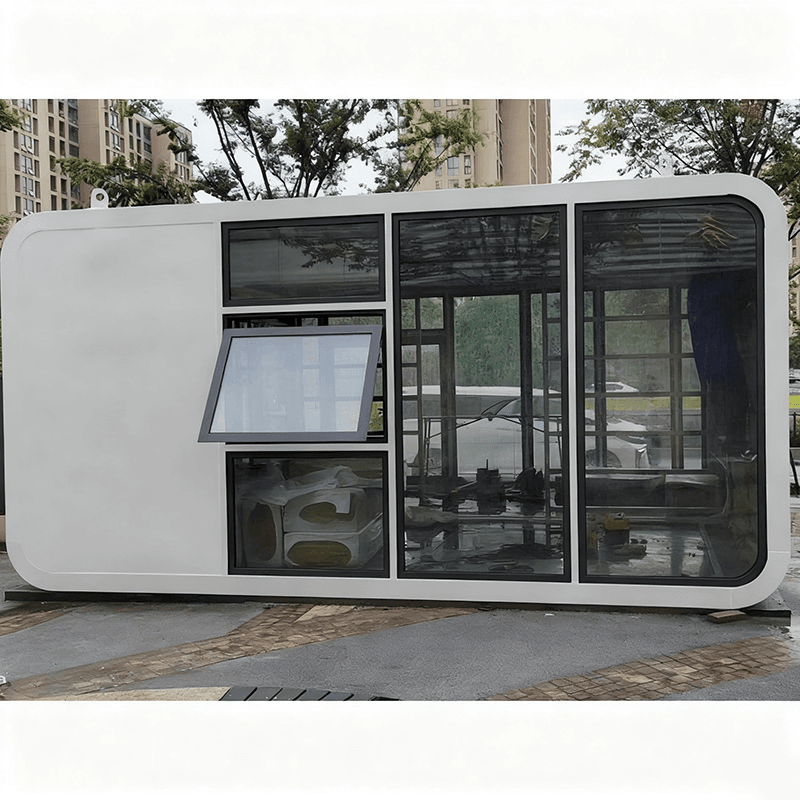
Modular Design and Structural Features
Its basic unit is a standard-sized container-like structure. The framework is welded from high-strength steel, and the exterior is covered with galvanized steel plates or sprayed with a silver-white anti-corrosion coating. The dimensions adhere to international standards (such as 6 meters or 12 meters in length), facilitating transportation and stacking. The structure is divided into a framework, wall panels, a roof, and a floor: the framework forms a stable whole; the wall panels are designed with sandwich panels, filled with rock wool or polyurethane foam in the middle to enhance thermal and sound insulation; the roof is mostly sloped for easy drainage and corrosion prevention; the floor is made of anti-slip and wear-resistant materials. Each unit can be connected horizontally or vertically or stacked into multi-story buildings through bolts or welding, but structural reinforcement is required.
Appearance and Performance Advantages
The silver-white coating combines aesthetics with functionality, reflecting sunlight to reduce heat absorption, lowering indoor temperatures, and preventing rust, making it suitable for coastal or high-humidity environments. Doors and windows are made of aluminum alloy or plastic, lightweight and corrosion-resistant, with multiple windows available as needed to improve lighting.
Core Advantages
- Efficient Production and Construction: Factory assembly-line manufacturing is less affected by external factors, ensuring stable quality. On-site work mainly involves lifting and connecting, shortening the construction period. For medium-sized projects, on-site assembly time is only a fraction of that of traditional methods.
- Significant Flexibility: Standardized containers can be flexibly combined and stacked according to functional requirements (such as residential, office, or emergency use), adapting to temporary, transitional, or rapid deployment scenarios, and supporting changes in building scale and location.
- Strong Sustainability: Factory production reduces on-site waste and pollution; the steel structure has a high recycling rate; the container's airtightness and structural strength facilitate the integration of green technologies such as thermal insulation systems and solar photovoltaic panels, reducing operational energy consumption.
Application Scenarios
Widely used in commerce (retail stores, dining spaces), the construction industry (site offices, dormitories), event organization (temporary exhibition halls, ticket booths), emergency relief (temporary shelters, command centers), and remote areas (schools, medical stations). In the Baiyin area of Gansu Province, brands such as Hongyi and Haiwangda Supply offer products, with prices varying by specifications and configurations, charged per square meter or per set.



