
Automobile Mobile Toilet Processing
Automobile mobile toilet processing involves multiple processes and customized designs. Taking the Dongfeng mobile toilet vehicle as an example, its processing features cover aspects such as materials, configurations, structures, and functional optimizations.
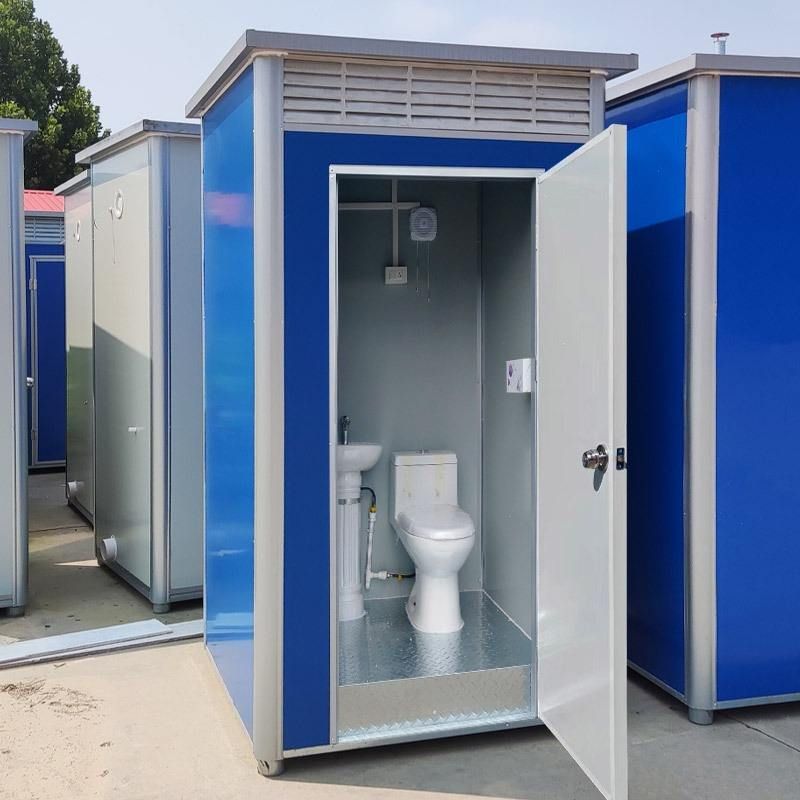
1. Material Selection and Structural Processes
The materials for automobile mobile toilets need to balance lightweight properties, durability, and environmental adaptability. The primary structure is a sandwich panel design, with the outer layer made of cold-rolled steel plates, offering high strength and corrosion resistance; the inner layer uses UV panels, which are smooth, easy to clean, and have UV protection. The internal steel frame of the walls is filled with insulation materials to adapt to different climatic conditions, ensuring freeze protection in winter and heat insulation in summer. Additionally, stainless steel fittings are used to prevent rust and extend service life.
2. Internal Configurations and Functional Zoning
Clear functional zoning is a core design principle for mobile toilets. The front door is typically designated as the ladies' restroom, while the rear door serves as the men's restroom and urinal area, reducing cross-interference through separate entrances. The interior uses lightweight, waterproof, and shock-resistant precision panels for easy maintenance and replacement. Both the ladies' and men's restrooms are equipped with stainless steel sinks, freshwater tanks, and wastewater tanks. The capacity of the freshwater tanks is designed according to the usage scenario, while the wastewater tanks feature both direct drainage and suction drainage functions for quick cleaning. Auxiliary configurations include stainless steel handrails, coat hooks, vanity mirrors, and energy-efficient lighting to enhance the user experience.
3. Water Circulation and Water-Saving Technologies
To reduce water consumption, mobile toilets use a high-pressure air source boosting system instead of traditional water pumps. Pressure is controlled via a pressure regulator to adjust the water volume for toilet flushing and handwashing. The handwashing faucet automatically stops after 5 seconds of water flow to achieve water-saving goals. The freshwater tank is equipped with a quick-fill port at the top for rapid water replenishment; the wastewater tank's direct drainage function is suitable for environments with drainage facilities, while the suction drainage function allows for污水 removal via external equipment, enhancing flexibility.
4. Climate Adaptability and Environmental Requirements
Built-in sewage pipes, water flow pipes, and lighting/power equipment must ensure sealing and safety. The wall insulation design allows adaptation to climates across the country, but the usage scenario must meet requirements for water source access and power supply. For example, in areas without a fixed water source, mobile water tanks or regular water replenishment are necessary; in low-temperature environments, pipe freeze protection measures are required.
5. Customized Services
Automobile mobile toilets support comprehensive customization in terms of size, stall numbers, configurations, and materials. According to customer needs, the vehicle length, width, and height can be adjusted to optimize space utilization; the number and layout of stalls can be flexibly designed to meet pedestrian flow demands in different scenarios; material choices can be replaced with lighter or more durable options to suit special environments.



