
Automobile Container Transformed into Mobile Home
Transforming an automobile container into a mobile home is feasible, but multiple factors need to be considered comprehensively.
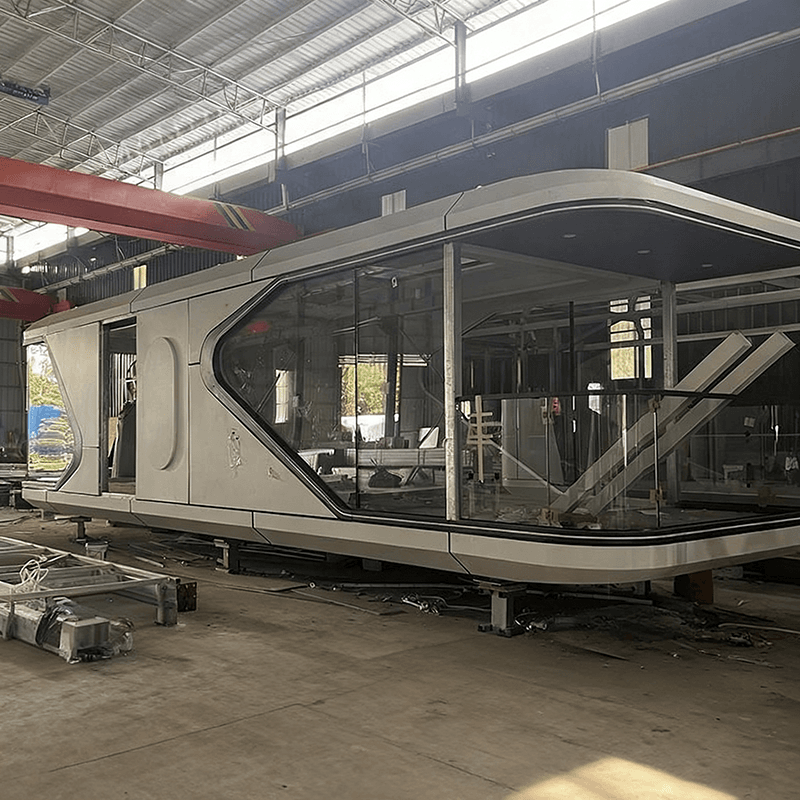
I. Feasibility of Transformation
Containers inherently possess a standardized structure, high strength, and good durability. After undergoing multiple processes such as rust prevention, sound insulation, thermal insulation, and waterproofing, they can meet residential needs. Their modular nature allows for a high degree of freedom in transformation, enabling the creation of different functional spaces such as cozy nests, popular photo spots, or practical office areas according to requirements. Meanwhile, the standardized production process results in a short transformation period, typically taking 7-15 days to complete, saving half the time and cost compared to traditional house building.
II. Key Aspect of Transformation
- Structural Reinforcement and Deformation Restoration: If the container has been deformed due to its original use (e.g., meat-hanging containers), tools such as jacks are required to restore its shape and ensure structural stability. For example, in a certain transformation case, the deformation rate of the carriage was reduced to a safe range through jacking adjustments.
- Functional Zoning Design: Divide areas such as living, kitchen, bathroom, and bedroom according to residential needs. For instance, in the container home of a New Zealand couple, the ground floor is designed with living and kitchen areas, while the upper floor has a bathroom and three bedrooms. Comfort is enhanced by covering the walls with hardwood plywood and laying commercial carpets on the floor.
- Material Selection and Process: Externally, wooden boards and anti-corrosion coatings can be added to enhance aesthetics and durability; internally, eco-friendly furniture and recycled wood are used to reduce the discomfort of the metal container. The bathroom space should have two sinks reserved, and the bedroom should have small translucent glass windows to optimize lighting.
III. Compliance and Mobility
- Legal Compliance: It is necessary to confirm the local approval requirements for container residences. If used solely as a warehouse and not occupying public space, it usually does not count as illegal construction; however, for residential purposes, relevant procedures may need to be completed to avoid being identified as illegal construction due to lack of approval.
- Transportation and Installation: Foldable containers can reduce transportation costs (e.g., the products of Suzhou Zhongnan Steel Structure can be folded to reduce their volume to 1/5, allowing 20 sets to be loaded per truck), making them suitable for frequent relocation scenarios. During installation, site conditions need to be considered. For example, in short-term engineering camp scenarios, a single set of products from Suzhou Zhongnan Steel Structure can be installed in just 2 hours, and a 100-set camp can be put into use in 7 days.



