
Introduction to the Advantages of Container Houses
The advantages of container houses are mainly reflected in multiple aspects such as structural performance, construction efficiency, economy, environmental protection, flexibility and mobility, and functional adaptability:
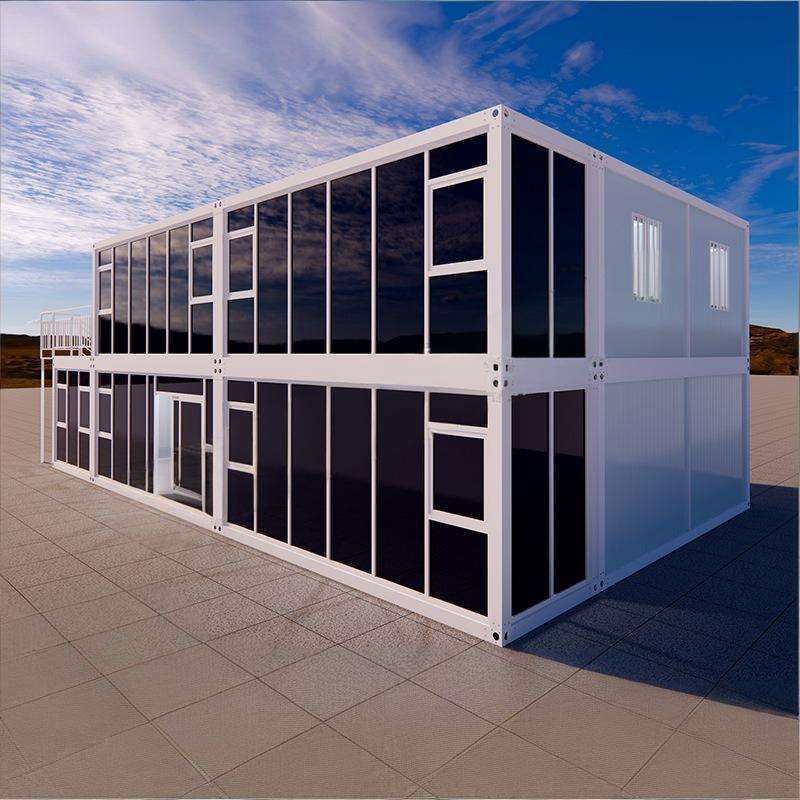
Superior structural performance: Container houses use standard containers as carriers and adopt all-steel structural frames, offering high strength and durability. Measured data shows that the frame deformation rate of high-quality container houses under extreme conditions (such as a Category 12 typhoon or a magnitude 8 earthquake) is far below the industry's qualified threshold, enabling them to withstand harsh weather conditions and natural disasters, ensuring the safety of people and property during use.
High construction efficiency: Container houses employ modular design and industrial production methods, with over 90% of the processes for the structure, walls, and water and electricity pipelines completed in the factory. After the foundation is completed, the prefabricated modules are directly transported to the site for hoisting and assembly, with minimal weather interference. The overall construction period is shortened by more than 50% compared to traditional buildings, and in some projects, the reduction can reach up to 75%.
Good economy: The construction cost of container houses is relatively low, and the on-site labor requirement is reduced by 70% compared to traditional house building, with construction waste emissions reduced by more than 75%. The total cost of a comprehensive project can be saved by approximately 20%. In addition, the single hoisting and transportation cost is relatively low, and after arriving at a new site, they only need to be connected to water and electricity for use, resulting in low relocation and resettlement costs.
Outstanding environmental protection: Container houses are prefabricated in the factory, with zero pollution during on-site construction and minimal construction waste generated, aligning with the development trend of green buildings. At the same time, containers themselves have recycling value, further reducing their impact on the environment.
High flexibility and mobility: Container houses can be combined and modified according to needs to adapt to different architectural scenarios. They can be easily moved from one place to another, making them highly suitable for temporary residences, mobile offices, or venues requiring frequent relocation.
High functional adaptability: Container houses can be customized according to specific usage scenarios, such as adding side or end expansion modules to increase usable area, or incorporating elements like glass curtain walls and wood-grain finishes for brand display, cultural and creative parks, and other scenarios, balancing functionality and visual expression.



