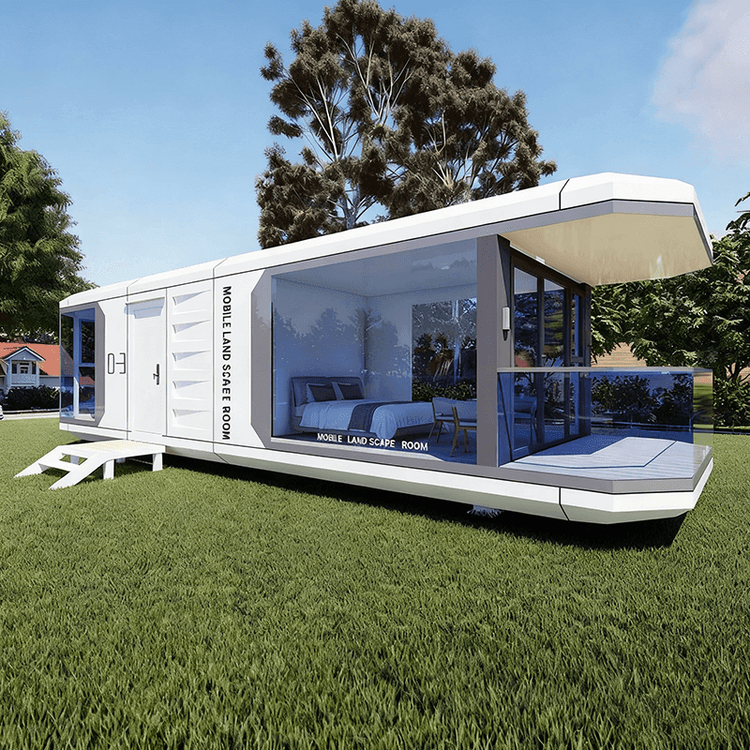
Ziyang Container Villa Houses
Although there is currently no detailed definition of 'container villa houses' specifically in Ziyang, container houses can be creatively transformed into unique living spaces, with their application scenarios and technical features providing a feasible basis for villa-style design.

1. Structural Features and Transformation Potential
Container houses use weathering steel as their framework, offering high load-bearing capacity and wind resistance. Their interiors can be upgraded by installing insulation layers, electrical systems, and water supply and drainage facilities. Their modular structure allows for flexible assembly and combination. For example, by stacking or connecting multiple container units in parallel, multi-story or large-span spaces can be created to meet the area and layout requirements of villa-type buildings. Additionally, the exterior can be enhanced with anti-corrosion coatings, decorative panels, or glass curtain walls, while the interior can use eco-friendly decoration materials to improve living comfort.
2. Extensibility of Application Scenarios
According to available information, container houses in Ziyang have been applied in creative park studios and temporary warehousing, with core advantages including mobility, reusability, and rapid deployment capabilities. If these scenarios are upgraded for residential use, the following aspects need to be optimized:
- Residential Function Adaptation: Add partitions for bedrooms, kitchens, bathrooms, etc., and equip with smart home systems;
- Environmental Adaptability: Select high-efficiency insulation materials (such as rock wool boards) and energy-saving doors and windows according to Ziyang's climate characteristics to reduce energy consumption;
- Compliance: Meet local building codes, such as foundation bearing capacity and fire safety requirements, and some scenarios may require temporary building permits.
3. Cost and Benefit Analysis
The initial costs of container villa houses include basic procurement (ranging from several thousand to tens of thousands of yuan per unit) and renovation expenses (depending on the configuration). In the long run, their cost-effectiveness is reflected in:
- Mobility: Avoiding waste from traditional building demolition, suitable for flexible land use scenarios;
- Modular Expansion: Low-cost space adjustments by adding or removing container units;
- Emergency Response: Quick conversion into shelters in natural disasters or temporary needs.
4. Renovation and Usage Considerations
- Selection of Professional Teams: Ensure welding processes and electrical wiring meet safety standards to avoid structural hazards;
- Insulation and Fire Prevention: Prioritize the use of Class A fire-resistant materials and test insulation performance to adapt to seasonal changes;
- Moving Specifications: If relocation is required, specialized lifting equipment must be used to prevent structural deformation;
- Packing Container House Options: For higher prefabrication levels, factory-produced packing container houses can be chosen, offering higher on-site assembly efficiency, but requiring prior assessment of foundation conditions and compliance.
Currently, the villa-style application of container houses in Ziyang is still in the exploratory stage. It is recommended to consult local construction companies or planning departments based on specific needs to balance creative design with practical functionality.