
Zibo Container Modular Housing
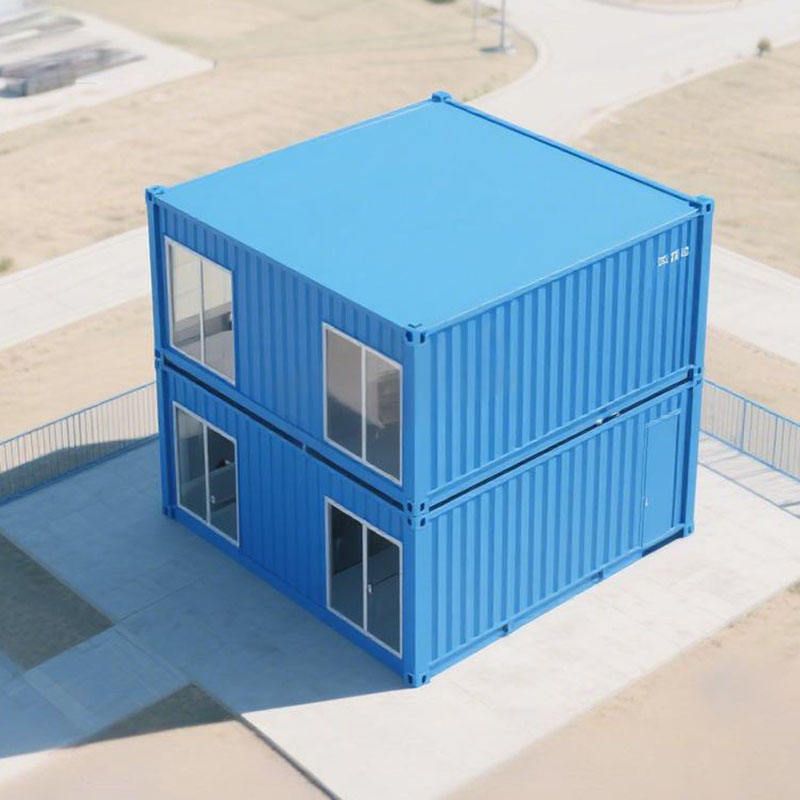
Zibo container modular housing is a green building form based on ISO-standard containers, achieving rapid construction and recyclability through modular design, eco-friendly material selection, and technological innovation.
Construction and Process Features
The core structure uses 6-meter or 12-meter ISO-standard containers as the base, modified through cutting, welding, reinforcement, and other processes. For example, side panels are replaced with thermal insulation sandwich panels to address heat insulation issues, and additional reinforcement bars are added at key frame nodes to enhance earthquake resistance. Some adopt a “container + steel structure” composite design to overcome size limitations. In terms of material selection, the frame uses Q235B or higher-strength carbon structural steel, with hot-dip galvanized layers meeting standards to ensure rust resistance. The insulation layer uses ≥50mm rock wool or polyurethane; rock wool offers fire resistance and sound absorption but has high water absorption, while polyurethane provides thermal insulation and waterproofing at a higher cost. For process standards, the frame employs CO2 gas-shielded welding or automated welding equipment, with additional reinforcement bars added at key nodes. Wall panel-to-frame connections are selected based on usage scenarios, including welding, high-strength bolts, or modular plug-in structures.
Technological Innovation Directions
Tailored to northern climates, wall materials widely use Class A fire-resistant rock wool and polyurethane insulation layers, paired with low-emissivity coated glass for year-round comfort. Some products feature recyclable aluminum-magnesium-manganese alloy roofing to reduce lifecycle carbon emissions. Rapid assembly technology enables “LEGO-style” module connections through standardized interfaces. A bolt-connection system developed by Zibo manufacturers allows a two-person team to complete the main structure of a single-story building in four hours, reducing construction time by over 70% compared to traditional methods. For smart integration, some products incorporate IoT sensors to monitor temperature, humidity, and air quality in real time, with mobile app control over ventilation systems, underfloor heating, and other devices for “zero-contact” smart management.
Application Scenarios and Industry Trends
Applications include construction sites (double-story dormitories accommodating 200 people), rural tourism (starry-sky rooms, book bars, and other themed spaces), and emergency response (deploying temporary medical stations or command centers within 72 hours). In terms of industry trends, with the implementation of the Modular Building Technical Standard, Zibo manufacturers are transitioning to “industrialized manufacturing,” achieving component precision within ±2mm through digital production lines and offering customized design services via BIM technology. In the future, technologies like hydrogen heating and photovoltaic integration will drive container housing upgrades from “functional products” to “smart green buildings”.



