
Zhumadian Prefabricated Concrete House
The prefabricated concrete houses in Zhumadian are built mainly with prefabricated components and possess various characteristics.
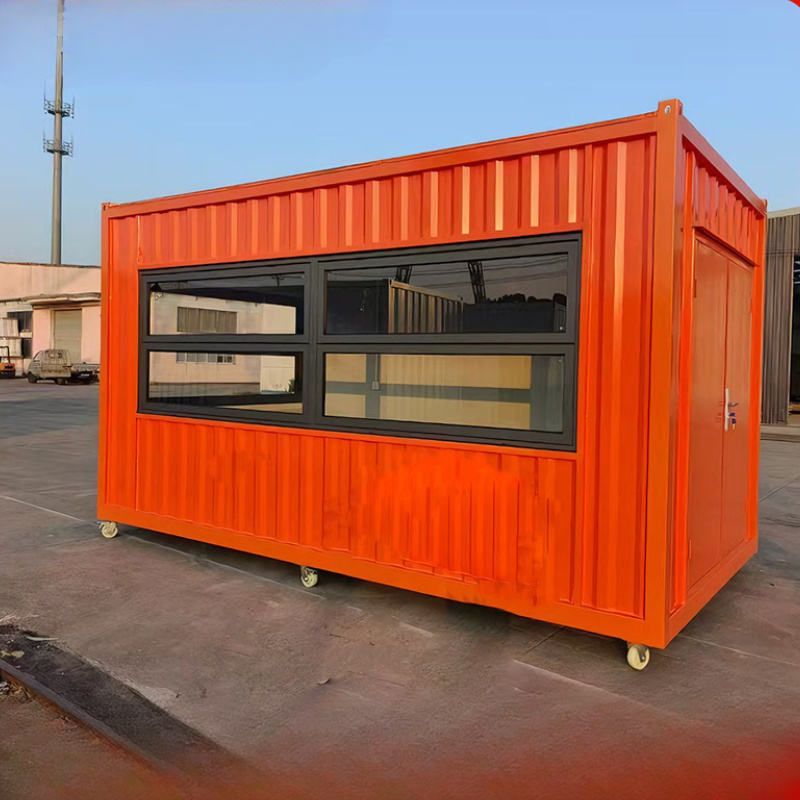
Materials and Structure: The prefabricated concrete houses in Zhumadian come in a variety of materials. There are prefabricated houses made of color-steel, cement, sandwich panels, etc., as well as prefabricated reinforced concrete assembled housing unit modules. These modules include walls, roofs, door and window openings, and corner columns at all four corners. Vertical reinforcement bars are reserved at the top of the four corner columns for vertical connections between modules, stirrups are reserved on the side of the corner columns for horizontal connections, and grouting holes are set at the bottom due to the embedded grouting sleeves. The unit modules have 200mm-wide overhanging slabs on both sides of the roof to fill the horizontal connection gaps of the subsequently poured modules.
Significant Advantages:
- Fast Construction Speed: Produced on factory assembly lines, the efficiency is extremely high. A house can be built in as fast as four hours, and an 80-square-meter house can be fully completed in a month, saving several times the time compared to traditional house-building methods.
- Low Cost: It saves a large amount of on-site labor costs and material waste. Labor costs can be reduced by about 30%, and there is a 10%-15% potential for material cost reduction.
- Stable Quality: The factory production process is standardized, and material testing is strict, which can avoid many non-standard construction problems. Many manufacturers also provide comprehensive warranty services.
- Environmentally Friendly: Some powerful manufacturers use new environmentally friendly building materials, such as prefabricated concrete components (PC components), which have low production energy consumption, excellent thermal insulation, sound insulation, and fire resistance properties. They can also convert industrial solid waste into building material raw materials, achieving resource recycling. The prefabricated building technology can significantly reduce on-site wet operations, reducing dust, sewage, and construction waste emissions. Compared with traditional cast-in-place methods, it can reduce on-site construction waste by about 60% and construction water consumption by 30%.
Existing Shortcomings: The design flexibility is poor. The size of the prefabricated panels is fixed, making personalized design difficult. The performance needs to be strengthened, with room for improvement in seismic resistance, fire resistance, and sound insulation and heat preservation effects. Some users have reported poor sound insulation.
Installation Method: The prefabricated reinforced concrete assembled housing unit modules are prefabricated in advance in the factory. After being hoisted and assembled on the construction site, the horizontal connection nodes between the modules are poured on site, and the reserved grouting holes are grouted and sealed to connect all parts into a whole.
Production Capacity and Supply: Powerful manufacturers have established a multi-source supplier system and monitor inventory through a digital management system to provide early warning of supply disruptions. Medium-sized factories can have an annual design production capacity of 50,000 to 100,000 cubic meters of components, which can simultaneously support 20 to 30 rural self-built housing projects.



