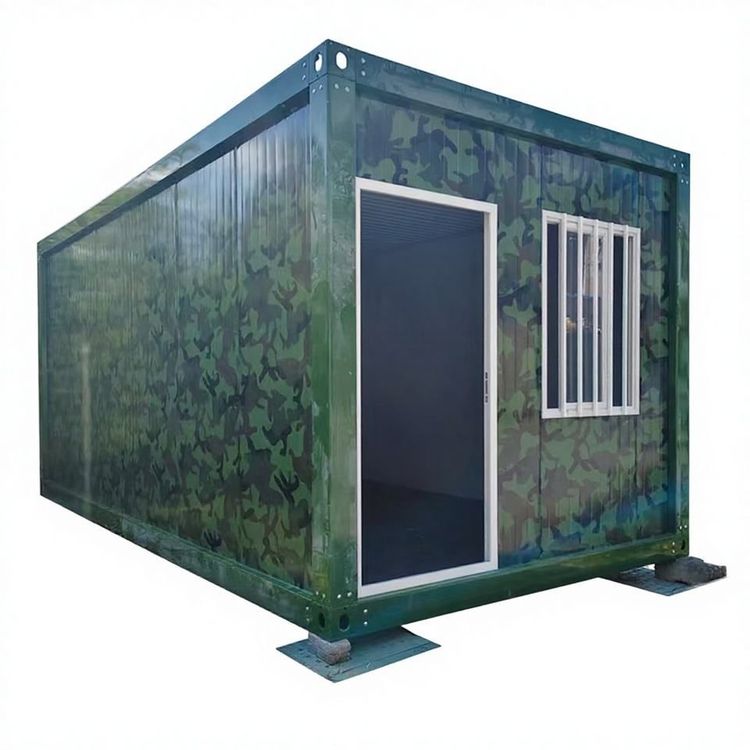
Zhuanghe Mobile Toilet Installation
The installation of mobile toilets in Zhuanghe mainly follows the core steps of 'positioning - assembly - connection', with specific processes varying depending on the toilet type (split-type or integrated).

Installation Steps for Split-Type Mobile Toilets
Positioning the Chassis and Frame
Use a forklift or manual labor to place the prefabricated steel structure chassis steadily at the predetermined location and adjust it to a level state using a spirit level. The stability of the chassis directly affects the quality of subsequent installations, so it must be ensured to be in close contact with the ground to avoid shaking.Installing Walls and Roof Panels
Insert the sandwich panel wallboards one by one into the chassis slots and secure them with bolts or clips to ensure a tight and seamless connection. Then install the roof panels, focusing on sealing (e.g., using waterproof glue or sealing strips) to prevent rainwater leakage. This step usually takes 1-2 hours, and attention should be paid to the verticality of the wallboards and the slope of the roof to ensure smooth drainage.Connecting Internal Facilities
Install partitions, toilets, flushing systems, sinks (optional), lighting, and ventilation equipment. The connection of water and electricity pipelines should be operated by professionals, but modular design (e.g., quick connectors) can simplify the process. For example, the flushing system needs to test water pressure stability, the circuit needs to check insulation performance, and the ventilation equipment needs to ensure adequate air volume.Function Inspection and Debugging
Conduct flushing tests (observe drainage speed and blockage), circuit checks (test the safety of switches and sockets), and sealing checks (simulate rainfall by spraying water to test the roof and walls). All functions must be normal before they can be put into use.
Installation Steps for Integrated Mobile Toilets
Integrated toilets (such as container-type toilets) have completed internal decoration and equipment integration in the factory, and only require the following on-site:
- Lifting and Positioning: Use a crane to lift the entire toilet to the predetermined location and adjust the direction to ensure reasonable orientation of doors and windows.
- Connecting Water, Electricity, and Sewage Pipes: Quickly connect water supply, drainage, and electrical circuits through quick connectors, shortening the installation time to 2-4 hours.
Practical Case of Zhuanghe's 'Toilet Revolution'
Dahua Village in Changling Town adopted the 'component pre-assembly + mass participation' model: the toilet rooms and fiberglass septic tanks were assembled and then transported to the village committee for display. The villagers dug pits by themselves and then collected the components to install at home. Through incentive measures (first come, first served), more than 600 households were installed within 10 days, significantly improving efficiency. This model combines standardized components with mass autonomy and is suitable for promotion in rural areas.