Back to blog
Article
Installation of Portable Toilets at Zhouning Construction Site
Admin September 29, 2026
The installation of portable toilets at the Zhouning construction site should be carried out step by step according to the type of toilet (such as integrated, split-type, or simple-construction type). The specific process is as follows:
I. Preliminary Preparation
- Site Confirmation
Select a flat and well-ventilated area, avoiding construction hazard zones and water source pollution areas. Clear debris and ensure the ground is solid with good drainage. If the ground is uneven, harden it in advance or lay steel plates. - Equipment Inspection
Check the list of accessories (such as the main frame, toilet bowls, fecal storage tanks, ventilation systems, etc.) and confirm water and electricity conditions: water-flush toilets require connection to water pipes and tanks, while non-flush or biodegradable types can simplify sewage connections.
II. Foundation Fixation
- Split-type Toilets
Use a forklift or manual labor to place the prefabricated chassis (steel structure) steadily, adjust it to be level, and then fix the bottom with expansion screws or counterweights. - Integrated Toilets
Directly hoist into position and connect water, electricity, and sewage pipes. The installation time is approximately 2-4 hours. - Simple-construction Toilets
Assemble metal or bamboo-wood frames, ensuring they are vertically stable, and lay waterproof membranes on the ground.
III. Installation of Core Components
- Walls and Roof Panels
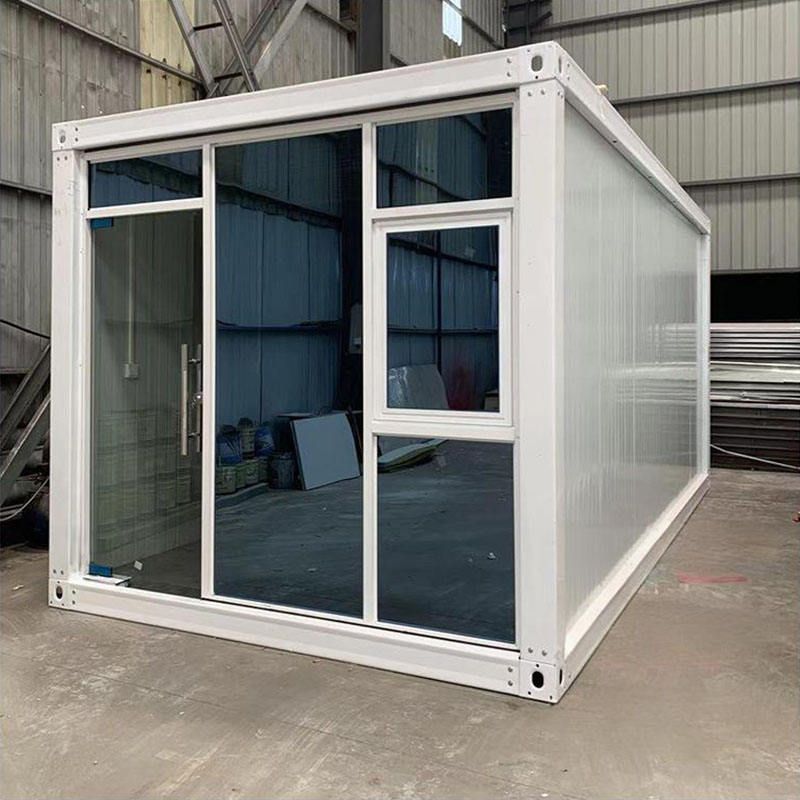
Insert the sandwich panel walls into the chassis slots and secure them with bolts or clips; install the roof panels and seal them. For portable toilets in construction site prefabricated houses, install the back, left, right, and front panels in sequence, adjust for alignment, and then secure the slots. - Toilet Bowls and Sewage Systems
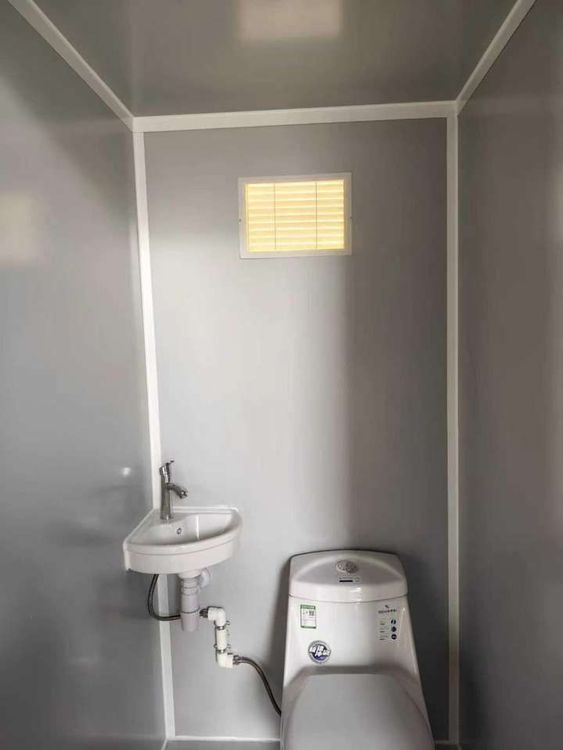
Connect the sewage outlet to the fecal storage tank, ensuring a leak-proof seal; water-flush toilets require connection to water pipes and tanks, while non-flush or biodegradable types can omit complex piping. - Ventilation Systems
Install ventilation louvers or exhaust fans to maintain air circulation.
IV. Assembly of Auxiliary Facilities
- Doors, Windows, and Accessories
Install doors and windows, adjust their opening and closing mechanisms, add handrails, hooks, etc.; lay anti-slip mats. - Water and Electricity Connections
Connect the electrical circuits (lighting, exhaust fans) and test for normal power supply; modular water and electricity interfaces (such as quick connectors) can shorten installation time.
V. Sealing and Debugging
- Sealing Inspection
Seal gaps with silicone strips to prevent odor leakage. - Function Testing
Test the flushing and sewage discharge functions, and clean up installation residues. - Placement of Supplies
Place toilet paper, deodorizers, and other supplies.
VI. Safety Inspection and Acceptance
- Structural Stability
Confirm that there are no loose components overall and mark emergency contact information. - Environmental Protection and Hygiene
Regularly clean the fecal storage tank to avoid overflow; use disinfectants to treat surfaces and prevent bacterial growth.
Precautions:
- Prioritize selecting a professional construction team to improve efficiency.
- Follow the "Portable Toilet Hygiene Standards" (GB/T 21239-2023) to ensure safety and hygiene.
- Choose traditional, water-saving, or environmentally friendly toilets based on the construction site scale, number of users, and budget.