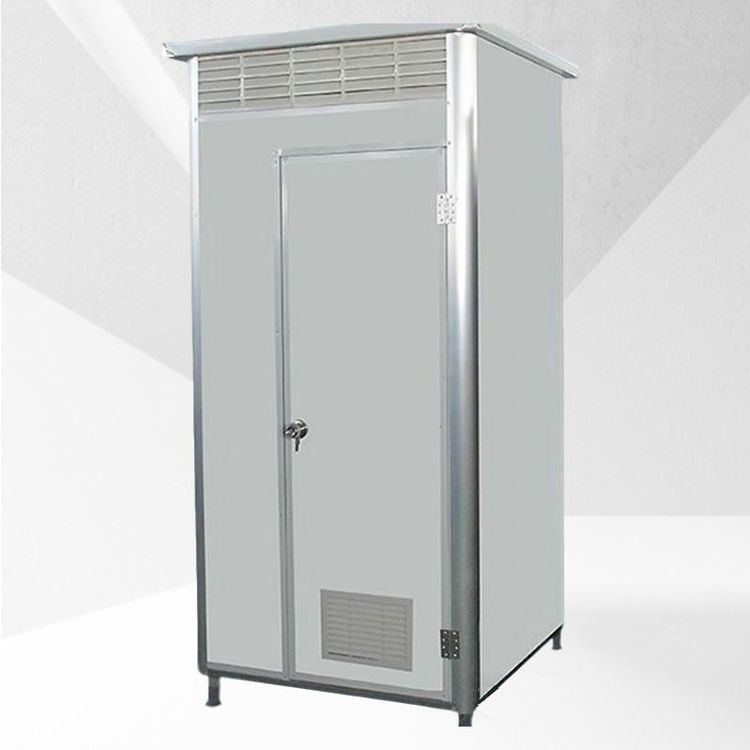
Zhoukou Mobile Environmental Toilet Inspection
The inspection of mobile environmental toilets in Zhoukou should be carried out comprehensively from multiple aspects, including sealing and waterproofing, box tightness, wind resistance, appearance decoration, and testing methods. Details are as follows:

Sealing and waterproofing inspection is a fundamental step. Use a water spray gun, adjust the nozzle pressure to 0.1 MPa, maintain a spraying distance of 500 mm, and continuously spray water along the outer walls, corners, and roof connections of the mobile toilet for 15 minutes. After stopping for 1 hour, check for any leakage. This step simulates rainwater scouring scenarios, focusing on verifying the waterproofing performance of the outer walls and roof to prevent rainwater infiltration, which could cause damage to the internal structure or the spread of odors.
Box tightness inspection should be carried out in steps. First, fill the water storage tank and fecal storage tank with water and let them stand for more than 1 hour to check for any leakage. Visually inspect the layout of the visible parts of the water supply and drainage pipelines for neatness and stability, and check for any leakage. Inspect the partition between the cleaning port and the internal space for tightness. Second, use a stopwatch to test the time taken for the toilet fixture to complete the blocking action. Take the average of five consecutive measurements to ensure that the automatic cleaning and blocking action time in the toilet compartment does not exceed 3 seconds when feces are discharged, thereby verifying the self-cleaning and odor-proofing functions. In addition, visually inspect whether the fecal storage tank is isolated from the interior of the toilet compartment, whether the settings of the vent pipe, fecal extraction port, and emptying valve are reasonable, and whether the cleaning port cover opens and closes flexibly and is well-sealed.
Wind resistance inspection should focus on structural stability. The welding of the public toilet's steel structure should comply with the JGJ81 standard, and the anti-corrosion and anti-rust treatment should meet the requirements of GB50212. The overall structure should have anti-overturning performance, with a wind resistance of no less than Level 10, an earthquake resistance of no less than Level 8, and a service life of no less than 10 years. A thrust test should be carried out in accordance with the experimental conditions and methods specified in GB/T50212 to verify its stability under extreme weather conditions.
Appearance and decoration quality inspection should take into account both practicality and aesthetics. Visually inspect whether the appearance, interior decoration, sanitary ware, and signs of the toilet are complete and effective. Measure the errors between the external and internal dimensions and the design drawings to ensure they do not exceed 5 mm. Check whether the inner and outer decorative layers are flat without depressions, firmly attached, smooth and clean on the surface, and have rainproof and easy-to-clean properties. The caulking should be sealed and connected without rain leakage or water seepage. The floor should be flat and sealed without water seepage or ponding.
Testing methods are divided into supervision testing, on-site testing, and operational testing. Supervision testing allows the purchaser to send personnel to supervise the manufacturing process or conduct a pre-acceptance inspection before shipment. On-site testing requires the equipment to be inspected with relevant units upon arrival, and acceptance should be carried out according to the supply list, with an explanation of functional operations. Operational testing should be carried out after the construction, installation, and commissioning are completed. Only after a trial run without faults and confirmation by the user can the product be judged as qualified.