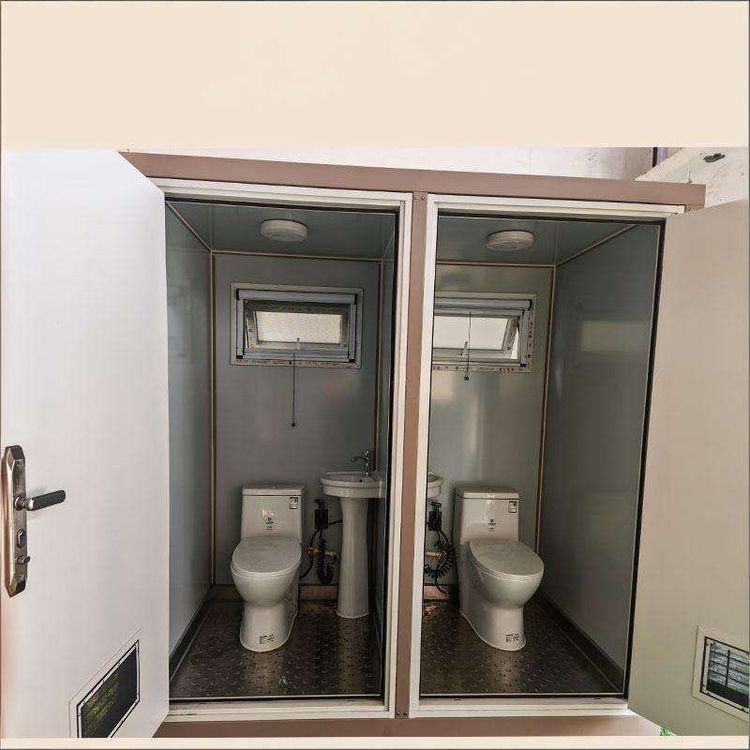
Zhengzhou Waterless Mobile Toilet Installation
The installation of waterless mobile toilets in Zhengzhou is usually included in the rental or customized installation process, and it is necessary to select a plan and standardize operations according to specific needs.

I. Regular Installation Process
Initial Communication and Plan Design
Customers need to clarify key information such as the usage scenario (e.g., scenic spots, construction sites, temporary events), the estimated number of users, duration, and site location. The rental company or manufacturer recommends types such as waterless packaged mobile public toilets based on the needs and plans the layout to ensure reasonable toilet distribution and compliance with usage requirements.Contract Signing and Cost Confirmation
After both parties confirm the plan, a contract is signed, specifying the price, quantity, delivery and installation time, and after-sales service terms. The contract should detail the division of responsibilities, such as transportation damage and installation and commissioning issues, to avoid subsequent disputes.Transportation and On-site Survey
After the mobile toilets are transported to the site, technicians need to survey the site again to confirm whether the installation location is flat and obstacle-free and to plan the best placement position. If the site conditions are insufficient (e.g., soft ground), hardening treatment or adding counterweights should be carried out in advance.Installation and Commissioning
Waterless mobile toilets do not require connection to water supply and drainage pipes but need to be fixed with expansion bolts or stabilized with counterweights to prevent tipping. After installation, it is necessary to check whether components such as the electrical circuit (lighting, ventilation), door locks, and sewage system (e.g., packaging bag replacement device) are operating normally to ensure usage safety.Cleaning and Handover
The installation team thoroughly cleans the interior of the toilets, equips them with toilet paper, hand sanitizer, air fresheners, and other supplies, and informs customers of daily usage precautions (e.g., prohibiting the disposal of debris and regularly replacing packaging bags).
II. Special Requirements for Customized Prefabricated Toilets
Site Selection and Layout
It is necessary to consider factors such as pedestrian traffic, barrier-free facilities (e.g., ramps, handrails), and the proportion of children's toilet stalls to ensure comprehensive functionality. For example, scenic spot toilets can add maternity rooms or family toilet stalls.Environmental Protection and Energy Efficiency
Select water-saving sanitary ware, solar lighting, and other equipment to reduce resource consumption. If chemical agents are used to treat excrement, it is necessary to ensure compliance with environmental protection standards.Waterproofing and Ventilation
The ground and walls need to be waterproofed to prevent leakage; install exhaust fans or fresh air systems to keep the interior dry and odor-free.Safety and Maintenance
The ground should use anti-slip materials, and facilities should be regularly inspected and reinforced; install emergency call devices and arrange for dedicated personnel to clean and maintain them to ensure long-term usability.