
Mobile Public Toilet in Zhengzhou East District
The mobile public toilet in Zhengzhou East District features modular design, flexible water supply and drainage, power supply, adaptability to multiple scenarios, and comprehensive leasing services, with targeted cooling measures in summer.
Design and Structure
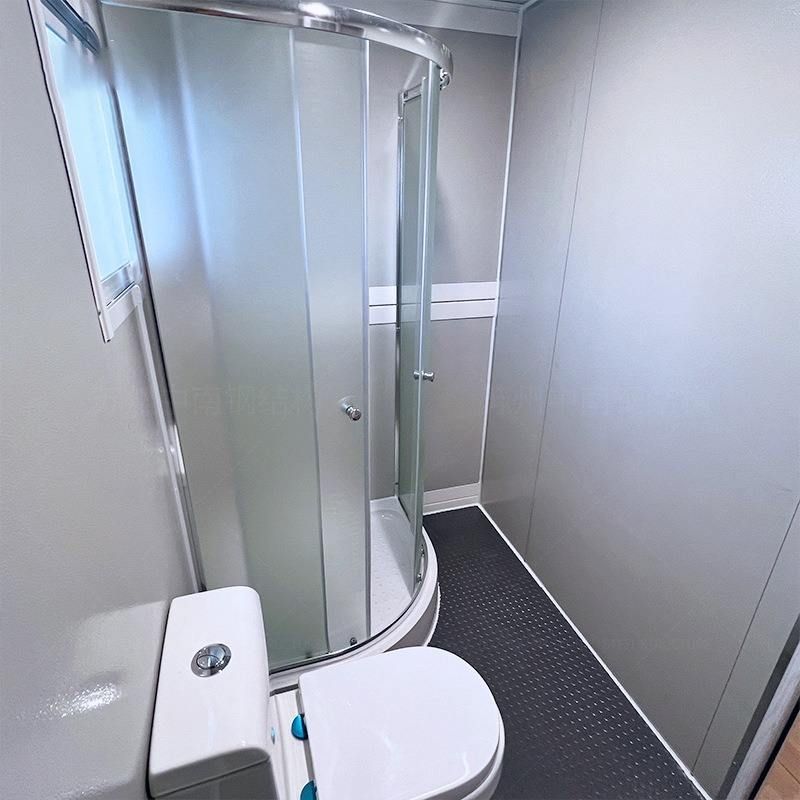
It adopts a modular design, with a frame mainly composed of light steel keel structures. The exterior is covered with composite insulation panels, and the internal functional areas are divided based on ergonomic data, including independently isolated toilet spaces, hand-washing areas, and necessary ventilation and lighting systems to meet basic usage needs.
Water Supply and Drainage & Power Supply
There are two technical paths for the water supply and drainage system design: one is a closed-loop system equipped with independent water storage tanks and wastewater recovery tanks, and the other is connecting to municipal pipe network interfaces. The power supply methods are diverse, allowing connection to the municipal power grid and also enabling off-grid operation through solar photovoltaic panels and battery packs to ensure normal operation under different conditions.
Applicable Scenarios
The differences in technical parameters determine the applicable scenarios. Small single-unit modules weigh between 800 and 1500 kilograms and can be transported by medium-sized trucks, making them suitable for short-term cultural events or temporary construction sites. Medium-sized combined units increase the number of usage compartments through expansion modules and are mostly used at construction project sites with a construction period exceeding three months. Large integrated facilities are equipped with complete sewage treatment systems and can operate continuously in areas lacking municipal infrastructure, commonly seen at large outdoor events.
Summer Cooling Measures
When selecting equipment, emphasis is placed on heat dissipation performance. Models with ventilation systems are preferred, and if the budget allows, small air conditioners or fans can be installed. The location should avoid high-temperature areas, and it is recommended to place them in the shade of trees or buildings. If the site is limited, a sunshade can be placed on top of the equipment. Inside, sensor-based flushing systems are installed, small cooling ice buckets are placed, and toilet seat papers and air fresheners are regularly replaced. Emergency cooling facilities are provided, such as placing simple cooling devices inside or around the mobile public toilet. If possible, water mist can be sprayed on the ground, and "High-Temperature Precautions" notices should be posted. Daily maintenance ensures equipment stability, with increased equipment inspection frequencies during high-temperature seasons to check circuits, clean drainage ports, and regularly replenish disinfectants.
Leasing Service Process
It includes technical links such as demand assessment, plan design, execution, and post-maintenance. Demand assessment collects basic parameters such as the number of users, service duration, and site conditions. Plan design involves equipment selection, transportation route planning, and installation and commissioning plan formulation. Execution includes standardized operation procedures such as special vehicle transportation, on-site rapid assembly, and water and electricity system connections. Post-maintenance adopts a regular inspection mechanism, including technical services such as waste removal, consumable replenishment, and equipment function checks.



