
Zhengding Container Mobile House
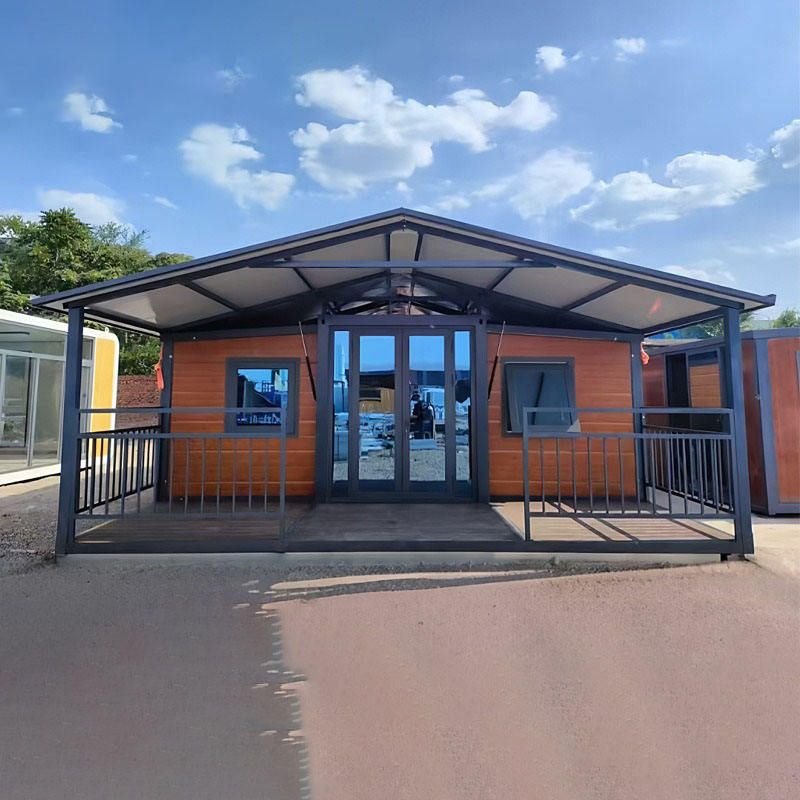
Zhengding container mobile houses are modular buildings primarily made of light steel materials, customizable in specifications, and characterized by rapid installation, low cost, and good earthquake resistance. They are widely used in construction sites, commercial settings, and temporary living scenarios. The following provides an introduction from the perspectives of core features, application scenarios, advantages, and purchasing suggestions:
I. Core Features
Zhengding container mobile houses use light steel as the main frame, offering high structural strength and low self-weight, facilitating easy transportation and lifting. Their specifications are customizable, with common models being residential containers, available in sizes such as 20-foot and 40-foot standard shipping containers, and can be expanded into multi-room structures as needed. The houses adopt a modular design, with internal components (such as walls and roofs) prefabricated in factories and assembled on-site, reducing construction time by more than 50% compared to traditional buildings. Additionally, light steel materials combined with rock wool, polyurethane, and other core materials achieve good thermal insulation, sound insulation, and fire resistance. Some products enhance corrosion resistance through galvanization, with a service life of up to 20 years or more.
II. Application Scenarios
- Construction Sites: Used as temporary offices, dormitories, restrooms, and warehouses, meeting the needs of short construction cycles and high mobility.
- Commercial Uses: Can be transformed into small shops, market stalls, relocation transitional housing, etc., supporting rapid deployment and relocation.
- Residential Sector: Suitable for vacation villas, Airbnb accommodations, and rural commercial combined housing, enhancing comfort through modern designs incorporating elements like glass curtain walls and solar panels.
- Special Scenarios: Such as temporary earthquake relief housing and outdoor campsite accommodations, relying on their structural stability and rapid response capabilities.
III. Core Advantages
- Cost-Effectiveness: Light steel materials and standardized production reduce costs, while short construction periods minimize labor costs, resulting in overall costs 30%-50% lower than traditional concrete buildings.
- Environmentally Friendly and Flexible: Factory prefabrication reduces on-site construction waste, and modular design supports disassembly and reassembly, with material recyclability exceeding 80%.
- Strong Adaptability: Light steel's flexibility provides better earthquake resistance than brick-and-mortar structures, suitable for earthquake-prone areas; waterproof and windproof designs meet the demands of harsh outdoor environments.
IV. Purchasing Suggestions
- Material and Craftsmanship: Prioritize products using Q235B or Q355 steel (with column thickness ≥ 2.0mm), polyurethane foam core materials, and galvanized corrosion-resistant treatments.
- Customization Capabilities: Confirm whether the manufacturer supports customization of specifications, shapes, and internal layouts, such as adding bedrooms, kitchens, and other functional areas.
- Supporting Services: Evaluate whether the manufacturer provides transportation, installation, recycling, and rental services for supporting equipment (such as air conditioners and iron beds) to reduce later costs.



