
Zhejiang Intelligent Mobile Toilet Design
The design of intelligent mobile toilets in Zhejiang combines regional characteristics with diverse needs, offering targeted optimizations in structure, functionality, deployment, appearance, and technological integration. Details are as follows:
1. Structural and Material Design: Wind-resistant and Moisture-proof, Adapting to Climate
Zhejiang experiences frequent typhoons, long rainy seasons, and high humidity. Mobile toilets adopt wind-resistant structures and moisture-proof, corrosion-resistant materials. For example, Ningbo Hongzhu Company combines a purification board enclosure system with a steel frame structure. The purification board features anti-corrosion and easy-to-clean properties, extending service life. The outer shell materials include high-strength fiberglass, aluminum alloy, or new composite materials, offering corrosion resistance, rust prevention, heat insulation, and thermal retention, effectively resisting erosion in humid environments.
2. Functional Module Integration: Standardized Configuration, Meeting Basic Needs
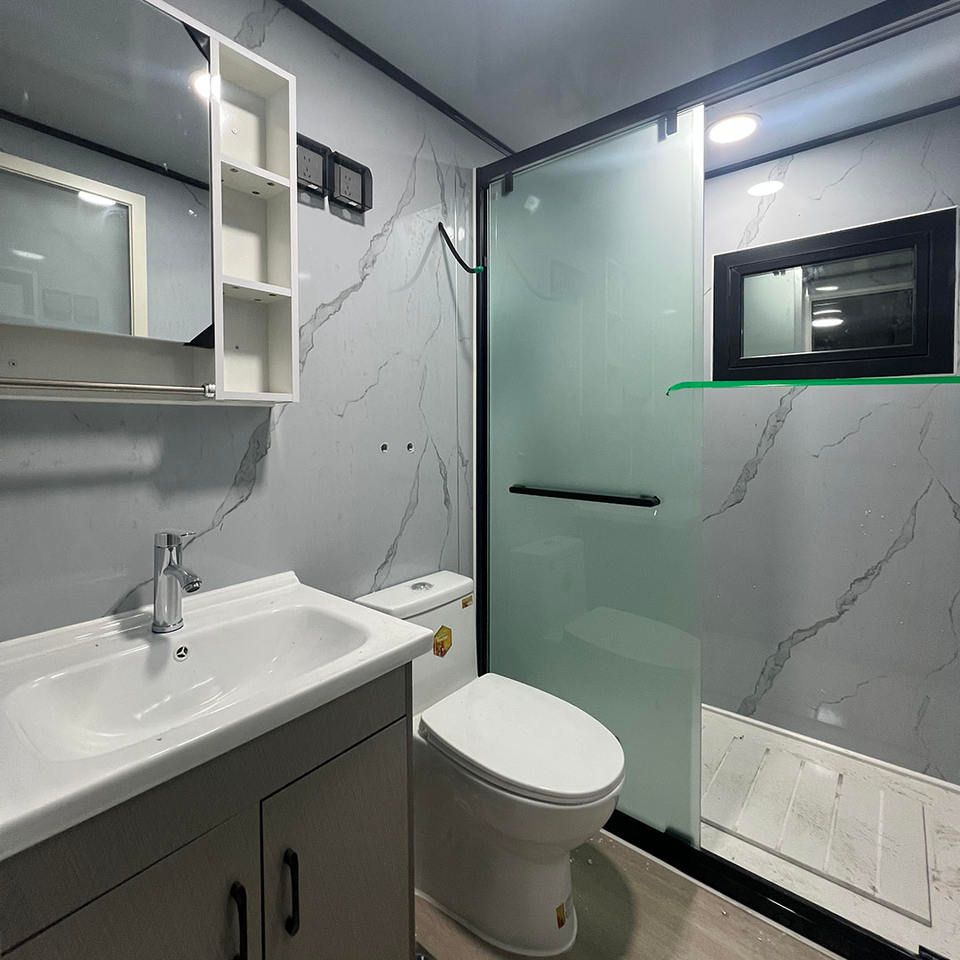
Standard units include a toilet area, handwashing and cleaning area, ventilation and lighting system, and waste treatment system. The toilet area is equipped with water-saving toilets, paper towel holders, and handrails; the handwashing area integrates a small sink and water-saving faucet, with some supplied by built-in water tanks; the ventilation system uses ventilation windows or forced exhaust, with translucent panels on the top or sides to reduce reliance on artificial lighting; waste treatment methods include recirculating water flushing, waterless packaging, or biodegradation, with some products adding intelligent configurations such as sensor flushing devices and indoor air exchangers to meet operational and maintenance needs in different scenarios.
3. Modularization and Rapid Deployment: Flexible Assembly and Disassembly, Efficient Turnover
The design draws on modular housing technology, with a main frame made of hot-dip galvanized steel, walls filled with insulation material, and a non-slip drainage structure at the bottom, aiming for a service life of no less than a certain number of repeated lifting and turnover cycles. After standardized factory production, they can be used on-site by simply connecting pipes or electricity, and can be entirely removed after the event, quickly restoring the site to its original condition, suitable for temporary or mobile scenarios.
4. Appearance and Environmental Harmony: Customized Design, Blending into Scenarios
The exterior design emphasizes integration with the surrounding environment. For example, toilets in camping bases use emerald green metal carved panel exteriors with an apple pod shape; those in scenic spots or characteristic towns emphasize exterior harmony, internal space comfort, and the completeness of barrier-free facilities, enhancing the cultural tourism experience.
5. Technological Integration and Humanized Considerations: Intelligent Management, Enhancing Experience
Some products integrate intelligent management interfaces to meet the needs of municipal sanitation departments for convenient waste removal and intelligent management; they optimize user experience through ventilation systems, lighting design, and waste treatment technologies, such as using natural ventilation or small fans for air circulation, reducing reliance on artificial lighting during the day, and balancing functionality and comfort.



