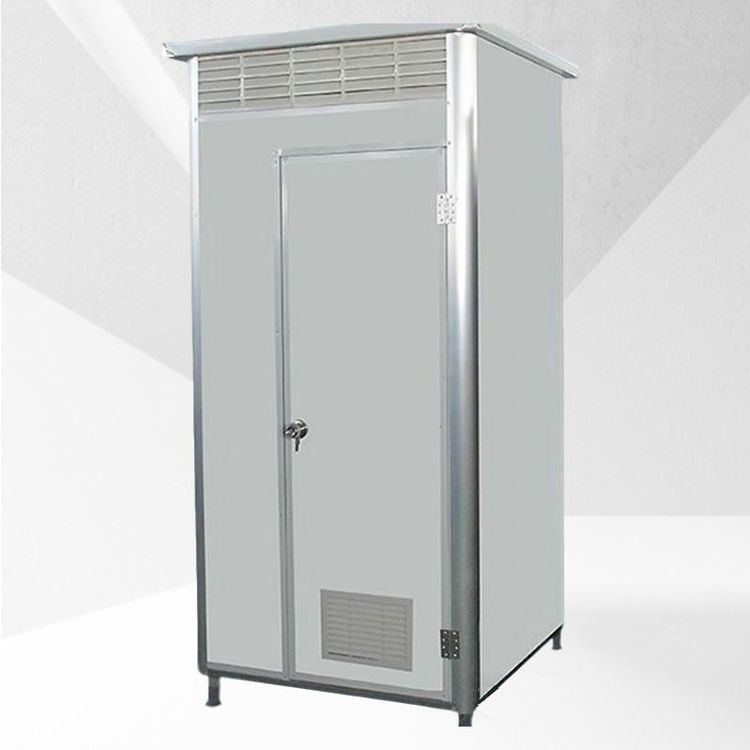
Zhejiang Construction Site Portable Toilet
The portable toilets for construction sites in Zhejiang are designed as movable facilities to meet the temporary or phased toilet needs of places such as factories and construction sites, featuring flexible combination and easy transportation. The following is an introduction from three aspects: production services, material structures, and classification methods.
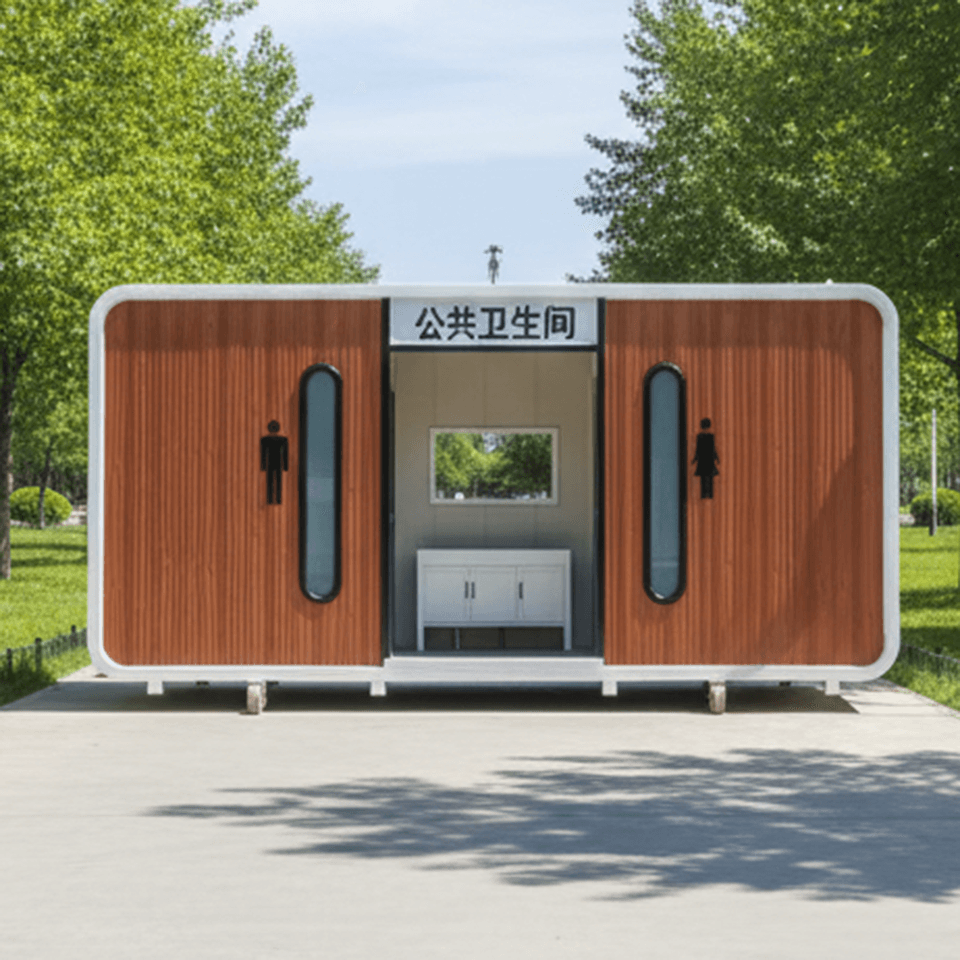
In terms of production services, there are multiple local enterprises in Zhejiang that provide production and sales services for construction site portable toilets. For example, Dezhou Hongtu Metal Products Co., Ltd. once customized a factory-use portable toilet for a Zhejiang customer, setting up 7 male squatting positions and 1 female squatting position according to actual needs (more males than females), and the urgent project only took 4 days, demonstrating the flexibility of customized services. In addition, enterprises such as Hangzhou Huagong Metal Products Technology Co., Ltd., Hangzhou Shiteng Industrial Co., Ltd., and Wenzhou Shiteng Metal Products Co., Ltd. also offer related products, with price ranges from several hundred yuan to tens of thousands of yuan, depending on configurations (such as the number of squatting positions and material grades) and specifications (such as size and functional modules). Users can choose according to their budget and needs.
In terms of material structures, the materials of portable toilets for construction sites in Zhejiang are diverse, including steel structures, color-coated steel, plastics, metals, aluminum-plastic panels, anti-corrosion wood, aluminum alloys, and stainless steel. Different materials have different characteristics: steel structures have high strength and good durability, suitable for long-term use; color-coated steel is lightweight and has a relatively low cost, facilitating rapid construction; plastic materials are waterproof and moisture-proof, suitable for humid environments; stainless steel is corrosion-resistant and easy to clean and maintain. In terms of structural forms, they can be divided into single-unit structures (independent units, suitable for small-scale needs) and composite structures (multiple units combined to meet large-scale use); in terms of mobility, they are divided into lifting and handling types (relying on mechanical handling) and powered and towed types (can move on their own or be towed by vehicles); in terms of sewage treatment methods, they are divided into water-flushing and non-water-flushing suction types (relying on septic tanks or pumping), circulating water-flushing types (water-saving and environmentally friendly), and dry-packing types (suitable for waterless environments, with feces packed for treatment).
In terms of classification methods, the classification of portable toilets for construction sites in Zhejiang is mainly based on structures, mobility, and sewage treatment methods. Structural classification affects spatial layout and capacity; mobility classification determines deployment efficiency; sewage treatment method classification is directly related to environmental performance and applicable scenarios. For example, water-flushing types are suitable for construction sites with water sources, and dry-packing types are suitable for areas with water shortages or high environmental requirements.