
Zhanjiang Internet-Famous Container House
Zhanjiang's internet-famous container houses are characterized by modular design, flexible applications, and stylish appearances, widely used in commercial, office, temporary living, and cultural tourism scenarios. Here is a detailed analysis:
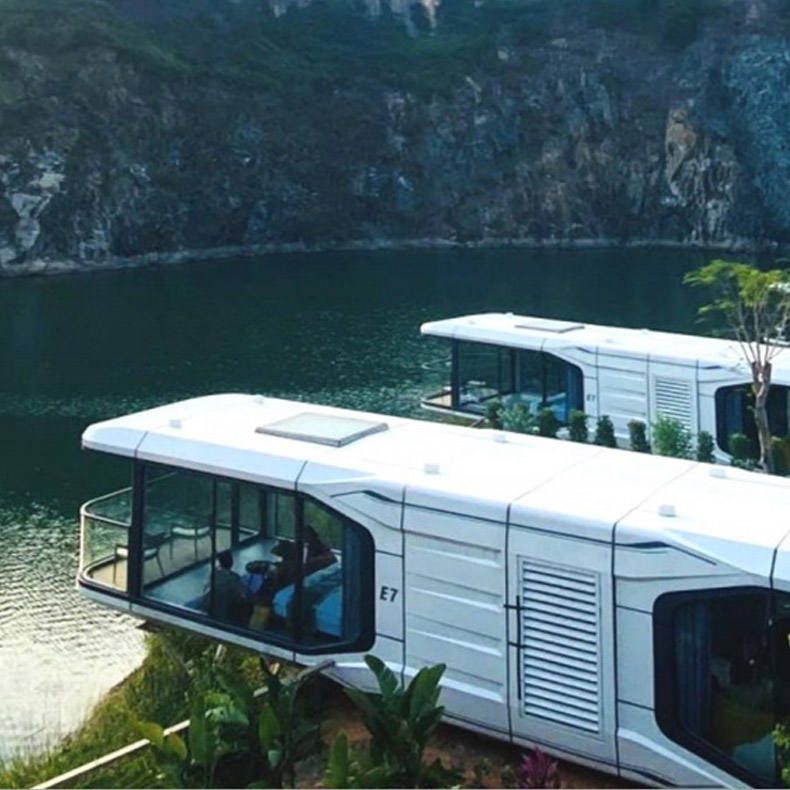
1. Modular Design and Rapid Construction
The container houses in Zhanjiang adopt a detachable modular design, with individual boxes independently separated. During disassembly, there is no need to cut or damage the original components, facilitating transportation and reuse. For example, container office buildings in Zhanjiang, Guangdong, can quickly form contiguous dormitory areas or temporary office areas through the clustering arrangement of multiple boxes, suitable for short-term collective accommodation or office needs in construction sites and exhibitions. This standardized production model significantly shortens the construction period. Small integrated houses can be completed by 5 workers within 10 days, and complex house types can also be completed within 1 month, with an efficiency increase of over 50% compared to traditional house construction.
2. Diversified Functions and Scenario Adaptation
The functions of internet-famous container houses have expanded from single living to commercial and cultural tourism fields. For example, a pedestrian street in Zhanjiang has added 10 container stalls, collaborating with coffee shops, flower shops, and other merchants to create high-value, low-cost movable spaces, becoming a popular attraction for tourists to take photos and check in. The Xuwen Antarctic Village scenic area utilizes container houses to design water bungalows equipped with smart homes and private swimming pools, combining both观赏性 (ornamental value) and functionality, becoming a popular choice for romantic dates. In addition, container houses can also serve as quiet exploration spaces such as pet-themed creative parks, bookstores, and tea houses, meeting the needs of young people for personalized consumption scenarios.
3. Environmental Protection, Energy Efficiency, and Cost Advantages
Container houses use renewable materials and environmentally friendly processes, with a high factory prefabrication rate. On-site construction generates no dust or waste, producing almost no construction waste. The walls are filled with polyurethane insulation materials and paired with double-glazed windows, providing excellent thermal insulation performance, reducing air conditioning energy consumption, and saving energy. In terms of cost, their overall construction cost is about 40% lower than that of traditional brick-and-mortar houses. For example, a fully furnished two-story house can be built for 180,000 yuan, and the later maintenance cost is low. Equipped with energy-saving photovoltaic panels and circulating water systems, water and electricity expenses can be further reduced.
4. Customized Design and Visual Appeal
Internet-famous container houses support a high degree of customization. Customers can freely match structures, materials, and functional modules, with shapes covering streamlined, geometric-cut, and bionic treehouse designs, as well as design elements such as mirrored stainless steel exterior walls and roof greening systems. For example, the "Apple Warehouse" by Weifang Tiemeng Integrated Housing Co., Ltd. adopts a modular design, blending modern industrial style with natural elements in its appearance. Its internal layout can be flexibly adjusted, suitable for multiple scenarios such as commercial displays, offices, and temporary living, becoming a popular check-in spot on social media.



