
Zhangye Prefabricated Mobile Toilet
The Zhangye prefabricated mobile toilet is a public sanitation facility that achieves flexible deployment and resource recycling through modular design. It is primarily used in areas with periodic fluctuations in passenger traffic to address the shortage of sanitation facilities in specific environments.
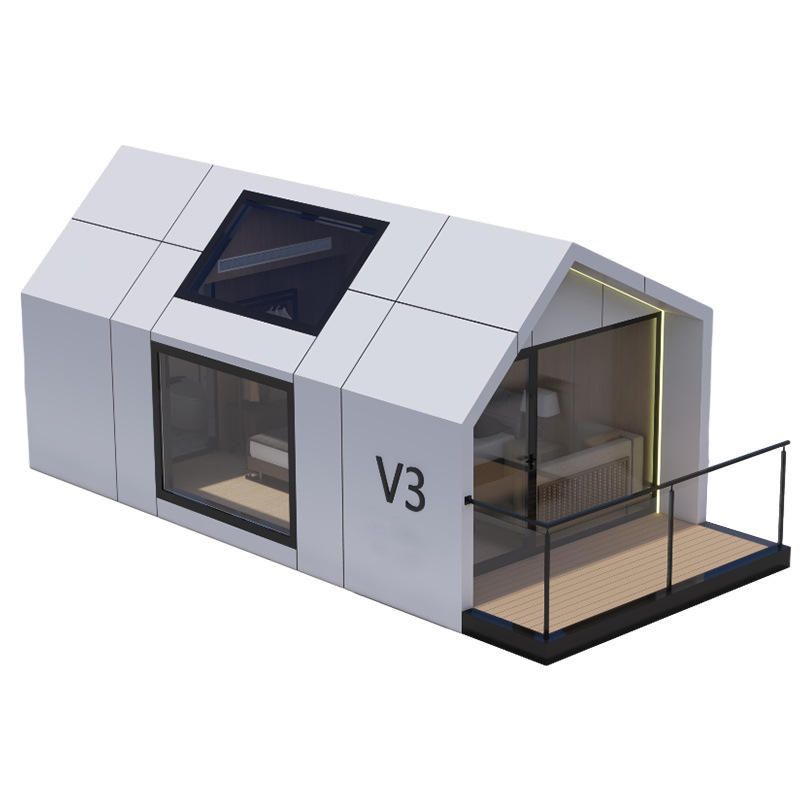
Modular Structure and Functional Configuration
The Zhangye prefabricated mobile toilet is assembled from independent modules such as an excreta treatment system, water supply unit, and ventilation device, allowing for flexible configuration adjustments based on the usage scenario. For example, during peak tourist seasons at the outskirts of scenic spots or at large event venues, the capacity of the treatment unit can be increased, while simpler circulation systems can be adopted for temporary events. This design enables it to quickly adapt to demand variations of different scales and cycles.
Excreta Treatment Technologies
Its core technologies include biological decomposition, physicochemical treatment, and waterless flushing technology. Biological decomposition utilizes microorganisms to convert organic matter into harmless substances, suitable for long-term usage scenarios. Physicochemical treatment involves adding specific agents to solidify or decompose excreta, with maintenance frequencies varying by technology. Waterless flushing technology, such as that developed by Zhangye Lanbiao Biology in its Bio-Engine Smart Ecological Toilet, achieves fecal resource recycling through biological degradation, generating microbial fertilizer that can be directly returned to fields without the need for water supply and drainage networks, making it particularly suitable for arid regions.
Water Resource and Energy Management
Water-saving flushing systems reduce single-flush water consumption through pneumatic or mechanical devices, while some waterless toilets use replaceable sealed containers. Water supply relies on external water tankers, rainwater collection devices, or connection to local water supply networks. Wastewater undergoes sedimentation, filtration, and multi-stage disinfection before being used for non-potable purposes or discharged into designated networks. For energy supply, solar power units provide electricity for lighting, ventilation, and control systems, with battery packs ensuring operation during nighttime or rainy weather. In areas with stable power supply, mains electricity can be used.
Local Adaptation and Ecological Protection
Given Zhangye's large temperature variations and frequent sandstorms, the design must consider the impact of material thermal expansion and contraction on sealing performance, winter freeze-proof measures, and the addition of air filtration devices to prevent dust from entering mechanical components. In arid climates, priority is given to waterless or water-saving products; in ecologically sensitive areas, strict evaluation of excreta treatment methods is required to prevent secondary pollution. For example, Lanbiao Biology's mining version has passed coal mine safety certification, becoming the first underground toilet in China and filling an industry gap.



