
Zhangye Mobile Environmental Toilet Design
The design of mobile environmental toilets in Zhangye needs to incorporate targeted technical solutions that take into account the local natural conditions of drought, dust, and large temperature differences between day and night, while balancing functionality and environmental adaptability.
Adaptive Design for Natural Conditions
In the arid and rainless region of Zhangye, the water storage system must have anti-evaporation capabilities, such as adopting a double-layer water tank structure or covering with thermal insulation materials to reduce water loss. The dusty environment requires enhanced sealing of the toilet body, with dust-proof rubber strips or filters added to door frames and ventilation openings to prevent sand particles from entering internal equipment. For large temperature differences between day and night (which can exceed 30℃), materials with low thermal expansion and contraction coefficients, such as aluminum alloy frames or high-strength composite panels, should be selected to avoid structural deformation or loosening of connectors due to temperature changes.
Core Structure and Functional Modules
- Lightweight Frame Materials: The main body adopts modular alloys or composite panels, featuring lightweight and corrosion-resistant properties, supporting rapid assembly, disassembly, and transportation, suitable for temporary or mobile use scenarios.
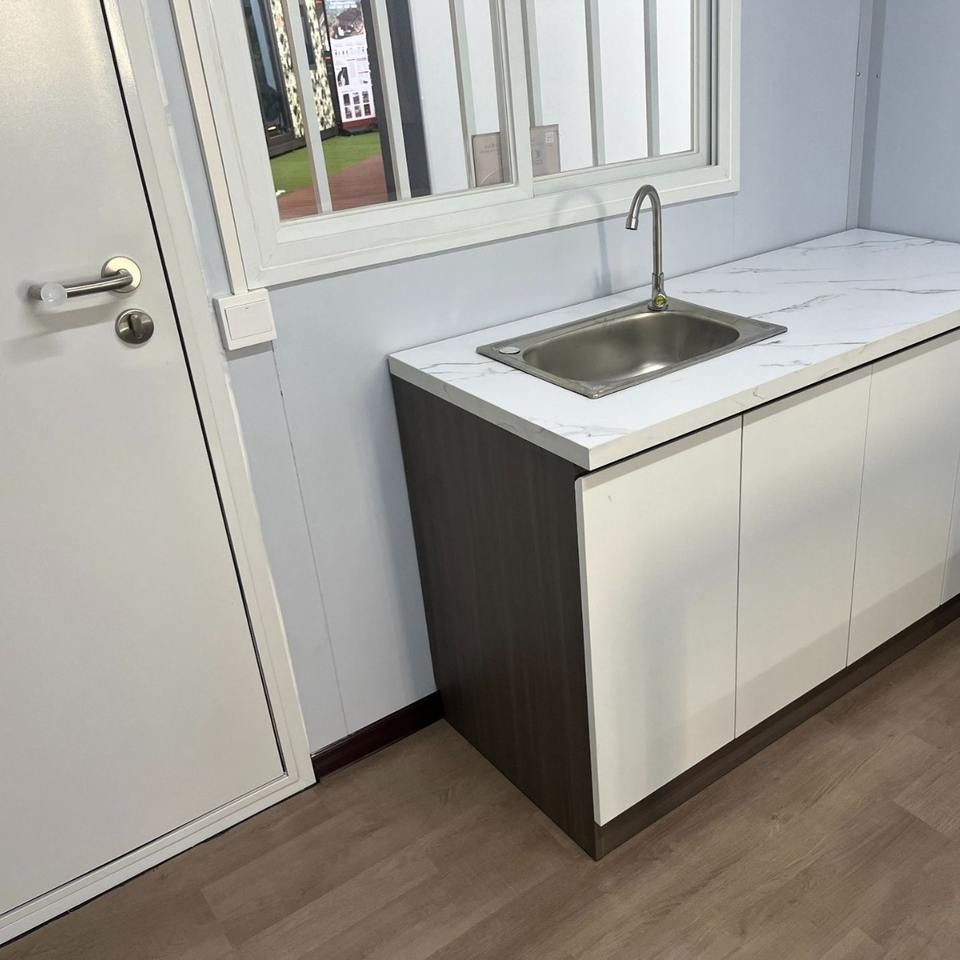
- Internal Sanitary Fixtures: Fixture dimensions should conform to ergonomic standards, such as toilet seat height and handrail spacing, to ensure user comfort. Materials should be selected with anti-fouling and easy-to-clean surface treatments to reduce maintenance frequency.
- Water Storage and Sewage Systems:
- Water Storage Module: Separate clean water tanks and sewage tanks are used to avoid cross-contamination through physical isolation. The capacity of the clean water tank is designed based on the number of users, for example, a tank of over 200L is required for 50 person-times of use per day. The sewage tank is equipped with a liquid level alarm to prevent overflow.
- Sewage Treatment Technology: Different methods are selected based on the usage scenario:
- Biodegradation: Utilizes microorganisms to decompose feces, suitable for high-frequency usage scenarios (such as tourist attractions), but requires regular addition of bacterial strains and temperature control.
- Chemical Decomposition: Treats excreta by adding disinfectants or decomposers, suitable for medium- to low-frequency usage, but attention should be paid to the environmental friendliness of chemical agents.
- Physical Separation: Adopts solid-liquid separation technology to package solids and filter liquids, suitable for arid and water-scarce regions, such as waterless and electricity-free mechanical packaging toilets, which compress feces into blocks through mechanical devices without the need for flushing, suitable for grasslands, deserts, and other areas without water and electricity infrastructure.
Solutions for Special Scenarios
For waterless and electricity-free areas in Zhangye, such as grasslands and deserts, it is recommended to adopt waterless and electricity-free mechanical packaging mobile toilets: Their core is a mechanical packaging device, driven by foot pedals or electricity (optional solar power supply), which compresses feces and seals them in biodegradable film bags without the need for flushing throughout the process. Urine is directed through a conduit into an independent collection tank for regular removal. These toilets do not require external water and electricity connections and have strong sealing properties, effectively coping with dusty and arid environments.



