
Zhangjiakou Mobile Toilet Installation
The installation of mobile toilets in Zhangjiakou requires meticulous planning and professional operation. The specific process is as follows:
I. Preliminary Planning and Preparation
- Site Inspection: Conduct on-site research at the installation location to assess the surrounding environment, pedestrian traffic, and infrastructure conditions. Determine the number and distribution of toilets based on the expected number of users, prioritizing flat and stable ground areas. Ensure the slope does not exceed 1% and the flatness error is less than 5 millimeters. For complex terrains, foundation reinforcement is required.
- Permit Processing: Communicate with the site management or relevant departments to obtain installation permits, ensuring compliance with local environmental hygiene standards and avoiding damage to greenery or public facilities.
- Climate Adaptation: Given the severe cold in Zhangjiakou during winter, the water supply pipeline should adopt anti-freezing design, wrapped with polyurethane insulation material with a thickness of no less than 30 millimeters. The ventilation system should be equipped with a bidirectional air exchange mode, relying mainly on natural convection in summer and activating a low-power warm air circulation device in winter. Install washable filters at the air inlets and outlets.
II. Transportation and Installation
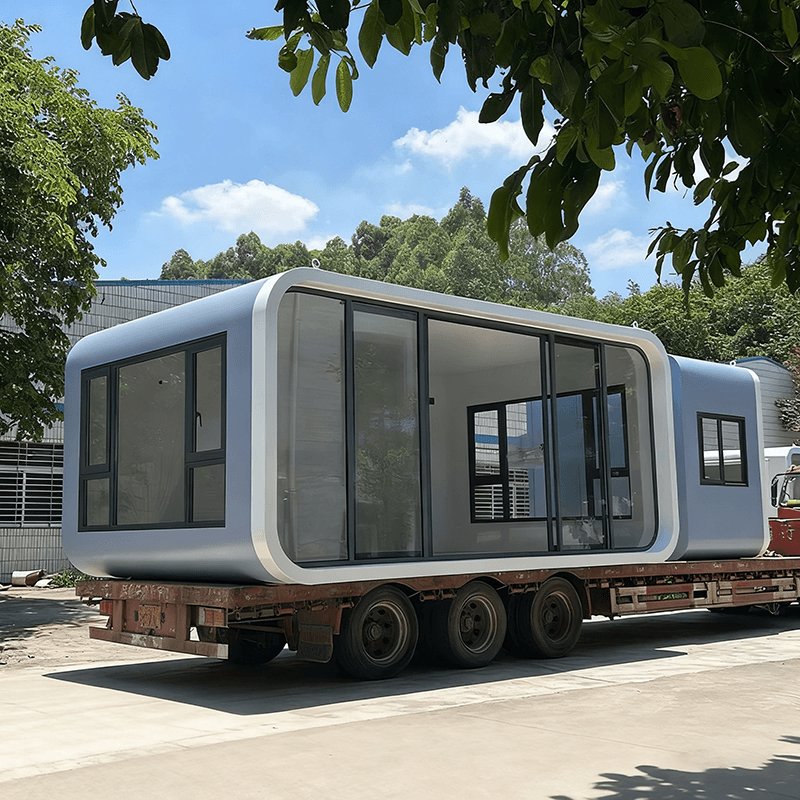
- Professional Operation: Mobile toilets are usually prefabricated structures and need to be transported to the site as a whole or in modules by professionals. During assembly, use specialized tools to ensure firm and well-sealed component connections, secure the base, and install the roof and wall panels, with a focus on checking waterproofing and insulation performance.
- Spatial Layout: The floor area of a single unit should be controlled between 1.2 meters × 1.2 meters and 1.5 meters × 1.8 meters. Depending on the usage density, adopt a linear or circular layout, with equipment spacing maintained between 0.8 meters and 1.2 meters to ensure convenient passage.
- Water and Electricity Connections:
- Water Supply and Drainage: Prioritize connection to the municipal system; in water-scarce areas, select models with built-in water storage tanks and sewage treatment equipment, and clean and replace them regularly.
- Power Supply: The standard configuration includes solar panels and battery packs, ensuring basic lighting can last for more than 72 hours during continuous cloudy days; it can also be connected to nearby power sources.
III. Testing and Acceptance
After installation, conduct a comprehensive inspection of the flushing system, door locks, ventilation equipment, and other functions to ensure there is no leakage or damage. Place toilet paper, hand sanitizer, and other supplies inside, and set up signage outside to clarify usage norms.
IV. Daily Maintenance
Regularly clean and disinfect, clean the water storage tank and sewage treatment equipment on time, check the integrity of components, and repair them promptly. In winter, focus on inspecting the insulation layer of the water supply pipeline to prevent freezing and cracking; the ventilation system filters should be cleaned once a month to ensure air circulation efficiency.
By following these steps, mobile toilets can operate efficiently and stably in the Zhangjiakou area, balancing practicality and environmental adaptability.



