
Zhangjiajie Container Refitted Housing
Zhangjiajie container refitted housing features convenience, flexibility, environmental sustainability, technological innovation, cost-effectiveness, and customized services, making it widely applicable in tourism, emergency response, residential, and other fields.
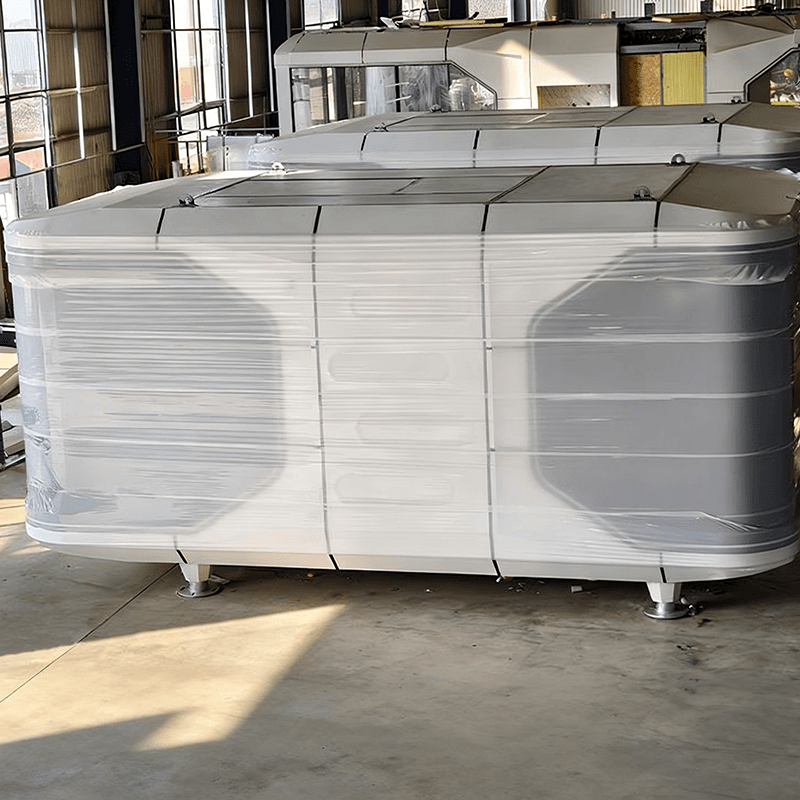
Convenience and flexibility are the core advantages of container houses. Their main structures are prefabricated in factories, requiring only foundation treatment and lifting connections on-site. Lifting and installing a standard unit takes just a few dozen minutes, and the entire project, from transportation to occupancy, can be shortened to 15-30 days, much faster than traditional construction. Construction primarily involves dry operations, reducing noise and construction waste, with minimal environmental impact. After project completion, the houses can be disassembled and relocated to new sites for reassembly, enabling resource recycling. Modular design supports flexible horizontal and vertical combinations, allowing them to be pieced together into various functional spaces such as dormitories, offices, and exhibition halls to meet diverse needs.
Environmental sustainability is reflected in material recycling and resource conservation. Some houses are refitted from used containers, giving new life to waste resources; even when new steel is used, the main structure is 100% recyclable. Factory prefabrication precisely controls material usage, reducing scrap waste; dry construction saves significant amounts of water, with overall resource consumption reduced by over 80% compared to traditional buildings. On-site work is minimal with short cycles, causing minimal disruption to the original landscape. After project completion, the structures can be completely removed, facilitating site restoration. Construction waste is extremely low, significantly reducing environmental pressure.
Technological innovation enhances living quality. BIM technology is used to pre-install water and electricity pipelines, and the walls are filled with rock wool insulation layers, with winter indoor-outdoor temperature differences exceeding 15℃, demonstrating excellent insulation performance. With 100% steel recycling and an 80% reduction in construction waste, optional photovoltaic roofing solutions generate 8-10kWh of electricity per day, enabling green energy utilization. The houses are highly functional and expandable, capable of being transformed into public facilities such as medical stations and schools through horizontal connections. For example, in Cili County's flood season in 2023, 20 container classrooms were built in 48 hours, ensuring the resumption of classes for 500 students.
Cost advantages are significant. A standard 20㎡ single-container unit costs approximately 35,000 yuan (including basic decoration), which is only 35% of the cost of a brick-and-mortar structure of the same area. In the post-disaster reconstruction project in Sangzhi County, the total investment for 200 container houses was 7 million yuan, saving 13 million yuan from the budget. In mountainous areas with limited land availability, containers can be stacked 2-3 stories high, increasing land utilization by 50%, as seen in the Tianmen Mountain Town project, which accommodated 60 housing units on an 800㎡ plot.
Customized services meet individual needs. Some companies in Zhangjiajie offer container sales, refitting, recycling, installation, and customization of special-purpose containers. During design, they carefully select steel suitable for the building structure, ensure bolts and other fittings meet long-term usage requirements, and apply anti-rust paint to enhance corrosion resistance.
You may also like

Portable Toilet Eco-Friendly: MOQ, Samples & Quotation Guide
Read More
Top Portable Toilet Color Steel Manufacturers: How to Choose a Factory Partner
Read MorePortable Toilet Picture: Types, Features & Buying Tips
Read More