
Back to blog
Article
Zhangjiajie Container Mobile House
Admin September 16, 2026
The following is information about container mobile houses in Zhangjiajie:
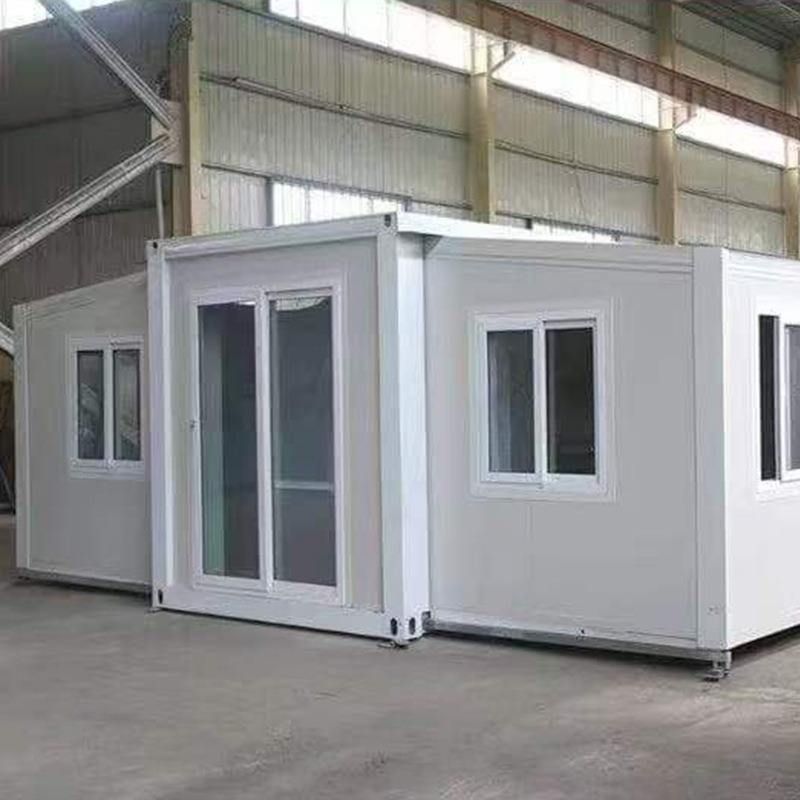
Manufacturers:
- Jinhua Xin'an Steel Structure Engineering Co., Ltd.: Offers customized design services for second-hand containers, covering the entire process of design, production, sales, and installation. Its products are applied in infrastructure construction scenarios such as buildings, municipal engineering projects, parks, and scenic spots.
- Hunan Yaheng Tengfei Light Steel Housing Co., Ltd.: With 15 years of industry experience, its products include packing-box units, foldable container houses, and fixed container houses. These are widely used in construction site project offices, dormitories, temporary relief housing, and scenic-spot homestays. The company provides one-stop services including design, production, logistics, installation, and maintenance.
Product Prices and Materials:
- Significant Price Differences:
- The price of creative container houses (Xiangxing brand, Ganzhou Xiangxing Metal Products Co., Ltd.) is 350 yuan per square meter, suitable for low-cost scenarios.
- The price of single-story/double-story K-type prefabricated temporary buildings (color-steel material, Cangzhou Mingxin Container Temporary Building Co., Ltd.) is 5,200 yuan per unit, suitable for short-term or temporary use.
- Material Selection:
- The mainstream materials include sandwich panels and color-steel, which are lightweight, corrosion-resistant, and easy to install, suitable for rapid construction needs under different climatic conditions.
Technical Features of Large Mobile Telescopic Houses:
- Telescoping Mechanism: It adopts a segmented guide rail and hydraulic linkage system, with automatic leveling support feet at the bottom. The telescoping process is driven by a distributed power unit, and each joint is controlled by an independent servo motor to ensure precise movements.
- Material Selection:
- The exterior facade uses an aviation-grade aluminum alloy frame combined with a polyurea coating, balancing strength and weather resistance.
- The interior partitions are made of glass fiber reinforced plastic (GFRP), which is lightweight and has excellent fire resistance.
- The connecting bolts are passivated to prevent rust and extend service life.
- Internal Pipeline Design:
- The water supply pipes and cables are prefabricated into a spring shape to adapt to telescoping deformation; the drainage system is embedded with foldable polypropylene corrugated pipes, and quick-release interfaces are set at module connections for easy maintenance.
- Meteorological Adaptability:
- The control system is equipped with a built-in wind speed sensor. When the wind speed exceeds 13.8 meters per second, the telescoping mechanism is automatically locked, and the anti-wind anchoring device is activated.
- Telescoping operations must be carried out when the temperature is above 5 degrees Celsius to avoid material embrittlement caused by low temperatures.
- Differences from Conventional Prefabricated Temporary Buildings:
- Structural Mechanics Differences: Containers rely on the overall frame for load-bearing, and opening windows or doors will damage the structural integrity; telescopic houses use a truss-type frame, and the opening parts are optimized for stress distribution through finite element analysis.
- Airtightness Differences: Telescopic houses adopt a modular sealing design to adapt to high-humidity or dusty environments, while traditional prefabricated temporary buildings have relatively weaker airtightness.
Related
You may also like

30Oct
Portable Toilet Rental for Construction Sites: What to Consider
Read More
30Oct
Portable Toilet Rental Price Guide: Budget, Mid-Range & Premium
Read More
30Oct
Portable Toilet Color Steel: A Practical Buyer's Guide
Read More
30Oct