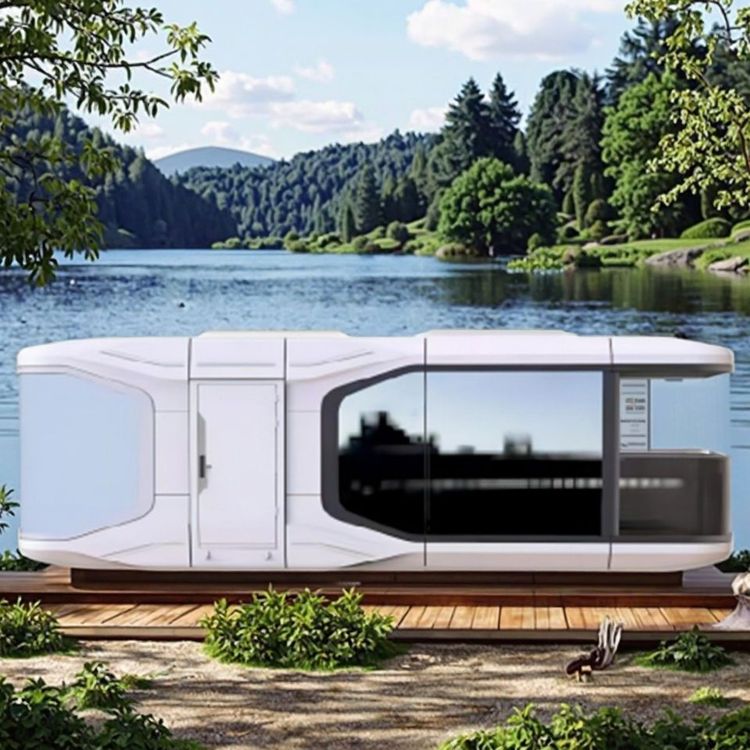
Principle of Ecological Mobile Toilets in Yuxian
If Yuxian ecological mobile toilets adopt a common design, their principle is mainly based on the integration of biological and physical technologies, achieving harmless and resourceful treatment of excreta through internal processing and reducing dependence on external sewage systems.

Microbial Degradation Technology
This technology is one of the core treatment methods for ecological mobile toilets. By introducing specific microbial communities (such as marine microorganisms and anaerobic ammonium oxidation bacteria) into the treatment unit, these microorganisms can rapidly decompose organic matter in feces, converting it into carbon dioxide, water, and a small amount of organic fertilizer. The biological reaction process generates high temperatures (50-65°C or even higher), effectively killing pathogenic microorganisms in excreta and achieving harmless treatment. This technology does not require flushing water, only requiring periodic replenishment of microbial agents, significantly reducing water consumption and avoiding odor issues associated with traditional toilets.Physical Separation and Dehydration Technology
To meet the solid-liquid separation needs of excreta, ecological mobile toilets typically use mechanical separation devices (such as screw extruders) to initially separate feces and urine. The separated solid portion undergoes further volume reduction through dehydration processes (such as heating or vacuum suction), resulting in dehydrated products with low water content and high stability, which can be used as raw materials for soil amendments for landscaping or non-edible agricultural crop cultivation. This technology reduces the difficulty of subsequent treatment and extends the cleaning cycle of the fecal storage tank.Urine Resource Utilization Technology
Separate collection of urine and feces is a common design in ecological mobile toilets. After being collected through dedicated pipelines, urine undergoes chemical precipitation (such as adding magnesium salts to form struvite) or membrane filtration technology to remove heavy metals and pathogens, converting it into liquid fertilizer. The treated urine has high nitrogen, phosphorus, and potassium content and can be directly used for irrigation of non-edible plants (such as flowers and lawns), achieving resource recycling.Intelligent Monitoring and Management System
To enhance operational efficiency, ecological mobile toilets are equipped with built-in sensor networks that continuously monitor key parameters such as usage frequency, treatment unit temperature, and storage tank liquid level. Data is remotely transmitted to a management platform via wireless modules, allowing maintenance personnel to promptly clean the fecal storage tank or replenish microbial agents based on data alerts, preventing equipment failures or environmental pollution.Renewable Energy Utilization
In response to potential power shortages or cold environments in Yuxian, ecological mobile toilets typically have solar panels installed on their roofs to power internal lighting, ventilation systems, and intelligent control systems. The combination of solar energy and energy storage batteries ensures that the equipment can operate normally without an external power supply, reducing energy dependence.
The technological combination of ecological mobile toilets in Yuxian may be further optimized based on local climate (such as enhanced insulation in cold regions) and usage scenarios (such as simplified structures for temporary venues), but the core goal always revolves around "on-site treatment, resource recycling, and environmental friendliness."