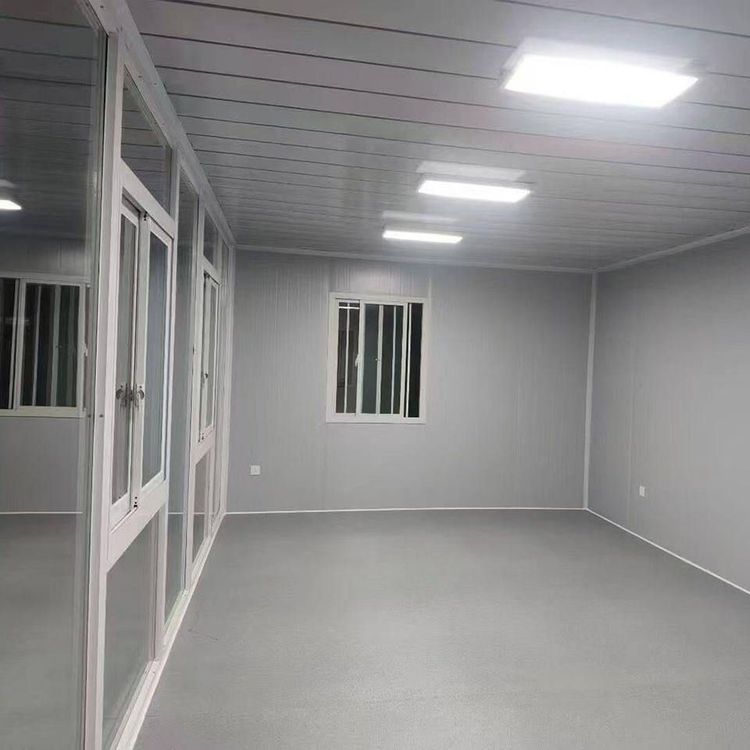
Yuqing Container House Installation
The installation of container houses in Yuqing can be carried out by referring to the following steps, ensuring that each step is carried out in accordance with specifications and safety standards:

Site Preparation Select a flat and solid foundation, ensuring that the ground bearing capacity meets the weight requirements of the container house. It should also have good drainage performance to prevent water accumulation from causing structural dampness or damage. Before installation, thoroughly clear the site of debris, stones, and other obstacles to provide convenient conditions for subsequent construction.
Transportation and Unloading Container modules are typically composed of steel frames and insulation materials and need to be transported to the site by professional transport vehicles. During unloading, lifting equipment (such as cranes or forklifts) should be used to place the modules in designated positions according to their categories, avoiding collisions or deformation. The modules should be arranged in the installation order to facilitate rapid assembly later.
Foundation Installation Determine the base position according to the design drawings and fix the base to the ground using expansion bolts or chemical anchors to ensure structural stability. Foundation installation must strictly adhere to the levelness requirements, with deviations not exceeding design specifications; otherwise, it will affect the accuracy of subsequent module assembly.
Module Assembly Arrange the container modules in the order specified in the design drawings and connect them using preset locks or high-strength bolts. During connection, check whether the module interfaces are aligned, and the bolt tightening torque must reach the design value to ensure the overall rigidity of the frame. Before installation, check the frame components: confirm that there is no damage or missing parts, and the dimensions meet the design requirements; the ground must be solid to support the frame, avoiding structural deformation due to foundation settlement; after fixing with bolts, conduct a secondary check of the connection tightness to prevent loosening.
Door and Window Installation Install pre-installed doors and windows at the reserved positions, using waterproof sealant to treat the joints and prevent rainwater leakage. The connection between the door and window frames and the walls should be reinforced to ensure wind pressure resistance. After installation, check the flexibility of opening and closing and the security of the locks.
Interior Decoration When laying water and electricity pipelines, follow the concealed engineering specifications to avoid exposed or interfering pipelines. Wall, floor, and ceiling decoration materials must comply with fire protection and environmental protection standards. Furniture and living facilities should be installed firmly to prevent tipping and causing injury.
Final Inspection Conduct a comprehensive inspection of all connection nodes, fasteners, and sealed parts to confirm that there are no looseness or defects. Perform structural load-bearing tests (such as simulating wind loads and live loads) and waterproof tests. Only after passing the inspection can the container house be put into use.
Key Precautions: During installation, wear safety protective equipment to avoid high-altitude operation risks; suspend construction in adverse weather conditions (such as strong winds or heavy rain); all materials and accessories must be provided with quality certificates to ensure compliance with national standards.